"To preserve the reputation of the Fraternity unsullied must be your constant care."

BE A FREEMASON

Showing posts with label book. Show all posts

Monday, March 16, 2026

'Solomon's Builders' Now Available As Audio Book


by Christopher Hodapp


To my surprise, my 2006 book, Solomon's Builders: Freemasons, Founding Fathers, and the Secrets of Washington D.C., has just been released as an unabridged audio book and is now available from Amazon/Audible for $18.18. Unfortunately for fans of audio books, there are many photos and illustrations in the print edition, so your enjoyment of Solomon's Builders may be less than ideal, unless you use it as a companion to the dead tree version. That's not me trying the old Chico Marx sales tactic, "One's no good - you gotta have the whole set." I'm just saying it's tough to contemplate the street plans of Washington DC or Sandusky, Ohio without actually seeing them.

Be aware that Solomon's Builders was written before novelist Dan Brown's hotly awaited Da Vinci Code sequel, The Lost Symbol, was released. Still, I actually enjoyed writing it more than any other book I've done. At the time, Dan Brown mania was in full force, and second-guessing his anticipated 'Masons in Washington DC' storyline was a cottage industry. 

Shortly after Freemasons For Dummies was released in 2005, I received an obscene phone call from an editor at Ulysses Press who made me an offer few new authors can refuse: they wanted to pay me to write anything I wanted, as long as they could promote it as an unauthorized tie-in to Brown's sequel. I spent 10 days in Washington interviewing, researching, taking photos, and even getting threatened with arrest by the CIA in Reston. (Yes, really.) And, unlike the Dummies books with Wiley, Ulysses gave me little in the way of a deadline.

Brown's Masonic-themed The Lost Symbol finally came out in 2009, almost 9 years after his blockbuster DaVinci Code was released, and much of the speculation about his plot points that I made in my book turned out to be wrong. Brown – or his publisher – had leaked early on that his upcoming book was to be called The Solomon Key, hence my own title, which I ultimately liked, whether it tied in or notBut I wrote it in such a way that it was more of an overview of the Masonic backgrounds of the Founding Fathers and a Masonic guidebook to the city than the sort of "I'll bet he writes this" ripoff that so clogged up bookstore shelves at the time (usually with the word 'Code' in the title). Consequently, most of the book's content has withstood the lapse of time, and remains useful and informative. 

BTW, as was done with Freemasons For Dummies several years ago, the publisher never asked me to narrate the recording - it's read by someone named Charles Constant, who does a fine job. I just wish an invitation had been extended to me, since I am an experienced voice-over artist who's recorded many commercials over the decades. I've encountered many Masons who have been disappointed when the recording wasn't me, but that's show-biz. 


Just to clarify something else: Ulysses Press' owner called me the day the news services breathlessly reported that Brown had finally turned in his sequel's manuscript in 2009 and that they finally had a publication date. The owner wanted ANOTHER tie-in book written within six weeks after I actually read The Lost Symbol to update my previous guesses and explain the actual Masonic references Brown DID include in his new novel. That new book was released in January 2010 as Deciphering the Lost Symbol, and is still floating around out there. 

Thursday, September 25, 2025

Today Only! Sale on 'Freemasons For Dummies' Kindle Just $2.99


by Christopher Hodapp

UPDATE 9/29/2025 AT 8:00PM
SALE IS OVER WITH AND THE KINDLE IS BACK UP TO IT'S NORMAL $17.99 PRICE.

I just received a last-minute message from my editor at Wiley that Amazon is offering a flash sale RIGHT NOW on the Kindle version of Freemasons For Dummies for an unbelievable $2.99! 

That's a markdown from the usual Kindle price of $17.99 and it's available today only, Thursday, September 25th! 

Strange and myriad are the ways of Amazon. No, I don't know when they'll shut it down, so you need to act fast. He who hesitates pays full retail! And this flash sale applies ONLY to the Kindle edition of the book, and NOT the paperback dead-tree version.

CLICK HERE to be whisked off to the Amazon page.


Sunday, July 14, 2024

New Book by Chris Ruli: 'Brother Lafayette' Available for Presale


by Christopher Hodapp

It's Bastille Day today, so I think it's appropriate to post this story. Macoy Publishing has announced the pre-sale of Brother Christopher Ruli's newest book, Brother Lafayette: the Marquis de Lafayette's Masonic Travels in America 1824-25 (Macoy, 2024, $24.95) now through September 24th, when it's expected to begin shipping. 

UPDATE 7/23/2024: Chris is also offering to personalize and autograph copies of Brother Lafayette for $27. CLICK HERE TO ORDER YOURS. NOTE: please include signature instructions, with preferred name, in the "add a note to seller" box while at checkout.

This year marks the 200th anniversary of Major General Marie-Joseph-Paul-Yves-Roch-Gilbert du Motier, Marquis de La Fayette’s triumphant goodwill tour of America between 1824-25. Fewer and fewer Americans these days have been taught about Major General Lafayette and his role in the American Revolution, and even fewer know of just how dedicated he was to the cause of liberty, before he arrived in America, and long after he returned home to France where he was swept up in its own revolution. But in addition to his long career as a military figure, statesman, revolutionary, protector, political prisoner, and so much more, he was also a Freemason.

In 1824, Lafayette visited America at the invitation of President James Monroe, and began traveling the country. The American Revolution’s 50th anniversary was approaching, and Lafayette was the last of George Washington's major generals who was still alive. During his whirlwind goodwill tour, he spoke in many places, including several Masonic lodges. He was treated with much the same sort of awe and adoration that had been reserved for George Washington himself, which never ceased to astonish him. Everywhere Lafayette went, adoring crowds followed him through the streets. Balls, dinners, tours, concerts, parades, and public honors of every kind were arranged to honor him, and what started out to be a three-month trip lasted over a year. It was during that visit that the park north of the White House was renamed to honor him. Literally hundreds of other parks, towns, cities, and counties throughout the United States are named after him. And there were more than a few Masonic lodges chartered in his name.


Lafayette's famed American tour took him to all 24 of the United States at that time – 6,000 miles in all – and in the decades following his visit, it seemed as though every Masonic lodge in the country wanted to claim their members had some kind of meaningful contact with the legendary general and Freemason.

Ironically, despite the high-profile visitations and associations with Freemasons while he was here, just a year later, William Morgan would disappear in Western New York, allegedly murdered by Brother Masons, and the most vehement period of American anti-Masonic persecution would erupt throughout the country.

Now, author and Washington DC Mason Christopher Ruli has done a deep dive into the itineraries, letters, diaries, minute books, and press reports of the time to create a full and definitive account of Brother Lafayette’s Masonic contacts and travels throughout his famed trip. The result is 
Brother Lafayette: the Marquis de Lafayette's Masonic Travels in America 1824-25a detailed, fascinating, and eminently absorbing travelogue with a uniquely Masonic focus. 

Similar in nature to Chris' previous Masonic history of the Presidential Mansion in Washington, DC, (The White House & the Freemasons, Macoy, 2023, $29.95-39.95) Chris has meticulously tracked down every known instance of Lafayette visiting Masonic lodges, grand lodges, and individual Freemasons. Through diaries, newspaper accounts, even lodge minute books, he has provided the best documented evidence of Lafayette's interactions with Masons all along the route. And they were considerable in number!

You'll find letters, transcripts of speeches, tributes, toasts, diplomas, songs written for the occasion, descriptions of medals and other gifts given to Lafayette. He was granted honorary memberships in lodges and grand lodges. When the weather turned cold in November 1824, he wintered at Alexandria, Virginia's famed Gadsby's Tavern. In January of 1925, halfway through the trip, he wrote to his friend Thomas Jefferson, "I contemplate to set out for the Carolinas, Georgia, Alabama, New Orleans, and the western states, upwards of 5,000 miles to be performed in 99 days with only 13 days rest...and 300 miles through a sort of wilderness. We will do the best we can." 

He was 69 years old, and the trip would have been grueling for men half his age.

(Typically for my own state of Indiana, which had only been granted statehood less than 10 years before, our legislature, our governor, and our grand lodge made no effort to issue Lafayette an invitation, and the only reason he set shore here was when his steamboat ran aground—the 19th century version of only stopping at an Indiana truck stop on the way someplace else.)

Macoy's is offering the book for pre-sale now for $24.94, and delivery is expected in September. CLICK HERE TO ORDER.


Just as an added aside, the 
American Friends of Lafayette have been preparing for celebrating the bicentennial of Lafayette's farewell tour, erecting historical markers, arranging for events all along the 6,000-mile route of his original trip. Festivities will begin August 16, 2024 in New York City and wind up at Mount Vernon in September 2025. If you live or belong to a lodge in an area that Lafayette actually visited, you should consider erecting a permanent historical marker describing the visit. Or if your city or town is already doing so this year, be sure your lodge contacts the local group arranging for the marker and ask if your lodge or grand lodge can take part in the dedication and other festivities.

If you don't know much about Lafayette or can't fathom why he was so adored by Americans at the time, read the excerpt below adapted from my 2005 book, Solomon's Builders:

Sunday, June 02, 2024

175th Anniversary Edition of Macoy's Classic Monitor


by Christopher Hodapp

Hard to believe, but Macoy Publishing and Masonic Supply is entering its 175th anniversary of serving the Craft. That's pretty amazing for any company, but especially one that has such a narrow niche of customers. To celebrate, their first project is a reprint of a Masonic classic: the 175th Anniversary Edition of (Robert) Macoy's Masonic Monitor. 

This edition has been thoroughly edited and formatted by Kansas Past Grand Master and author Michael Halleran, and its more than 300 illustrations have been painstakingly cleaned up. The hardback covers are being individually gold stamped in-house at Macoy using the same hand-carved wooden dies that were created for the original 1867 edition. 

The company has literally hundreds of these illustration dies created for their oldest books that were painstakingly carved by craftsmen in the 1800s using the tiniest of precision carving blades and magnifying glasses at a time long before the introduction of electricity. Macoy's also refurbished a mid-1800s letter press in order to print limited edition bookmark cards for this special book, using its own custom-carved wooden die.


In the video above, Macoy owner Steve McCall explains the difference between a Masonic monitor versus a ritual, and a brief history of the development of monitors that led to Robert Macoy's version in the 1850s. And if you've never known how a hardback book gets manufactured with a complex, artistic gold-stamped cover, Steve explains it. 


Macoy's has made a limited edition of just 750 copies of this book, and some 400 have already been sold. So act now! At just $29.95 (cheap!) they'll go fast! 

To order, CLICK HERE.

Monday, May 06, 2024

MAGI: Robert Cooper and Mark Tabbert Launch Masonic Book Review Podcast


by Christopher Hodapp

Masonic authors and historians Mark Tabbert and Scotland's Robert Cooper have recently embarked on a new joint podcast, a unique book review program called MAGI Reviews: The Masonic Authors' Guild International.  Mark and Robert started their podcast a couple of months ago, and they've done 16 episodes so far. 

Mark Tabbert

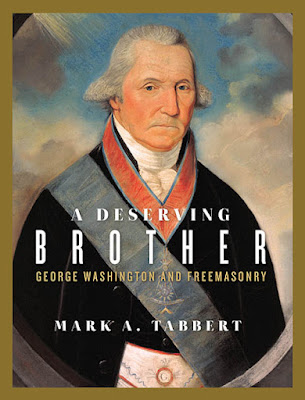
Both of these knowledgeable Brothers have held unique positions over the last couple of decades, and as Masonic authors and researchers, neither of them could be considered to be a slouch. Mark Tabbert is a past president of the Masonic Library & Museum Association, a former curator for the Scottish Rite NMJ's museum in Lexington, Massachusetts, and most recently, curator at the George Washington Masonic National Memorial's museum in Alexandria, Virginia. He's the author of American Freemasonry: Three Centuries of Building Communities and most recently, A Deserving Brother: George Washington and Freemasonry

Robert L.D. Cooper

Robert L.D. Cooper served for almost 30 years as the curator for the Grand Lodge of Scotland's Library & Museum in Edinburgh. He the author of The Red Triangle, an indispensable work about the history of anti-Masonic movements and persecutions; the outstanding Rosslyn Hoax, that examines the many legends and theories about the Knights Templar, Freemasonry, and the enigmatic Rosslyn Chapel in Scotland. Both of these brethren are members of the Society of Blue Friars, an honorary organization of  Masonic authors.

Because they are academic historians and not just a couple of aged, obsessive Masons with a warm glow in their hearts for dusty old Masonic books (not that there's anything wrong with that), they approach their reviews by discussing the pedagogical, academic value of the works themselves. Are they well-researched and well documented? Are they truthful? Are they backed up by useful, in-depth footnotes and references? Are their premises serious, looney, or just plain wishful thinking? Are they really thought-provoking, or are they so far off the rails that you'd be better off using them to prop up a rocky table leg? And what makes a more useful and more trustworthy Masonic book, from an academic point of view, anyway?

Consequently, there's been a good mix on the podcast so far – Masonic classics like Joseph Fort Newton's The Builders and David Stephenson's excellent Origins of Freemasonry: Scotland's Century; academic works like Mark C. Carnes’ Secret Ritual and Manhood in Victorian America and Steven C. Bullock's indispensable Revolutionary Brotherhood: Freemasonry and the Transformation of the American Social Order, 1730-1840. Over in the deep end of the pool are the more... let's call them speculative books, like Stephen Knight's paranoid fairy tale book The Brotherhood: Secret World of the Freemasons (the completely unsubstantiated book of nonsense that launched England into a three-decade anti-Masonic fervor) and David Ovason's inexplicably popular astrological Secret Architecture of our Nation’s Capital: The Masons and the Building of Washington, DC. 

So imagine my surprise when Mark and Robert featured my second book:  Season 1, Episode 16 reviewed Solomon's Builders: Freemasons, Founding Fathers and the Secrets of Washington, D.C., which was written some 14 years ago. After all this time, and despite the panicked circumstances under which it was written, I was pleasantly surprised that they felt it still was of value today.


Let me explain.

Back in the early 2000s when the world was young and dinosaurs ruled the Earth, the entire publishing industry was attempting to cash in on novelist Dan Brown's as yet-unreleased sequel to The DaVinci Code, rumored at that time to be entitled The Solomon Key (eventually The Lost Symbol). By 2003, Da Vinci Code was already the 6th most popular book in the history of the English language, and readers all over the world were breathlessly awaiting the next entry in his series of stories featuring Harvard University 'symbologist' (whatever that is), Robert Langdon. While speaking off the record at a small gathering of local citizens in his New Hampshire hometown, he let it slip that the title of his next book would likely be The Solomon Key and be about Freemasons in Washington D.C. That bit of seemingly innocuous news turned into an international headline, and the feeding frenzy began. 

Stacks of books about the Masons were hurled out by the mainstream press; History Channel shows began talking about the Masons; everyone from National Geographic to the stuffy US News & World Report published expensive, glossy, full-color specialty magazines about Freemasonry, the Knights Templar, old cathedrals, the Illuminati, Bohemian Grove, and anything else they could possibly heave into the mix that sounded ancient, mysterious, spooky, and secret society-ish. Then, Disney rushed the Masonic-themed movie National Treasure into production, and it was released in November 2004. National Treasure would never have been made if not for Dan Brown's tardiness in delivering his sequel manuscript; and my own Freemasons For Dummies would never have been published if National Treasure hadn't been the #1 box office hit of 2004. In fact, Bob Cooper's own book, Cracking the Freemasons Code, was released during this same period for much the same reason – to get a jump on what Masons everywhere feared might be bad fictional treatment by Brown's book.

So. In 2005 I was contacted by Ulysses Press, a small, independent publisher located in Berkeley, California, and asked to write a book that would attempt to second-guess Brown's still as-yet unknown story points, debunk any sort of Masonic claims that he might include in his sequel, and explain his as-yet unseen storyline—whatever that might be—from the standpoint of the Masonic fraternity. And I was given a whopping four months to deliver the manuscript (a month longer than Wiley gave me to write Freemasons For Dummies). 

It hit on the Masonic membership and activities of several of America's founding fathers, talked about possible Masonic influences on the Constitution, and explored the run-up to the Enlightenment period in England and how the Freemasons sprung from it. It detailed the Masonic cornerstone ceremonies for the White House, the U.S. Capitol building, the Washington Monument and more. Chapters debunked some of the most common fantasies about the Masons – Albert Pike, All-Seeing Eyes, the 'Masonic' symbols on the dollar bill and why they aren't actually 'Masonic', and, of course, the nonsense about the supposed 'Masonic' patterns in the streets of America's federal city. The back half of the book was a Masonic travel guide to Washington D.C., listing the many Masonic halls around the city, current and former grand lodge locations, Alexandria's George Washington Masonic National Memorial, the Scottish Rite SJ's House of the Temple, the city's original 'cornerstone', plus other noteworthy landmarks, buildings and monuments with both real and imaginary Masonic connections. 

Solomon's Builders still holds up pretty well 18 years after it was published, if I do say so myself.  When I wrote it, I tried to keep the specific Brown-related mentions to a minimum so it wouldn't become obsolete. I'm gratified that it still remains in print today, because so many other really excellent books that were released about the same time by respected Masonic authors have gone out of print and vanished into the anonymity of Half-Price Books metaphysical section. 

Masonic/Dan Brown mania had a big die-back after his The Lost Symbol  was finally published in 2009 – fortunately for us, the Masons actually turned out to be the good guys in the book, and not the evil, bald-headed, cat-stroking supervillains most of us feared. And the fraternity did have a momentary uptick in men joining lodges who were inspired either by Brown's novel or by one of the myriad Masonic books that came out at the time. But that faded after a couple of years.

Yet, Solomon's Builders remains a decent, handy Masonic guide to D.C. today. Albert Pike's statue in Judiciary Square did get yanked down in the fevered summer of George Floyd riot-related statue toppling. And the city of Alexandria and the parks department put some decent money into sprucing up the area around the first boundary marker for the District of Columbia that was installed and dedicated by Freemasons. And a few other changes have happened throughout the city. But most of the information is still valid today. So, many thanks to Mark and Bob for hitting it with a spotlight again. I'm honored just by the mere mention.

Tuesday, February 13, 2024

Masonic Week 2024: John Bizzack Named 112th Blue Friar


by Christopher Hodapp

WB John W. Bizzack, Past Master of Kentucky's historic Lexington Lodge No. 1 and one of the driving forces behind the Rubicon Masonic Society, was named as the 112th member of the Society of Blue Friars at Masonic Week in Arlington, Virginia last Friday.

The Blue Friars were founded in 1932 for the express purpose of recognizing outstanding Masonic authors throughout the world. It is arguably the smallest of Masonic organizations, and possibly the oddest, since it has no ritual and few rules. Traditionally, the Society convenes a Consistory each year during Masonic Week in the Washington, D.C. vicinity to induct a new Friar, and its gatherings are open to all Master Masons. Each year's Consistory is a highlight of Masonic Week, and a new friar may be announced at the discretion of the Grand Abbott.

Friar Bizzack is the author of numerous books, including 
Island Freemasonry, an examination of the influential role that Masonic lodges played in civilizing the frontier during America's early westward expansion, and how modern observant-styled lodges can play much the same part today by holding members to higher standards and educating new generations in civility, self-improvement, self-governance and tolerance. A thread that winds throughout all of John's works is that in fewness there is strength. A smaller fraternity will ultimately be a better one, and the huge membership numbers of the past ultimately damaged Masonry's core mission in North America. 

Some of Friar Bizzack's other works include Taking Issue, Sins of Our Masonic Fathers, and Bending Granite

Normally, the new friar is expected to present an original research paper at the Consistory. Unfortunately, John was unable to attend due to upcoming surgery, but his paper on the subject of measuring the success of Freemasonry was read by Friar Adam Kendall.

Grand Abbott Arturo DeHoyos has named Philalethes Magazine editor Shawn Eyer as the new Deputy Grand Abbott for the Blue Friars, since former Deputy Abbott Mark Tabbert moved away from the Washington D.C. area last year and took up residence in Iowa. Mark has returned to his midwestern roots, and living a more leisurely life out here in the states that begin with 'I', where the greatest dilemmas we face are over what to wear to the weekly Corn God sacrifices...

NOTE: This story originally credited Shawn Eyer as reading Friar Bizzack's paper. In fact, it was Friar Adam Kendall who did the honors. Apologies for the error.

Saturday, November 18, 2023

UPDATE: VENUE CHANGE FOR CONNECTICUT EVENT NOVEMBER 29th!


by Christopher Hodapp

UPDATE: THE VENUE FOR MY CONNECTICUT SPEAKING EVENT HAS BEEN CHANGED!

I'll be speaking next Wednesday, November 29th at the Grand Lodge of Connecticut's 5th District Blue Lodge Council. When I originally posted this event, I had thought it was to be at Unity Lodge No. 148 in New Britain. However, the venue has changed. It will be Wednesday evening at the East Street Eatery at Farmingbury Hills Golf Club, located at 141 East Street, Wolcott, Connecticut. 

The event will be hosted by Wolcott Lodge No. 146. Dinner will begin at 6:30PM and the program will begin at 7:30PM. Dinner: $20 contribution. Reservations required due to limited seating. Please make all reservations via the BLC email address: BLC5Reservations@gmail.com

For further information, contact: WB Steve Gorman, Secretary BLC5 at 860.916.1162 (cell/text) or by email at roughashlar@ctfreemasons.net

Click to enlarge

It's been quite a few years since I've been in Connecticut, and I'm truly looking forward to being there. I've actually had the pleasure of speaking in their 5th District at New Britain's Unity Lodge twice before - first in 2008, and again in 2018. So they've got no one to blame but themselves for inviting me a third time. It's not like they weren't forewarned.

Barring any undue mischief by the airlines, I'll have books with me in case anyone wants a copy disfigured by my usual childish, illegible scrawl.

Monday, February 21, 2022

Book Review: 'A Deserving Brother: George Washington and Freemasonry' by Mark Tabbert


by Christopher Hodapp

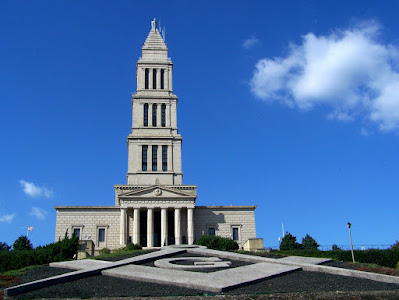
When the George Washington National Masonic Memorial in Alexandria, Virginia was first proposed in 1910, it was designed as a magnificent monument to America’s most famous Mason, along with being a safe and secure repository for priceless Masonic objects owned by Virginia’s Alexandria-Washington Lodge 22 that were associated with Brother George. The lodge possessed an original, contemporary portrait of Washington showing him dressed in Masonic regalia. And they had a collection of irreplaceable items which had originally been owned by Washington or utilized by him for the cornerstone ceremony for the U.S. Capitol building in 1798. 


But a fire at the lodge in the late 1800s resulted in the loss of several their priceless objects. So the Memorial was proposed as a national Masonic project that would be supported by all regular, recognized grand lodges in the U.S. in order to more safely house and display these almost sacred items for the public and for Masons alike. Today, the Memorial houses one of the largest collections of Washington-associated memorabilia outside of his estate, Mount Vernon and the Smithsonian Museum.


Many years ago, Mark Tabbert told me of an ongoing project he was working on. He has been the head of collections at the Memorial for many years, and the physical resources at the Memorial are preserved for future historians and Masons. Like the fairytales of Parson Weems’ chop-down-the-cherry-tree “biography” of the general, president and founding father, Masonic tall tales about Washington began propagating with great abandon after his death, and continue through today. 

Despite the endless (and frequently bogus) claims some Masons have made over the years about Worshipful Brother George and his enthusiasm for the fraternity, the truth is that Washington really only provably attended a handful of lodge meetings in person throughout his entire lifetime. Tabbert has always insisted that it is vital to honestly understand the role Freemasonry legitimately played in Washington’s life (and conversely, the role he played for the fraternity) instead of just breezily and blindly accepting legends that were told, retold and embellished by well-intentioned brethren over the last two and a half centuries. 


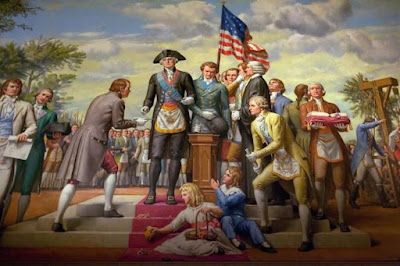
For instance, although Washington was named as the Master of Alexandria Lodge when it was chartered, he never actually sat in that position, or even as a sideliner in that lodge, and the famous drawings and paintings of him dressed in a jewel and apron as the Worshipful Master and presiding over a meeting were simply artistic flights of fancy on the part of painters and sculptors, and nothing more.

The result of Mark’s ongoing labors over the last decade is an ambitious new book being released this week by the University of Virginia Press: A Deserving Brother: George Washington and Freemasonry. In it, Tabbert has researched quite literally every single reference, claim, rumor, letter, declaration, newspaper article or offhanded remark that ever connected George Washington to the Masonic fraternity. Every known bit of physical evidence associated with Washington and his Masonic membership is presented in the book in chronological order, while explaining, debunking or ignoring the unsubstantiated claims. Tabbert’s intention has been to correct the historical record and create the standard reference work for future researchers on the trail of Washington and the influence Freemasonry may or may not have had on his life and his character.

Freemasonry during America’s formative years was instrumental in reinforcing the notion of a non-secular, “civic religion” that was so vital to the creation and success of this new constitutional, democratic republic. Washington’s membership in the fraternity was influential in both directions. In practical terms, Masonry demonstrated mutual cooperation, respect, religious toleration, and social egalitarianism that informed Washington’s understanding of democracy. And his membership in the fraternity gave Freemasonry a status that few other organizations could achieve at the time. His Masonic membership and support drew more and more merchants, community and business leaders, and men of all political and religious persuasions to join its ranks.

A Deserving Brother straddles the line between being an historical narrative and an itemized, encyclopedic catalogue. An extensive introductory chapter by Washington historian Edward G. Lengel gives a general chronological sketch of George’s life and where it coincided with the Masonic fraternity. But the main body of the work is its meticulously researched catalogue. The book is divided into several major periods of Washington’s life: as a British subject; General and Commander in Chief; private citizen; President of the United States; and his retirement and death. Each chapter is introduced by a general outline of the time period covered. Following that, descriptions of each reference include photos, dates, locations, circumstances, and in the case of letters and other documents, transcriptions of the text itself. In an effort to be as complete as possible, Mark has included correspondence whenever someone would send Washington a note, a Masonic book or other gift related in any way to the fraternity. And to aid future researchers, each item’s provenance and current location today are provided.

Notably, Tabbert has been careful to include verified details of several important, oft-cited milestones concerning Washington and the Masons, including his first inauguration in New York City and the circumstances involving the famous St. John’s Lodge Bible upon which he took the oath of office; the Masonic cornerstone ceremony of the U.S. Capitol in 1793 and the surviving working tools and related objects used at that event; and details of Washington’s Masonic funeral service in December 1799. An epilogue goes on to cite references about Washington used both by Masons and anti-Masons in the 1800s, as well as celebrations held by Masons in 1899 on the 100th anniversary of his death, and in 1902 for the 150th anniversary of his raising as a Master Mason. The major books written about Washington’s Masonic experiences and involvement are described, as well as the formation of what would become the George Washington National Masonic Memorial Association. 


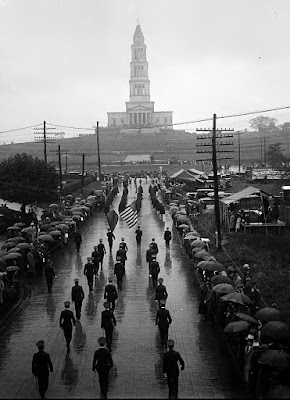
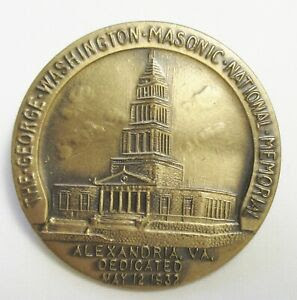
The Memorial itself was officially dedicated in 1932, some 22 years after it was first proposed, and Tabbert provides a synopsis of its mission and exhibits then and now, as well as an explanation of the changes that have occurred there since its opening.

In short, Mark Tabbert’s A Deserving Brother is without question the most extensive, detailed and truthful accounting of Washington and his Freemasonry as he lived it. As an historical research tool it is invaluable, and will unquestionably be the most important reference work on George Washington and the fraternity available for decades to come.

This book is being distributed by Macoy Publishing under a special partnership with the George Washington Masonic National Memorial Association. Priced at $34.95 for the 304-page hardback edition, CLICK HERE TO ORDER.

Friday, August 27, 2021

Templar Eye Foundation Offers Historic 19th Century 'Knight Templar Monitor' Reprint


by Christopher Hodapp

UPDATED 8/31/2021 at 11:30PM: The original version of this post incorrectly stated that this is a leather-bound edition. I have also added more ordering options at the end of the story.

In the late 1880s, Sir Knight George Cooper Connor of Tennessee made a florid, handwritten transcript of the rituals of the Masonic Knights Templar Orders of the Red Cross, Malta and the Temple for use in the Grand Commandery of Tennessee. His manuscript later became a basis for the development of the adopted Templar Orders we know today. Now researchers and students of the evolution of Masonic-related rituals have a beautiful new historical reprint to pore over, thanks to the Knights Templar Eye Foundation and Lookout Commandery No. 14 in Chattanooga, Tennessee.

This hard-bound reprint of George Cooper Connor's Templar Monitor was designed by Brother Steve Adams, who has designed and illustrated several recent books for the Scottish Rite Research Society. The Monitor includes commentary from PGC George Marshall, KGT, on the ritual of each of the Orders, and the publication reflects the tireless efforts of SK Piers Vaughan, KCT. Like some recent Scottish Rite NMJ publications of the Francken Manuscript and several early French Masonic manuscripts, this volume features Connor's beautifully handwritten text and illustrations on one page, and a modern typeset version with new, clearer graphic illustrations and diagrams on the facing page. 


Unlike the relatively simple choreography of degree floor work in a Craft Lodge, the Templar Orders require more cast members and much more complexity of movement with the candidate throughout the asylum. Consequently, Cooper's original manuscript included many hand-drawn watercolor images relating to staging each of the Orders, along with illustrating the design of the jewels of the Orders.


Connor served as Right Eminent Grand Commander and Most Worshipful Grand Master of Masons in Tennessee. He later served as Grand Recorder of the Grand Commandery of Tennessee as well as serving on several committees of the Grand Encampment of Knights Templar US. You will find more information about him in the preface to the book, along with items regarding his Templar Funeral Service and the Templars and dignitaries from around the nation who attended his funeral.

There is a limited supply of the Templar Monitor, and it is being offered as a fundraising item for the Knight Templar Eye Foundation. The price is $150 and 100% of the proceeds go directly to the KTEF. Please note that there are no online sales offered at this time. To purchase it, you must CLICK HERE, print, and mail the order form along with a check or money order, or fax the form with your credit card information. I'm only reporting it.

I'm also informed that it can be ordered by phone from the Foundation office at 214-888-0220.

(Images are shamelessly snagged from Steve Adams' Facebook page.)

Friday, May 21, 2021

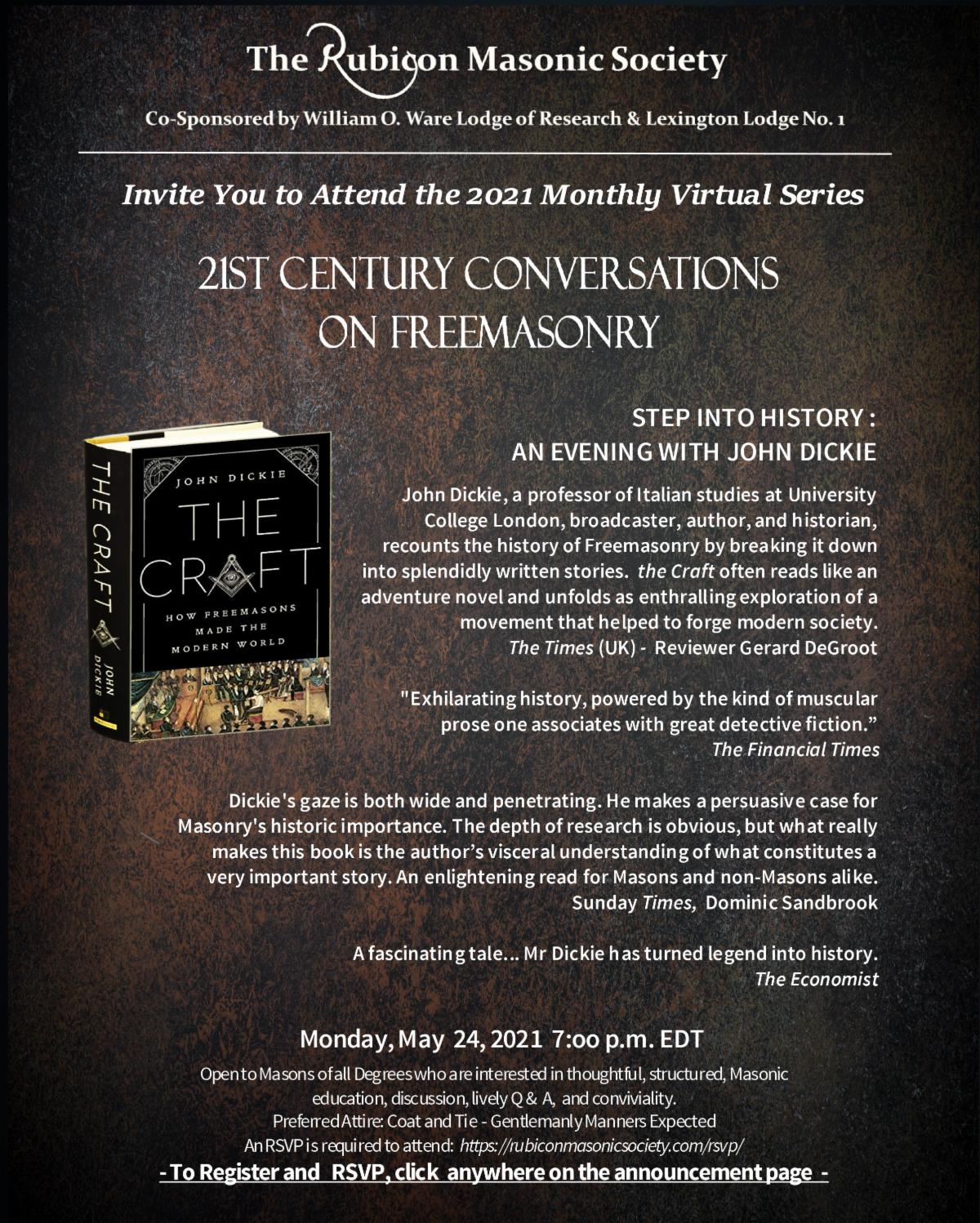
Monday: Conversation With John Dickie, Author of 'The Craft'


by Christopher Hodapp

On Monday, May 24th, the Rubicon Masonic Society, Kentucky's William O. Ware Lodge of research, and Lexington lodge No. 1 will feature an online presentation with Mr. John Dickie, the author of the recent book, The Craft - How The Freemasons Made the Modern World. The program will begin at 7:00 p.m., EST.

I've been remiss for some time now in not mentioning the ongoing video presentations of Rubicon, the WOW LOR, and Lexington Lodge. There continues to be outstanding work and leadership coming out of Lexington, Kentucky, and they have been putting on outstanding video presentations since the COVID shutdowns began last year.


If you haven't read Dickie's The Craft, you should if you have any interest in learning about just how important Freemasonry has been throughout its centuries of existence.

The press' reaction to The Craft has been remarkably unusual for these days. When it was published last fall, English reviewers kept their usual anti-Masonic sniping to themselves and generally praised the book as being informative, evenhanded, and "eye-opening" (in a GOOD way). The book covers a pretty wide breadth, telling the history of the Craft since the 1500s by highlighting various individual Masons (and occasional non-Masons) who influenced its development. Considering the scope of the subject matter, Dickie does a good job of placing the fraternity in the context of the wider society surrounding it in different times and places. As Masons, we often have a bad case of tunnel vision by failing to look at the larger picture of what was happening in society in any given period that had big impact on the fraternity. 


To answer the obvious question, John Dickie is not a Mason — his grandfather was, but he is not a Mason himself. He is a University College of London Professor of Italian studies, and the author of several books about the Italian Mafia, most notably, The Cosa Nostra (2005) and Blood Brotherhoods (2014). 


UPDATE MAY 25, 2021


Sunday, February 28, 2021

Mille Regretez


by Christopher Hodapp

Deepest apologies for no updated stories here for the last couple of weeks. Alice and I are in the final deadline week for our new book project. 

Folks have asked what we're working on, and since Wiley has now put up the pre-sale listing on Amazon, there's no point being coy about it anymore. RVs and Campers For Dummies is due to be officially released on June 24th, 2021.

The Wiley Publishing folks operate a well-oiled machine, and they have a definitive working methodology from which we cannot deviate. So we're burrowed in, wrapping up the manuscript and photo submissions. What that means in practical terms is wake up, type, forage for food, type, pass out, wake up, type, pass out, rinse, repeat. Phone calls and emails go unanswered, and if we could teach the poodle to use the can opener, we'd have her cook something. 

Once we've sent off the last of it, we get three weeks of 'author review,' which means the editors pore over the manuscript, make corrections, edits, and suggestions, rearrange paragraphs and whole chapters, put it back together again before the art and production teams do their stuff. And then we get to crawl outside, and if we see our shadows, we know there are six more weeks before publication.

Monday, December 21, 2020

Revived Masonic Book Club Announces First New Volume


by Christopher Hodapp

Back in September, it was announced that the Masonic Book Club, which went defunct in 2010, was being resurrected under new management by Brent Morris and the Scottish Rite Southern Jurisdiction. 

Today it was announced that the first volume of the newly reactivated Masonic Book Club is now ready for pre-publication purchase: The Perfect Ceremonies of Craft Masonry and the Holy Royal Arch. The 392-page hardback book will include marbled covers, a satin ribbon, and rubricated title pages. The Perfect Ceremonies of Craft Masonry and the Holy Royal Arch was published in 1871 and the rituals are considered the lineal ancestors of the official Emulation ritual and lectures used in the United Grand Lodge of England today. 

When the two rival grand lodges at work in England (Antients and Moderns) decided to bury the hatchet and merge to become the United Grand Lodge of England in December of 1813, their separate rituals had diverged over the previous century. A Lodge of Reconciliation was named and spent the next two years developing a combined ritual that would be acceptable to both sides. They didn't demand that all lodges knuckle under to some new 'authorized ritual.' Instead, they developed a ritual that contained what they felt were the essential aspects of the Masonic degrees and openings and closings. Lodges were permitted to include their local variations in their ritual work, as long as they contained the essentials laid down by the Lodge of Reconciliation in its final versions approved by the UGLE in 1816.

In 1823, the Emulation Lodge of Improvement was formed by a group of skilled ritualists from both the former Antients and Moderns grand lodges, who were also well versed in the newly adopted ritual being promulgated by the UGLE's official Grand Steward's Lodge system. Their members were some of the most respected ritualists in England, and their goal was to was to instruct the letter-perfect ceremonies through lectures and demonstration. 

To this day, the Emulation Lodge of Improvement is the respected authority for approving skilled Preceptors for UGLE's lodges of instruction throughout its jurisdiction.


This new Masonic Book Club edition of The Perfect Ceremonies of Craft Masonry and the Holy Royal Arch picks up numerically from when the original MBC was dissolved several years ago - this book will officially be Volume 42. 


The MBC pre-publication price is $25 if ordered before January 21st, 2021 – the book will retail for $35 after that date, all plus shipping and handling.

Here are the important details from their announcement today:
    • The pre-publication window will be open from December 21, 2020 until January 21, 2021, at 11:59 p.m. The MBC pre-publication price is $25, and the book will retail for $35, all plus shipping and handling.
    • We only will accept pre-orders placed using the MBC pre-order online form. Pre-orders are not available through the Scottish Rite store.
    • If there are enough pre-publication sales, MBC members will be notified, the book will be printed, and volumes will ship about March 29, 2021.
    • Your credit card will be charged immediately; if there are not enough pre-publication sales, refunds will be credited on or about January 28, 2021.
If you have any questions, please visit the "FAQs" section on our MBC web page or email us at mbc@scottishrite.org.

We sincerely apologize, **but due to GDPR complications, we can neither accept credit card charges from nor ship to the EU/EEA, at this time**. If this situation applies to you, we suggest that you have a friend outside of the EU/EEA order and receive the book for you.

One other note from the ordering site. As long as there are sufficient pre-orders for the announced book, it is expected to ship at the end of March 2021. If there are insufficient orders, your money will be refunded.

Tuesday, November 10, 2020

Special Promotion for 'Freemasons For Dummies' - Now Through December


by Christopher Hodapp

Over the last couple of months, I have been working with the good folks at Wiley Publishing to find a way to offer a substantial discount to lodges and grand lodges who wish to order copies of Freemasons For Dummies for their new petitioners and candidates, without being required to buy large quantities. 

For a limited time you, your lodge or your grand lodge can order multiple copies of the paperback edition of Freemasons For Dummies directly from the publisher at 30% off the $19.99 list price. This special offer will extend from now through December 31st, 2020.

Because of the COVID virus shutdowns, Masonic lodges throughout the United States have been largely forbidden from meeting in person and conferring degrees on new candidates. 
In many states, Masons have been prevented from conferring degrees at least until the end of the year. At the other end of the situation, thousands of interested men who have been trapped at home by the shutdowns have been contacting grand lodges directly or logging on to the www.BeAFreemason.com website expressing new interest in joining the Masonic fraternity. The result has been a growing group of potential new Masons stalled and unable to move forward until states fully reopen and lodges can once again meet together in person. 

Freemasons For Dummies is the perfect introductory book for potential new Masons. 

So here are the gory details for this deal:
To get the 30% discount, you MUST order through the Wiley.com website at: https://www.wiley.com/en-us/Freemasons+For+Dummies%2C+2nd+Edition-p-9781118412084
OR call their order line directly Monday thru Friday at ‭(800) 225-5945‬
Use the following private Promo Code: MAS20
There is NO minimum number of books you must order for the 30% discount. It works even for single copies (but do watch out for their postage fees).
The Wiley folks were kind enough to extend this discount all the way through the end of this year.
Be aware that this 30% discount applies only to the paperback book, not to the audio, Kindle or other electronic editions. It also doesn't apply to any foreign language editions. Also, this discount cannot be used at Amazon, Barnes & Noble, or anywhere else. Only through Wiley's customer service department.
Several grand secretaries have told me they have been purchasing Kindle gift codes from Amazon in advance and sending one as a gift to men who who complete their degrees. Unfortunately, I wasn't able to secure a discount code for Kindle versions from Wiley because those have to come from Amazon. But I'm still trying to find an alternative.

If your lodge or grand lodge is looking for even more of a discount (such as for a one-day class or other large group event), they can offer the following bigger price breaks:
  • 50-99 copies = 35% discount
  • 100+ copies = 40% discount
Let me know if you have that kind of interest, and I'll put you in touch with the marketing office.


https://www.wiley.com/en-us/Freemasons+For+Dummies%2C+2nd+Edition-p-9781118412084


Wiley Can Make Customized Editions

Don't forget that Wiley has a special branding department that can work with your Grand Lodge to create a customized version of Freemasons For Dummies specific to your jurisdiction. It makes the perfect welcome gift for new members. In fact, in 2011 the Grand Lodge of New Mexico and their Lodge of Research created their own customized edition of the book that was given to all of their Entered Apprentices.

What this means is that your Grand Lodge, education committee, or research lodge can have its own special edition of the book for your members, provided you are able to order in sufficient quantities. Your official seal or other artwork specific to your Grand Lodge could be featured on the outside, and a message from the Grand Master, Grand Lodge Education Committee, Lodge of Research, or other official group could be printed on the inside covers. The book is also a popular one for non-Masons, and your members could be encouraged to pass it to friends or family who might have an interest in the fraternity—the cover could include the Grand Lodge contact information, internet address, phone numbers, etc. Of course, it's also popular as a gift given by many lodges to new Masons. The inside cover might include a custom plate in which to inscribe the members’ name and lodge, and degree dates.

Both Wiley and I are willing to work with you on design, artwork and content. There is one caveat: No changes can be made to the text of the book itself, so if there is something in the book's current text that is NOT correct or applicable for your jurisdiction, that part can’t be changed. Only the inside and outside covers can be altered.

The retail price of Freemasons For Dummies is $19.99, but you can save between 45%-50% off the cover price, depending on the quantity being printed. The minimum order for a custom version is 1,000 books ($11 per copy or 45% off), with an additional price break at 2,000 copies ($10 per copy, 50% off). So obviously it behooves you to keep any messages or information generic enough so that it doesn't become dated before you use them all.

If you have any interest in this program, please do not hesitate to contact me directly, or Molly Daugherty, director of Custom Solutions and Brand Licensing for Wiley Publishing in Indianapolis at 317-572-3465, or at Mdaugher@wiley.com