Let's celebrate the historic past, while embracing family, fellowship, and looking forward. The celebration will also reveal the Grand Master 2026 Project, marking an exciting milestone for our fraternity and our future. Come celebrate a defining moment in American history with food, fun, and festivities for all ages as we honor the past, enjoy the present, and build toward what's next. There may even be a special commemorative gift for those who attend.
Thursday, May 14, 2026
America 250 Celebration June 20 at Indiana's Compass Park
Let's celebrate the historic past, while embracing family, fellowship, and looking forward. The celebration will also reveal the Grand Master 2026 Project, marking an exciting milestone for our fraternity and our future. Come celebrate a defining moment in American history with food, fun, and festivities for all ages as we honor the past, enjoy the present, and build toward what's next. There may even be a special commemorative gift for those who attend.
Friday, June 13, 2025
250 Years of Prince Hall Freemasonry in Boston
In 1775, Boston’s Prince Hall broke Freemasonry’s racial barrier. His global movement marches on.
* I say "the longstanding story" for a reason. Several years ago, researcher John Hairston (a Prince Hall Mason in Washington state) published Landmarks of our Fathers: The Critical Analysis of the Start and Origin of African Lodge No. 1 in which he painstakingly looked into the existing evidence of the formation of African Lodge. What he found alters the dates of the degrees of Hall and his 14 brethren to 1778, after the Revolution was already underway, and shows that the Irish military lodge had nothing to do with the event. Former sergeant John Batt, who conferred their degrees, was a dicey character who had left the British Army and may very well have been a degree peddler who took advantage of the situation and duped the black men into thinking he had authority he didn't possess. None of that alters the ultimate legitimacy of African Lodge once it received its English charter, and certainly has no bearing on the long heritage of Prince Hall Freemasonry, but calling into question anything about their founding risks the slaughter of sacred cattle. The 1775 date was loudly defended for more than 150 years as white Masons refused to accept the Prince Hall/African Lodge story as legitimate and would use any excuse or deviation from the original story to attack them. There's probably no harm in the general acceptance of the 1775 story when it comes to legendary heritage. Nevertheless, Brother Hairston's evidence should not be ignored or discounted by serious researchers and historians.
Massachusetts Masons To Rededicate Bunker Hill Monument June 16th
![]() |
| Photo: National Parks Service |
From the Charlestown Patriot-Bridge website yesterday:
On Monday, June 16, Charlestown will become the center of national remembrance as the Bunker Hill Monument Association leads a full-day commemoration marking the 200th anniversary of the laying of the Bunker Hill Monument’s cornerstone and the 250th anniversary of the Battle of Bunker Hill.
Titled “Two Centuries of Glory,” the event will blend pageantry, history, and patriotism. The day begins with a ceremonial procession at 9:30 AM from the Charlestown Navy Yard, featuring more than 500 participants — Freemasons in full regalia, veterans, military groups, civic leaders, and historical reenactors — retracing the symbolic path toward the monument.
At 10:00 AM, a traditional Masonic cornerstone-laying ritual will take place at the base of the Bunker Hill Monument, replicating the original 1825 ceremony that drew thousands and helped define the commemorative landscape of early America. Attendees will witness stirring musical tributes form 20 musicians and historical readings, including portrayals of Daniel Webster and the Marquis de Lafayette — key figures in the monument’s founding.
The celebration continues in the evening at 6:00 PM at the Old South Meeting House with “It Has Begun!” — A Grand Monumental Celebration. This culminating event will include authentic spirited toasts each followed by a lively interpretation form the Dee Orchestra and Chorus of the orginal odes and songs that 60,000 people heard in 1825. Lafayette’s 1825 tribute to freedom and liberty, read aloud once more in the very city where American independence first found its voice will be followed by the Marseillaise and the Star Spangled Banner.
Presented by the Bunker Hill Monument Association in collaboration with Boston National Historical Park, The Grand Lodge of Masons in Massachusetts, Revolutionary Spaces, the American Friends of Lafayette, and additional partners, the day promises to be a fitting tribute to two centuries of American memory and the enduring legacy of Bunker Hill.
For details about the Grand Lodge's involvement and for contact information, visit the Grand Lodge of Massachusetts event page HERE.
Unfortunately, the article doesn't explain just how much the Freemasons in the Boston area really had to do with the battle and with the erection of the monument itself two centuries ago, in 1825. Dr. Joseph Warren was the Master of St. Andrews Lodge and Provincial Grand Master under the Grand Lodge of Scotland (St. Andrews originally started out as a completely independent, un-chartered lodge of its own, but finally took enough flak over it that they obtained a charter from the GL of Scotland to give itself more legitimacy.) Warren died leading revolutionary troops against the English on Breeds Hill. After the revolution, King Solomon Lodge purchased the land in 1783 and erected a monument to Warren and the other Masons who died there with him during that desperate fight.
![]() |
| Photo: National Parks Service |
Sunday, July 14, 2024
New Book by Chris Ruli: 'Brother Lafayette' Available for Presale
Now, author and Washington DC Mason Christopher Ruli has done a deep dive into the itineraries, letters, diaries, minute books, and press reports of the time to create a full and definitive account of Brother Lafayette’s Masonic contacts and travels throughout his famed trip. The result is Brother Lafayette: the Marquis de Lafayette's Masonic Travels in America 1824-25, a detailed, fascinating, and eminently absorbing travelogue with a uniquely Masonic focus.

Just as an added aside, the American Friends of Lafayette have been preparing for celebrating the bicentennial of Lafayette's farewell tour, erecting historical markers, arranging for events all along the 6,000-mile route of his original trip. Festivities will begin August 16, 2024 in New York City and wind up at Mount Vernon in September 2025. If you live or belong to a lodge in an area that Lafayette actually visited, you should consider erecting a permanent historical marker describing the visit. Or if your city or town is already doing so this year, be sure your lodge contacts the local group arranging for the marker and ask if your lodge or grand lodge can take part in the dedication and other festivities.
Monday, May 06, 2024
MAGI: Robert Cooper and Mark Tabbert Launch Masonic Book Review Podcast
![]() |
| Mark Tabbert |
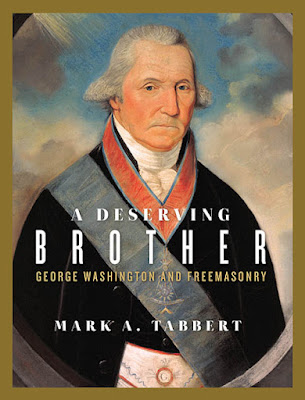
Both of these knowledgeable Brothers have held unique positions over the last couple of decades, and as Masonic authors and researchers, neither of them could be considered to be a slouch. Mark Tabbert is a past president of the Masonic Library & Museum Association, a former curator for the Scottish Rite NMJ's museum in Lexington, Massachusetts, and most recently, curator at the George Washington Masonic National Memorial's museum in Alexandria, Virginia. He's the author of American Freemasonry: Three Centuries of Building Communities and most recently, A Deserving Brother: George Washington and Freemasonry
![]() |
| Robert L.D. Cooper |
Saturday, November 11, 2023
December 15-17: Masons To Celebrate Boston Tea Party's 250th Anniversary in Grand Style!
Friday, December 15, 2023
(Open to the public)
A Historic Tavern Tour has been created in collaboration with Revolution 250, which is an organization that the Massachusetts Historical Society created to support the commemorative events leading up to 2026.
(Open to Freemasons, their families, and invited guests)
If visiting from another jurisdiction, attend St. John's Lodge's annual installation. St. John's Lodge was chartered in 1733 and is the oldest lodge in the Western Hemisphere.
Saturday, December 16, 2023
(Open to the public free of charge)
We will host a world-class speaker symposium at the Grand Lodge beginning at 8:30 a.m. and ending at 5:00 p.m. Through the generosity of our event sponsors, we can provide the events to the public at no cost.
- 8:30-9:10-Dr. Brooke Barbier "Radicalizing John Hancock: The Tea Act and the Boston Tea Party."
- 9:15-10:00-RW Walter Hunt "Freemasonry Before the Revolution"
- 10:15-11:20-Boston-Lafayette Lodge of Perfection performing "Treason to the Crown"
- 11:30-12:15-Dr. Jayne Triber "Brother Revere: How Freemasonry Shaped Paul Revere's Revolutionary Role"
12:15 -1:00 Break for Lunch
- 1:30-2:00 -Dr. William Fowler "A Fireside chat with famed author Dr. Fowler."
- 2:00-3:00 -JL Bell "How Bostonians Learned to Talk about the Destruction of the Tea."
- 3:00-4:00 -Dr. James Fichter "Tea: Consumption, Politics, and Revolution, 1773–1776."
- 4:00-5:00 -Dr. Ben Carp "Teapot in a Tempest: The Boston Tea Party of 1773."
(For Freemasons and their families)
There will also be opportunities to attend a group tour of a few local historic locations. The historic sites set prices for tours.
Following the symposium, Freemasons can join a procession with the Grand Master from the Grand Lodge to the Old South Meeting House, then to the Boston Tea Party Museum. Retracing the steps of our forefathers 250 years ago. (Registration will be $10 per Brother and include a commemorative apron for the event).
Sunday, December 17, 2023
The Grand Chaplains will lead a non-denominational ecumenical service at the Grand Lodge at 10:00 a.m.
Following the service, there will be a celebratory brunch with the Massachusetts Sons of the American Revolution. Tickets will be $50 and limited to 150 people. This will be held in the Grand Master's Banquet Hall.
To purchase custom swag, please visit this link and order now. Purchases will not be available on the day of the event. The store opens on November 1
For all questions and concerns, contact the 250th Committee at 250committee@gmail.com
Sunday, February 27, 2022
Grand Lodge of Massachusetts Co-Sponsoring Revolutionary War Lecture Series
According to a story in the MetroWest Daily News, the first presentation in the series will be held this Friday through Sunday and will highlight the events that led to the 'Boston Massacre' and its aftermath. This weekend commemorates the 250th anniversary of Dr. Joseph Warren’s first 'Boston Massacre Oration' in 1772.
Crispus Attucks is generally regarded as the first person killed on the night of March 5th, 1770 in what was quickly dubbed the 'Boston Massacre' by the pro-independence press. Six British soldiers and their commanding officer were surrounded and attacked by an angry mob of 400 Bostonians. When one soldier was struck with a club and knocked to the ground, the soldiers opened fire on the crowd, killing five men and wounding six. Revolutionary Mason Paul Revere quickly put together what became the most famous depiction of the event, an engraving that depicted the steely-eyed soldiers firing into the helpless crowd.
The Grand Lodge Massachusetts is marking its 289th anniversary this year. It is the oldest Masonic grand lodge in the Western Hemisphere and the third-oldest in the world. It was chartered in 1733, following the establishment of the Grand Lodge of England in 1717, and Ireland in 1725. Many of the participants in the runup to the American Revolution were Freemasons in Boston, at the English-chartered St. John’s Lodge (the first chartered Masonic lodge in the American colonies, established by the "Moderns" Grand Lodge of England), and the independently established Lodge of St. Andrew (which eventually secured a charter from the Grand Lodge of Scotland, and ultimately became a part of the "Ancients" Grand Lodge in North America).
Each event will display artifacts, documents and period pieces that have never been available for public viewing, such as the lost archives of Warren’s medical diary, the only painting of Warren (by John Copley of the Museum of Fine Arts in Boston) and more.
- “Trial by Massacre” by Dr. Robert J. Allison (Charlestown only)
- “The Ongoing Search for Crispus Attucks” by J.L. Bell (Framingham, New England Historic Genealogical Society, Dedham)
- “The Martyr & the Massacre: The Story of Dr. Joseph Warren” by Christian Di Spigna
- “Women Witnessing a Massacre” by Katie Turner Getty (Framingham, New England Historic Genealogical Society, Charlestown, Dedham)
- “The Boston Massacre and its place on the Road to American Independence” by Jonathan Lane (New Bedford only)
- Friday, March 4, 7:00 p.m. Framingham History Center
- Saturday, March 5, 2:00 p.m. New England Historic Genealogical Society
- Saturday, March 5, 6:00 p.m. Charlestown Historical Society
- Sunday, March 6, 1:00 p.m. Dedham Historical Society & Museum
- Sunday, March 5, 6:00 p.m. New Bedford Masonic Building
Monday, February 21, 2022
Book Review: 'A Deserving Brother: George Washington and Freemasonry' by Mark Tabbert
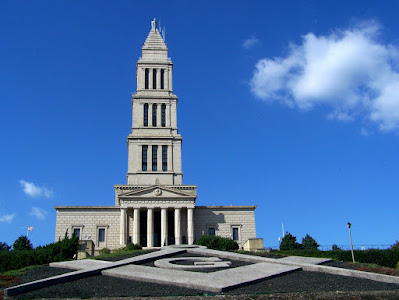
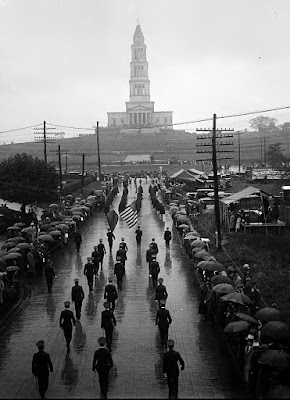
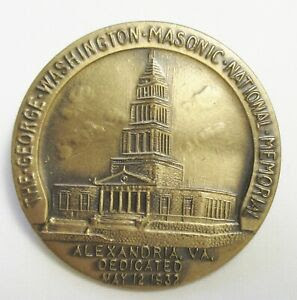
When the George Washington National Masonic Memorial in Alexandria, Virginia was first proposed in 1910, it was designed as a magnificent monument to America’s most famous Mason, along with being a safe and secure repository for priceless Masonic objects owned by Virginia’s Alexandria-Washington Lodge 22 that were associated with Brother George. The lodge possessed an original, contemporary portrait of Washington showing him dressed in Masonic regalia. And they had a collection of irreplaceable items which had originally been owned by Washington or utilized by him for the cornerstone ceremony for the U.S. Capitol building in 1798.
Many years ago, Mark Tabbert told me of an ongoing project he was working on. He has been the head of collections at the Memorial for many years, and the physical resources at the Memorial are preserved for future historians and Masons. Like the fairytales of Parson Weems’ chop-down-the-cherry-tree “biography” of the general, president and founding father, Masonic tall tales about Washington began propagating with great abandon after his death, and continue through today.
The result of Mark’s ongoing labors over the last decade is an ambitious new book being released this week by the University of Virginia Press: A Deserving Brother: George Washington and Freemasonry. In it, Tabbert has researched quite literally every single reference, claim, rumor, letter, declaration, newspaper article or offhanded remark that ever connected George Washington to the Masonic fraternity. Every known bit of physical evidence associated with Washington and his Masonic membership is presented in the book in chronological order, while explaining, debunking or ignoring the unsubstantiated claims. Tabbert’s intention has been to correct the historical record and create the standard reference work for future researchers on the trail of Washington and the influence Freemasonry may or may not have had on his life and his character.
Freemasonry during America’s formative years was instrumental in reinforcing the notion of a non-secular, “civic religion” that was so vital to the creation and success of this new constitutional, democratic republic. Washington’s membership in the fraternity was influential in both directions. In practical terms, Masonry demonstrated mutual cooperation, respect, religious toleration, and social egalitarianism that informed Washington’s understanding of democracy. And his membership in the fraternity gave Freemasonry a status that few other organizations could achieve at the time. His Masonic membership and support drew more and more merchants, community and business leaders, and men of all political and religious persuasions to join its ranks.
A Deserving Brother straddles the line between being an historical narrative and an itemized, encyclopedic catalogue. An extensive introductory chapter by Washington historian Edward G. Lengel gives a general chronological sketch of George’s life and where it coincided with the Masonic fraternity. But the main body of the work is its meticulously researched catalogue. The book is divided into several major periods of Washington’s life: as a British subject; General and Commander in Chief; private citizen; President of the United States; and his retirement and death. Each chapter is introduced by a general outline of the time period covered. Following that, descriptions of each reference include photos, dates, locations, circumstances, and in the case of letters and other documents, transcriptions of the text itself. In an effort to be as complete as possible, Mark has included correspondence whenever someone would send Washington a note, a Masonic book or other gift related in any way to the fraternity. And to aid future researchers, each item’s provenance and current location today are provided.
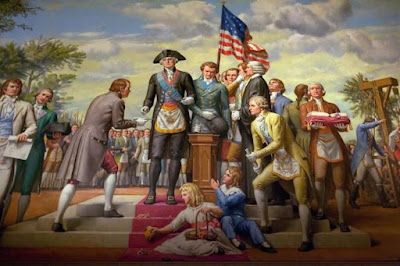
Notably, Tabbert has been careful to include verified details of several important, oft-cited milestones concerning Washington and the Masons, including his first inauguration in New York City and the circumstances involving the famous St. John’s Lodge Bible upon which he took the oath of office; the Masonic cornerstone ceremony of the U.S. Capitol in 1793 and the surviving working tools and related objects used at that event; and details of Washington’s Masonic funeral service in December 1799. An epilogue goes on to cite references about Washington used both by Masons and anti-Masons in the 1800s, as well as celebrations held by Masons in 1899 on the 100th anniversary of his death, and in 1902 for the 150th anniversary of his raising as a Master Mason. The major books written about Washington’s Masonic experiences and involvement are described, as well as the formation of what would become the George Washington National Masonic Memorial Association.
In short, Mark Tabbert’s A Deserving Brother is without question the most extensive, detailed and truthful accounting of Washington and his Freemasonry as he lived it. As an historical research tool it is invaluable, and will unquestionably be the most important reference work on George Washington and the fraternity available for decades to come.
Thursday, April 18, 2019
Paul Revere, Freemason
By sheer accident, I'm in Massachusetts this week, south of Boston in Middleboro. And this happens to be the 244th anniversary of the famous ride of Brother Paul Revere.In popular culture and what passes for history these days, Paul Revere’s role in the American Revolution has been reduced to a town crier on horseback, albeit a romantic one. Paul Revere, a well-known silversmith, would become immortalized for his nighttime ride as the messenger proclaiming the approach of British troops at Lexington and Concord in April of 1775, when he and fellow Freemason William Dawes succeeded in warning the local militias.
In 1775, Paul Revere was the Senior Grand Deacon in the St. Andrew’s Grand Lodge officer’s line and Dr. Joseph Warren’s right-hand man. When the word came in from all over Boston that the British troops were assembling a small fleet of longboats on April 18, 1775, Warren, the Sons of Liberty and the St. Andrew’s members all knew British General Gage’s troops would be on the move.
Revere's mission took him through Charlestown and across the Charles River, then onward toward Lexington dodging British army patrols and alerting patriots all along the route.
At Lexington, Revere and Dawes met up with Dr. Samuel Prescott, and headed out to warn Concord, where patriots were storing a large cache of weapons and gunpowder.
April 19th brought "the shot heard round the world" and the official beginning of the American Revolution, which is another story for another time.
Massachusetts' Masonic grand lodge history before and after the Revolution is more hectic than most American states. When the Massachusetts Grand Lodge was chartered by the Grand Lodge of Scotland in 1769, with Dr. Joseph Warren as its Grand Master, the independently established Lodge of St. Andrew was a part of it. Paul Revere served as Junior Grand Warden 1777-79, Senior Grand Warden 1780-83, and Deputy Grand Master 1784-85 and 1791-92.
When a union of the Massachusetts Grand Lodge and the Saint John's Grand Lodge was agreed to, forming the Grand Lodge of Masons in Massachusetts in 1792, Revere was its second Grand Master from 1795-97.

The Revere Charge
"Worshipful Master:
"This W. Lodge, having chosen you for their Master and Representative, it is now incumbent upon you, diligently and upon every proper occasion, to enquire into the knowledge of your fellows, and to find them dayly imployment, that the Art which they profess may not be forgotten or neglected: you must avoid partiality, giving praise where it is due, and imploying those ln the most honorable part of the work who have made the greatest advancement, for the encouragement of the Art. You must preserve union, and judge in all causes amicably and mildly, preferring peace.
"That the Society may prosper, you must preserve the dignity of your office, requiring submission from the perverse and refractory, always acting and being guided by the principles on which your authority is founded. You must, to the extent of your power, pay a constant attendance on your Lodge, that you may see how your work flourishes, and your instructions are obeyed: You must take care that neither your words or actions shall render your authority to be less regarded, but that your prudent and careful behavior may set an example, and give a sanction to your power.
"And as brotherly love is the cement of our Society, so cherish and encourage it that the Brethren may be more willing to obey the dictates of Masons, than you have occasion to command.
"And you, the Officers of this Worshipful Lodge, must carefully assist the Master in the discharge and execution of his office; diffusing light and imparting knowledge to all the fellows under your care, keeping the Brethren in just order and decorum, that nothing may disturb the peaceable serenity or obstruct the glorious effects of Harmony and Concord; and that this may be the better preserved, you must carefully inquire into the character of all candidates to this honorable Society, and recommend none to the Master who in your opinion are unworthy of the privileges and advantages of Masonry, keeping the Cynic far from the Ancient Fraternity, where Harmony is obstructed by the superstitious and morose. You must discharge the Lodge quietly, encouraging the Brethren assembled to work cheerfully, that none when dismissed may go away dissatisfied.
"And you, Brethren of this Worshipful Lodge, learn to follow the advice and instruction of your officers, submitting cheerfully to their amicable decisions, throwing by all resentments and prejudices towards each other; let your chief care be to the advancement of the Society you have the honor to be members of; let there be a modest and friendly emulation among you in do ing good to each other; let complacency and benevolency flourish among you; let your actions be squared by the Rules of Masonry; let friendship be cherished, and all advantages of that title by which we distinguish each other, that we may be Brothers, not only in name, but in the full import, extent and latitude of so glorious an appellation.
"Finally, my Brethren, as this association has been carried on with so much unanimity and concord (in which we greatly rejoice), so may it continue to the latest ages. May your love be reciprocal and harmonious. While these principles are uniformly supported, this Lodge will be an Honor to Masonry, an example to the world, and therefore a blessing to mankind.
"From this happy prospect I rest assured of your steady perseverance, and conclude with wishing you all, my Brethren, joy of your Master, Wardens, and other officers, and of your Constitutional union as Brethren.
"Brother Grand Secretary,— It is my will and pleasure that you register this Lodge in the Grand Lodge Book, in the order of Constitutions, and that you notify the same to the several Lodges."Partially adapted from Solomon's Builders: Freemasons, Founding Fathers, and the Secrets of Washington DC by Christopher L. Hodapp.
For more Masonic information about Paul Revere, see the extensive Masonic genealogy page HERE.