"To preserve the reputation of the Fraternity unsullied must be your constant care."

BE A FREEMASON

Showing posts with label fraternal. Show all posts

Wednesday, April 17, 2024

Indiana University Annual Giving Day Raising Money For the Center For Fraternal Collections & Research

by Christopher Hodapp


Three years ago, Indiana University in Bloomington, Indiana opened the new Center for Fraternal Collections & Research (CFCR), headed up by Dr. Heather Calloway. The mission of the CFCR is to collect, preserve, and protect objects and ephemera of fraternal and religious groups for study and research in a permanent and accessible collection.

Today, April 17th is #IUDay at Indiana University, and the Center is attempting to raise $10,000.

During the "Golden Age of Fraternalism" from the end of the American Civil War until the Great Depression in 1929, over a thousand different fraternal, ritual-based or "secret societies" formed in the U.S. For too long, American fraternalism wasn't considered to be important enough for respectable historians to investigate. Yet the fraternal movement with its so-called "secret societies" was critical to the building and strengthening of American communities, and every bit as important as churches, political clubs and parties, social activist groups, and other local institutions. Masons, Elks, Odd Fellows, Knights of Pythias, Knights of Columbus, Ancient Order of Hibernians, Red Men, Woodmen - these were the most widely known. But there were hundreds and hundreds more.


"Indiana University's CFCR works to collect, preserve, and make accessible historical and cultural materials related to fraternal organizations and their membership, with an emphasis on organizations that are extinct or without stable historical repositories. They promote research into the history of fraternal organizations in service of the university’s teaching, research, and service mission."

                CFCR Board Menber Seth Anthony


These societies epitomized a commitment to community and personal advancement. So many of these once-vibrant fraternities have now slipped into obscurity, putting their rich legacies in jeopardy. But as these organizations merge or shutter their doors, precious records and artifacts face the threat of permanent loss. What becomes of their enduring legacy when these groups fade away?

 The Center for Fraternal Collections & Research provides three types of scholarly support to IU students and faculty, non-IU scholars, and the public:
  • Collecting and stewarding rare fraternal organization materials donated to Indiana University for the sake of scholarly research. 
  • Creating and supporting research related to fraternal studies at the student and faculty scholarly levels.
  • Disseminating research and information related to fraternal studies via public events, academic symposia, exhibitions, media presentations, and publications.


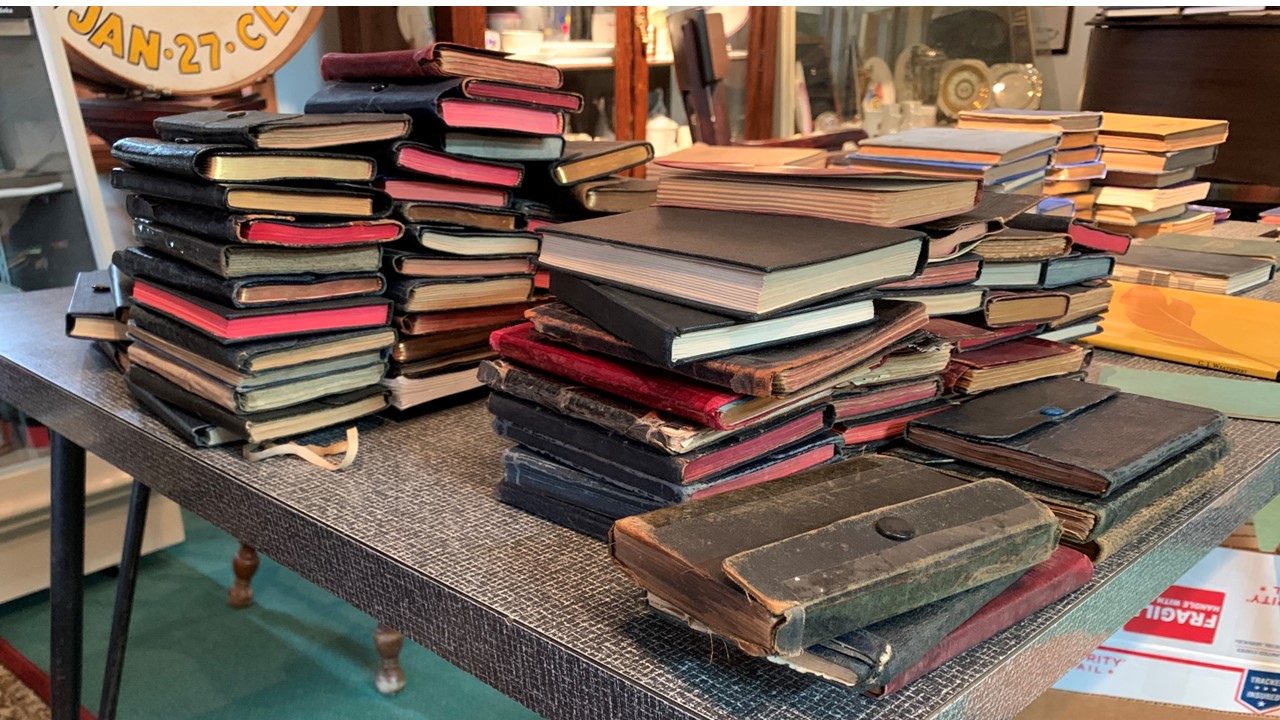
Items donated to the CFCR are unique or rare due to their content, subject, and other special importance; therefore, they're considered special collections. Unfortunately, materials that are not protected with preventative measures will eventually deteriorate. It is their goal to save this history.

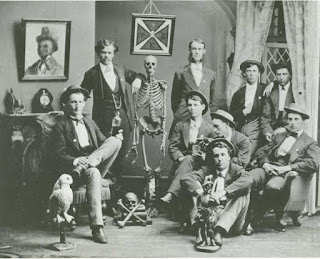


Besides camaraderie, the groups often provided insurance benefits, mutual aid, funeral funds and more. These groups weren't just for white, middle-class men or college students – there were societies that supported immigrant and ethnic communities, religious denominations, women, children, even certain professions or occupations, such as traveling salesmen (National Travelers) or logging workers (Concatenated Order of Hoo Hoo).


The CFCR is located in the IU Collections, Teaching, Research and Exhibition Center, located in the historic McCalla building on the IU Bloomington campus. Following a $6 million renovation of this one-time elementary school building, the Center now provides a safe, climate controlled facility for collections, plus seven display galleries, meeting areas, and a state-of-the-art media digitization and preservation department, all under one roof. 
Last year, the Center played host to the Scottish Rite Research Society's Fall presentation of papers.

Current generations have little or no understanding of the very existence and importance of these organizations, and too many of their publications, artwork, artifacts and jewelry disappear into the garbage or get melted down for their precious metals. The CFCR is now a welcome and secure repository for the quickly vanishing ephemera of American fraternal history.

So if you're interested in helping to support this new center, CLICK HERE to donate for #IUDay.


Friday, October 13, 2023

Scottish Rite Research Society Symposium Tomorrow in Bloomington, Indiana: Agenda


by Christopher Hodapp


The 2023 Scottish Rite Research Society Symposium is being held on the Indiana University campus in Bloomington, Indiana tomorrow, Saturday, October 14. The event will be held at the new Center for Fraternal Collections & Research (CFCR) in the McCalla Building.

University Collections at McCalla
Indiana University
525 N. Indiana Ave.
Bloomington, IN 47408

Everyone is welcome to attend in person - not just Masons - or the presentations can be viewed via Zoom. CLICK TO REGISTER HERE

For those of us who will be there, lunch will happen at noon, and the speakers will begin at 1:00PM EDT.

The agenda for presenters has just been finalized:

Lunch & Social Hour 12:00 pm-1:00 pm

Welcome and Session 1 1:00 pm-1:30 pm

"Brother James Gardiner, Pioneer & Masonic Executive"
Speaker: Chris Ruli

Session 2 1:45 pm-2:15 pm

"The Franken Manuscript Revisited" 
Speaker: S. Brent Morris

Session 3 2:30 pm-3:00 pm

"Illuminism, Illuminatus, Illuminati: The Making of Modern Conspiracy"
Speaker: Erich Huhn


Session 4 3:15 pm-3:45 pm

"The Chaotic Westward Movement of Freemasonry in the US"
Speaker: James Graham

Session 5 4:00 pm-4:30 pm

"Creating the Center for Fraternal Collections and Research"
Speaker: Heather K. Calloway

Special Remarks 4:30 pm-5:00 pm

Gary E. Brinley, Grand Master of Masons in Indiana

The Indiana University Center for Fraternal Collections and Research is proud to host the 2023 Scottish Rite Research Society Symposium! Held at the historic McCalla Building on on the Indiana University Bloomington campus, the symposium features presentations exploring symbolism, philosophy, development and changes to ritual, and more.


Center for Fraternal Collections and Research

The Indiana University Center for Fraternal Collections & Research (CRCR) is devoted to the collecting, protecting, and sharing of fraternal collections for the sake of research and public engagement. CFCR improves scholarship and understanding of fraternal groups, explores their impact on American society, and elucidates their importance across time and to different social groups.

Scottish Rite Research Society

The Scottish Rite Research Society is one of the most dynamic forces in contemporary Masonic research, pursing a publication program that emphasizes quality-both in content and in physical form. The Society has grown to over 4,000 members worldwide since its inception. Its publications have redefined the standards of Masonic scholarship. The administrative offices of the SRRS are at the House of the Temple in Washington, D.C., under the Supreme Council of the Scottish Rite. Activities and publications of the Society are governed by the Board of Directors, who are all Life Members of the Society, representing Scottish Rite valleys across the country.

For questions or concerns please contact: cfcrinfo@iu.edu.

For more information concerning this event go to

collections.iu.edu/fraternal-center/ scottish-rite-symposium.html


Thursday, September 07, 2023

10/14: Scottish Rite Research Society Symposium at Indiana University/Bloomington


by Christopher Hodapp

The Indiana University Center for Fraternal Collections and Research will be hosting the 2023 Scottish Rite Research Society Symposium on October 14, 2023 between 1:00-5:00PM. Everyone is welcome to attend - Masons, non-Masons, and SRRS members. 


The event will be held in the historic McCalla Building on the beautiful Bloomington campus of Indiana University. Bloomington is located in south/central Indiana 50 miles south of Indianapolis, off of I-69.

The McCalla Building features a variety of exhibits that participants can explore before and after sessions. While here, be sure to see the new exhibit about fraternal organizations, "LinkedIn to the Lodge: The Original Social Network."

University Collections McCalla provides a wonderful location where Indiana University and the local community can exhibit art, cultural heritage, scientific treasures and more.

University Collections at McCalla
Indiana University
525 N. Indiana Ave.
Bloomington, IN 47408

The Scottish Rite Research Society is one of the most dynamic forces in contemporary Masonic research, making it a natural partner for IU's Fraternal Center. The schedule of speakers will be posted as presenters are confirmed.

People are welcome to either attend the sessions in person, or to stream the sessions over the internet. When registering, please indicate if you will attend the symposium at IU or virtually.

CALL FOR PAPERS

The SRRS is interested in papers of interest to Society members, such as history of Freemasonry, the Scottish Rite, and other Masonic-related organizations; Masonic symbolism and philosophy; development and changes in ritual over time; and similar topics.

Download the Call for Papers document for details. Act fast! The deadline for submission of papers is October 1, 2023.

Indiana University Center for Fraternal Collections and Research


The newly opened Center for Fraternal Collections & Research (CFCR), headed by Dr. Heather Calloway, is devoted to the collecting, protecting, and sharing of fraternal collections for the sake of research and public engagement. CFCR improves scholarship and understanding of fraternal groups, explores their impact on American society, and elucidates their importance across time and to different social groups.

Whether you are interested in famous fraternal traditions such as Freemasonry, influential women's auxiliaries and orders, fraternal groups that served important roles in African American or other communities, or other orders that have served as cornerstones to American cities and towns, we hope that you will find the Center for Fraternal Collections and Research to be an exciting and welcoming place for your academic and personal inquiry.

What is the Scottish Rite Research Society?

The Scottish Rite Research Society is an offshoot of the AASR-Southern Jurisdiction, but do not let that dissuade you from becoming a member if you are outside of their territory. The articles in their hardbound annual collection, Heredom, tend to favor the AASR-SJ's evolution, history and symbolism, but not exclusively. Every volume always contains well-written and well-documented papers of wide interest to any Freemason.

The SRRS has an extremely aggressive publication strategy. In addition to Heredom, they also publish the quarterly Plumbline, which includes fascinating research articles. Membership includes an annual bonus book – generally a beautiful hardbound, annotated reprint of an historical volume from the House of the Temple's vast archive and library. You don't even need to be a Mason to join.

Annual SRRS membership is $55 and includes the annual Heredom, the quarterly Plumbline, a bonus book or other item every year (!), plus a discount on books and items from their shop at the House of the Temple (also available online). To join, CLICK HERE.

Thursday, March 23, 2023

2023 Sankey Lecture: Heather Calloway Sunday 3/26


by Christopher Hodapp

The Grand Lodge of AF&AM of Canada in the Province of Ontario has a unique relationship with the part of the academic world that studies our fraternity. The annual Dr. Charles A. Sankey Lecture in Masonic Studies at Brock University, St. Catharines, Ontario is presented each year through a unique partnership with the Grand Lodge. Since 2010, the Sankey Lecture has presented significant academic scholars who specialize in Freemasonry or fraternalism, and in recent years, these have been recorded and made available online HERE.


Dr. Heather Calloway will be the presenter for this year's 14th annual Sankey Lecture, this coming Sunday, March 26th from 3:00pm - 5:30pm. Her program will be "Skeletons in the Lodge Hall: Hidden Collections and Fraternal Curiosities," followed by a Masonic 'Antique Roadshow.'


The Marie Kondo Method. Swedish Death Cleaning. “Hoarders” reality TV shows. Downsizing.

De-cluttering is a hot trend in our heavily material culture.

At risk, however, is the loss of culturally significant objects and entire collections of ephemera, records, and artifacts.


Dr. Heather K. Calloway, the current Executive Director of University Collections at Indiana University, is working to manage and preserve collections of fraternal organizations, namely, the Freemasons, that are at serious risk of being discarded.

“Whether a lodge is moving, closing, or downsizing their space, the collections amassed by fraternal groups are at risk of being orphaned… They are often stored in closets, basements, and attics where environmental and storage conditions are abysmal. There is little or no emergency planning for these objects,” says Dr. Calloway.

Dr. Calloway will be presenting her lecture, “Skeletons in the Lodge Hall: Hidden Collections and Fraternal Curiosities,” at the 14th Annual Charles A. Sankey Lecture Series on Sunday, March 26th, in Sean O’Sullivan Theatre.

[snip]

“We are always excited when the Sankey Lecture comes around,” says archivist David Sharron, the Head of Archives and Special Collections at the Brock Library. “Hearing presenters like Heather Calloway and the attending Masons and scholars speak about Freemasonry so intelligently and passionately makes us feel secure that the Masonic book collection we have at Brock will always be needed and regarded in the best light.

As a part of the event, which is back in person for the first time since 2019, Dr. Calloway will be bringing some objects from the Indiana University’s collection of Freemason objects. Along with Mr. Sharron, she invites members of the public to bring in their own Freemason objects to discuss their historical significance.

Dr. Calloway notes that, “Fraternal history and material culture is found everywhere. It is held by private groups, archives, public and academic libraries, historical societies, and museums… Without action to address these needs for collection stewardship, many are at high risk for damage or loss.”

When: Sunday, March 26, 2023, 3:00 pm.
Where: Sean O’Sullivan Theatre 
Please reserve your FREE TICKETS in advance at Eventbrite.

RECEPTION: After the Lecture there will be a reception (from approx. 5:30 to 6:30 pm). All attendees are welcome to stay to chat with the speaker and with members of the Brock and Masonic communities. Light refreshments will be offered free of charge, and a cash bar will be available.

FREEMASON "ANTIQUES ROADSHOW": At the reception attendees are welcome (if they wish) to bring easily portable Masonic or related possessions that might have a historical or personal meaning. While they will not attempt to suggest a monetary value, Prof. Heather Calloway and David Sharron (Brock's University Archivist) will be on hand to discuss the possible significance of your items and strategies for preserving them in the best way possible.

LIVESTREAM OPTION: For those who cannot attend in person, there will also be a livestream during the Lecture. To view the livestream, use your browser to go to http://live.sankeylectures.ca. Participation in the Freemason "Antiques Roadshow" will not be possible via the livestream.

More details can be found on ExperienceBU.

Heather Calloway is currently serving as the Executive Director of University Collections at Indiana University. She spent 14 years at the headquarters of the Scottish Rite Southern Jurisdiction's House of the Temple in Washington, D.C., as the Museum Curator and Managing Director of Digital and Social Media. She's also served as the inaugural archivist for the Archives & Special Collections at Washington College, the University Archivist for the Perdue Museum and Archives at Salisbury University, and as the Librarian/Archivist for the Franciscan Monastery in Washington, D.C.

She is also heading up the creation of Indiana University's Center for Fraternal Collections and Research in Bloomington, Indiana, devoted to the collecting, protecting, and sharing of artifacts from the world of fraternal organizations. Along with the most famous groups like the Freemasons, the Odd Fellows, the Knights of Pythias and the Knights of Columbus, there were over a thousand similar groups that were established during the "Golden Age of Fraternalism" between the end of the American Civil War and the Great Depression of 1929.

Monday, May 09, 2022

Fraternal Swords Aren't Always Masonic


by Christopher Hodapp

A lady with the last name of Tobias sent me an email early this morning asking for help identifying what she thought was a Masonic sword that belonged to her grandfather. The engraved name on the sword blade was 'U.S. Grant Tobias.' It was a very typical fraternal group sword from Ward or Ames or Pettibone, or one of the several other companies making these since the 1860s. And they made thousands of them.

While attempting to save her message after reading it on my phone, I accidentally deleted her note and the photos. And I don't mean 'rescue-it-from-your-trash-folder' deleted, but double deleted it even from that folder. I've tried all the restoration tricks I know of, to no avail. 

So, if you are Ms. Tobias, the answer is no, the sword in your photos is not Masonic. 
Unfortunately, I only glanced at the photos for a few seconds before I stupidly deleted them. But I did look at them long enough to identify the symbols.

The scabbard is indeed from the American Legion veterans association. But the sword itself has the very Masonic-looking square and compass with an upraised arm holding a hammer in the center that denotes the Junior Order of United American Mechanics on its counter-guard. It's easy to get it confused with the Masonic symbol, but the two groups are not related. 


It's odd that the JrO. U.A.M. sword would have an American Legion scabbard - perhaps he belonged to the two groups simultaneously. Or he may have lost or damaged the proper one for the JrO. U.A.M. and just substituted the American Legion scabbard so it would be protected.

Both organizations are still in operation today.


In any case, the best source of information for identifying these antique swords is John D. Hamilton's indispensable book, The American Fraternal Sword: An Illustrated Reference Guide. Highly recommended, especially for fraternal museums, collectors and antique dealers.

Tuesday, April 19, 2022

Crowdfunding Campaign for Indiana University's Center for Fraternal Collections & Research


by Christopher Hodapp

(UPDATED: The faulty hyperlinks to the Center's crowdfunding contribution page has been fixed. My apologies to all for the error.)

Back in August 2021, Indiana University in Bloomington, Indiana announced the opening of the new Center for Fraternal Collections & Research (CFCR), headed up by Dr. Heather Calloway. This Wednesday, April 20th is #IUDay at Indiana University and the Center is attempting to raise $5,000 with a crowdfunding campaign to help establish an endowment.


The mission of the CFCR is to collect, preserve, and protect objects and ephemera of fraternal and religious groups for study and research in a permanent and accessible collection. 

During the "Golden Age of Fraternalism" from the end of the American Civil War until the Great Depression, over a thousand fraternal, ritual-based or "secret societies" formed in the U.S. For too long, American fraternalism wasn't considered to be important enough for respectable historians to investigate. Yet the fraternal movement with its so-called "secret societies" was critical to the building and strengthening of American communities, and every bit as important as churches, political clubs and parties, social activist groups, and other local institutions. Masons, Elks, Odd Fellows, Knights of Pythias, Red Men, Woodmen - these were the most widely known. But there were hundreds and hundreds more. 


Besides camaraderie, the groups often provided insurance benefits, mutual aid, funeral funds and more. These groups weren't just for white, middle-class men or college students – there were societies that supported immigrant and ethnic communities, religious denominations, women, children, even certain professions or occupations, such as traveling salesmen (National Travelers) or logging workers (Concatenated Order of Hoo Hoo).


Current generations have little or no understanding of the very existence and importance of these organizations, and too many of their publications, artwork, artifacts and jewelry disappear into the garbage or get melted down for their precious metals. The CFCR is now a welcome and secure repository for the quickly vanishing ephemera of American fraternal history. 


The CFCR is located in the new IU Collections, Teaching, Research and Exhibition Center, located in the historic McCalla building on the IU Bloomington campus. Following a $6 million renovation of this one-time elementary school building, the Center now provides a safe, climate controlled facility for collections, plus seven display galleries, meeting areas, and a state-of-the-art media digitization and preservation department, all under one roof.


So if you're interested in helping to support this new center, CLICK HERE to donate for #IUDay.

Monday, August 30, 2021

Indiana University Establishes New Research Center for Fraternal Organizations


by Christopher Hodapp

Indiana University in Bloomington, Indiana is now home to the newly established Center for Fraternal Collections & Research (CFCR), headed up by Dr. Heather Calloway. The CFCR will collect, preserve, and provide fraternal objects and ephemera for study and research in a permanent and accessible collection. 

During the "Golden Age of Fraternalism" from the end of the American Civil War until the Great Depression, over a thousand fraternal, ritual-based or "secret societies" formed in the U.S. Out of all of those hundreds and hundreds of societies with their millions upon millions of members, few survive today:  Odd Fellows, Eagles, Elks, Moose, Foresters, B'nai Brith, Knights of Columbus, Woodmen of the World, Knights of Pythias, Red Men, along with the Freemasons — these were the most commonly known American fraternal societies, and they still exist. But every year that passes, less and less evidence of them endures, especially the most obscure ones. 

Grand Encampment of the Independent Order of Odd Fellows
in Redding, California in October 1900. (Photo: Shasta Historical Society)

For too long, American fraternalism wasn't considered to be important enough for respectable historians to investigate. Yet the fraternal movement was critical to the building and strengthening of American communities, and every bit as important as churches, politics, activism and other local institutions. The "secret societies" were organized to support immigrant and racial groups, religious communities, to provide social assistance like burial or life insurance and retirement homes, to organize early patriotic or labor movements, or just become welcoming social clubs for the community in an increasingly urban society. Current generations have little or no understanding of the very existence and importance of these organizations, and too many of their publications, artwork, artifacts and jewelry disappear into the garbage or get melted down for their precious metals. 

At long last, there is a place where this important history can be found and preserved. With this announcement, IU becomes a welcome and secure repository for the quickly vanishing ephemera of American fraternal history. And the initial Board for the Center includes some notable names in the study of fraternalism:
  • If you've been around Freemasonry for a while, you may recognize director Dr. Heather Calloway from her fourteen years at the Scottish Rite SJ headquarters, the House of the Temple in Washington, D.C. 
    In 2018, she was hired as the first executive director of collections for Indiana University. The university has an estimated 220 collections comprised of about 30 million individual objects spread all across IU’s many campuses, schools, and departments all over the state.
  • Dr. S. Brent Morris is one of the world's most well-known and respected Masonic authors today. A list of the books he has written or edited and the Masonic organizations he has been associated with could fill a good-sized book by itself. Brent has recently retired from many years as the editor of the Scottish Rite Journal (for the Supreme Council Southern Jurisdiction), and continues to serve as editor for Heredom, the Scottish Rite Research Society's annual collection of papers. Most recently, Brent has resurrected the Masonic Book Club and continues to manage it.
  • Dr. Ken Moder is the founder and director of the J. H. Rathbone Museum of Fraternal History in Lafayette, Indiana. If you don't know of Ken and the Rathbone Museum, it has what may be described as one of the largest collections of fraternal organization artifacts, costumes, furniture, rituals and more in the world. Ken has been active in fraternal organizations for many years, including the Knights of Pythias, (Past Grand Secretary, Past Supreme Representative, and Knights of the Golden Spur for Indiana), Dramatic Order Knights of Khorrason, (Past Imperial Treasurer, Past Imperial Prince, and current Imperial Secretary). Ken also is a 32nd degree Scottish Rite Mason, the current president of Masonic High Twelve Club #99 in Lafayette, and a B.P.O. Elk. Ken also serves as a director of the Historical Society for American Fraternalism and the Tippecanoe County Historical Association. 
  • Seth C. Anthony is a Pennsylvania Mason and the creator of the online Museum of Fezology. The site features items from Seth’s own extensive collection of fezzes, from the apparel of the American Woodmen to the masonic White Shrine of Jerusalem. Seth’s other collecting interests include banners, jewels, and ephemera related to fraternal organizations that are less well-known.
  • Mark Tabbert has been the director of library and museum collections for the George Washington Masonic National Memorial in Alexandria, Virginia for sixteen years. Before that, he was curator for Masonic and fraternal collections at the Scottish Rite Library & Museum in Lexington, Massachusetts. He is the author of American Freemasons: Three Centuries of Building Communities and the upcoming A Deserving Brotherthe definitive work about George Washington and his Masonic involvement throughout his life.  In 2012 he co-edited Secret Societies in America & Other Foundational Studies in Fraternalism. Mark is also a past president of the Masonic Library & Museum Association.
  • Wendy Waszut-Barrett, PhD is an author, archivist and artist, specializing in scenic art and stage systems for historic theaters in North America and Europe. For the past thirty-three years, Wendy has documented, preserved, and painted scenes for a variety of performance venues, including fraternal lodges, vaudeville theaters, opera houses, ethnic halls, and film. The preservation of theatrical and fraternal heritage, as well as the continued training of artists in historic painting methodologies and materials, is her passion. Wendy is the president of Historic Stage Services, LLC, a company specializing in historic scenery and stage systems. As an author, Wendy’s past publications include The Santa Fe Scottish Rite Temple: Freemasonry, Architecture and Theatre (Museum of New Mexico Press, 2018), and numerous journal articles. She is a member of the International Organization of Scenographers, Technicians and Theatre Architects (OISTAT), United States Institute of Theatre Technology, the Canadian Institute of Theatre Technology, the Scottish Rite Research Society, and Phi Beta Kappa.
The CFCR is located in the new IU Collections, Teaching, Research and Exhibition Center, located in the historic McCalla building on the IU Bloomington campus. Following a $6 million renovation of this one-time elementary school building, the center now provides a safe, climate controlled facility for collections, plus seven display galleries, meeting areas, and a state-of-the-art media digitization and preservation department, all under one roof.


From their announcement:
We are an Indiana University research center devoted to the collecting, protecting, and sharing of fraternal collections for the sake of research and public engagement. We hope to improve scholarship and understanding of fraternal groups, explore their impact on American society, and elucidate their importance across time and to different social groups.

Whether you are interested in famous fraternal traditions such as Freemasonry, influential women's auxiliaries and orders, fraternal groups that served important roles in African American or other communities, or other orders that have served as cornerstones to American cities and towns, we hope that you will find the Center for Fraternal Collections and Research to be an exciting and welcoming place for your academic and personal inquiry.
Scholarly support
The center will provide three types of scholarly support to IU students and faculty, non-IU scholars, and the public:
  • The collection and stewardship of rare fraternal organization materials donated to Indiana University, for the sake of scholarly research.
  • Creating and supporting research related to fraternal studies at the student and faculty scholarly levels.
  • Disseminating research and information related to fraternal studies via public events, academic symposia, exhibitions, media presentations, and publication.
For more than a decade, our own Masonic Library & Museum of Indiana has benefitted greatly from our association with the Indiana University/Purdue University/Indianapolis Museum Studies program. Interns from that program have been invaluable to us for adopting proper collections and preservation methods, accessioning objects, creating new displays, and much more. Combined with the IU Bloomington Curatorship Program, Indiana University offers one of the top degree and post-graduate programs in the U.S. for students seeking museum and library careers. So the news of the Center for Fraternal Collections & Research is an outstanding development.

As an aside, Dr. Calloway and several of the Center's board members have also formed the Historical Society for American FraternalismAs the HSAF website says on its home page, "Understanding American Fraternalism is a means to understand how generations of American built stable communities within restless and ever-changing society."

Central to the HSAF's mission is an up-to-date, comprehensive and searchable list of these groups in its online Encyclopedia HERE.

Sunday, February 16, 2020

Angel Millar's 'Three Stages of Initiatic Spirituality' Now Available


Students seeking to explore the esoteric symbolism, concepts and philosophy of initiatic traditions like Freemasonry, Order of the Golden Dawn, Rosicrucianism and countless others, take note. Brother Angel Millar has just announced the release of his new book, Three Stages of Initiatic Spirituality: Craftsman, Warrior, Magician from Inner Traditions Publishing. 

Angel Millar is a New York Mason and a popular lecturer on Freemasonry, initiation and esotericism, as well as an artist and student of martial arts. He is the author of several books, including Freemasonry: Foundation of the Western Esoteric Tradition and The Crescent and the Compass: Islam, Freemasonry, Esotericism and Revolution in the Modern Age


Now in his newest book he discusses the craftsman, warrior, and magician archetypes that echo the traditional three-part division of societies. He explores how these three classic initiatic archetypes represent the three successive stages of spiritual growth in an individual’s life. He investigates their symbolism, rituals, and metaphysical aspects and shares meditations, practices, and transformational techniques for each archetype.

For an excerpt of the new book, the Introduction can be read HERE.


Friday, August 19, 2011

"Masonic" Symbolism and the F.O.P.?


In the United States we are fortunate that lurid allegations concerning Freemasonry and law enforcement are rare. In other countries, especially across Great Britain, press accounts are more common that attempt to link Freemasons with wrongdoing, and expecially if there is the slightest hint of any Masonic connection to the police or the judiciary. The British press is overly fond of making certain that a criminal's Masonic membership, if it exists, gets plastered in the opening paragraph of any story. And former Home Secretary Jack Straw's notorious witch hunt against Masons in law enforcement in the U.K. made headlines for years, even though it found zero evidence of any improper influence of Freemasonry on police or other justice officials.

Curiously, there does appear to be a visual connection between police and Freemasonry in the U.S. It's right out in plain sight, and has been for over a century. It is the official seal of the Fraternal Order of Police. At first glance, it's not obvious, but on closer inspection, the All Seeing Eye and a fraternal handshake can be seen in the bottom points of a five-pointed star.

Symbols are curious things, and any seal that is an amalgamation of symbols borrows liberally from other sources. The FOP explains theirs on their website:

The five-cornered star tends to remind us of the allegiance we owe to our Flag and is a symbol of the authority with which we are entrusted. It is an honor the people we serve bestow upon us. They place their confidence and trust in us; serve them proudly.

Midway between the points and center of the star is a blue field representative of the thin blue line protecting those we serve. The points are of gold, which indicates the position under which we are now serving. The background is white, the unstained color representing the purity with which we should serve. We shall not let anything corrupt be injected into our order. Therefore, our colors are blue, gold and white.

The open eye is the eye of vigilance ever looking for danger and protecting all those under its care while they sleep or while awake. The clasped hands denote friendship. The hand of friendship is always extended to those in need of our comfort.

The circle surrounding the star midway indicates our never ending efforts to promote the welfare and advancement of this order. Within the half circle over the centerpiece is our motto, "Jus, Fidus, Libertatum" which translated means "Law Is a Safeguard of Freedom."
Certainly the five-pointed star was an early Masonic symbol (seen more in Europe these days than in mainstream U.S. jurisdictions), as a symbol of the five points of man (head, hands and feet), as well as the five points of fellowship. It survives today in the U.S., albeit inverted, as the symbol of the Order of the Eastern Star. The All Seeing Eye is by no means a purely Masonic symbol, and appears in Renaissance art as a Christian symbol for God (along with the far older Egyptian "Eye of Horus"). And the fraternal handshake appears in Masonic, Odd Fellows, and many, many other fraternal groups' artwork throughout the 18th century.

In addition, the seal in the center of the star is the coat of arms of the city of Pittsburgh, where the FOP was originally founded. The castle-like structure is interesting for Pennsylvania, as there are still numerous jails and prisons around the state that were constructed in the 19th and 20th centuries to look like stone castles—the image below is the prison in Pottsville and there are many others like it.


The supposedly Latin motto is somewhat tortured grammatically, and any first year Latin student would have had their knuckles busted by Sister Mary Discipline over it. The design came from one of the founders, Delbert Nagle, the FOP's first Grand president in 1917, and was drawn by H. J. Garvy.

Nagle believed the motto meant "Fairness. Justice. Equality." After 50 years, a committee was formed to get to the bottom of the grammar problem, and several Catholic priests were consulted (including Monsignor John J. Doyle, historian for the Archdiocese of Indianapolis). The committee came up with the slightly corrected version of "Law Is a Safeguard of Freedom," even though that's something of a stretch as well.

The FOP was at first formed in secrecy in Pittsburgh because police in that city were not allowed to unionize. The FOP was technically not organized as a union, but a fraternity. Once the city's mayor approved of the group, it came out into the open. Like so many other fraternal groups that arose during the Golden Age of Fraternalism, it adopted customs originated in Masonic and Odd Fellows lodges, terms like grand lodge, passwords and handshakes.

Nagle also developed a "secret" ritual for initiates in 1916, based on the symbolism and "mysteries" of the FOP emblem. It's entirely likely that the specific All Seeing Eye and handshake images on the original seal were simply made from printer's block elements from existing fraternal artwork, which would account for their close similarity to Masonic artwork from the 1800s.

For all you'd ever care to know about the formation and history of the FOP, see Fraternal Order of Police 1915—1976: A History by Justin E. Walsh, Ph.D. Turner Publishing Company, 2004.