"To preserve the reputation of the Fraternity unsullied must be your constant care."

Proudly serving the fraternity since 2006
BE A FREEMASON

Showing posts with label universities. Show all posts

Monday, February 12, 2024

2024 Intl. Conference on Freemasonry: March 30th at UC/Berkeley


by Christopher Hodapp

The 2024 International Conference on Freemasonry will be held March 30th on the campus of the University of California at Berkeley. This will be the 12th annual academic conference sponsored by the Grand Lodge F&AM of California, and the theme this year will be "Rites In America."


“Rites in America” examines the almost countless forms and iterations of Masonry that have sprung up on this side of the Pacific, often in the particular context of immigrant communities or other, larger social movements.

Says event organizer Susan Sommers, a professor of history at St. Vincent College, “Freemasonry is one of the oldest and most successful fraternal, initiatory societies in the Western world. Despite its reputation for secrecy, it is well known and well documented.” As different Masonic and quasi-Masonic groups formed in the Americas, they often built on Masonry’s ritual framework while adding their own features. “Why reinvent wheels when you can simply change the hubcaps?” she says. “Over the centuries, especially since around 1750, Freemasons have added, edited, and invented orders, rites, and rituals with something close to wild abandon, all the while claiming that the landmarks are immutable, and have been since Adam.”

Speakers will include:

• Jonathan Awtrey - Visiting Assistant Professor, Fairfield University
“Moses Michael Hays and Freemasonry in British North America”

• Jesse David Chariton - Ph.D Candidate, Department of History, Iowa State University
“German Americans and Masonic Baptism in the Antebellum United States”

• Robert A. Gross - Professor of Early American History Emeritus, University of Connecticut
“Canceled and Back! How a Lodge Overcame Anti-Masonry and Regained a Place in Public Life”

• Alexander Towey - Lecturer, History Department, California State University, San Marcos
“Ebb & Flow: Freemasonry’s Rise, Decline, and Renaissance in American Society”

• Dr. María Eugenia Vázquez Semadeni - Historian, author, and expert on Mexican Freemasonry, Mexican political history, and Hispanic-American parliamentarianism; co-author, with Margaret Jacob, of Freemasonry and Civil Society: Europe and the Americas.
“Mexicanizing Freemasonry: The National Mexican Rite ”

• S. Brent Morris - Former managing editor of the Scottish Rite Journal, the world’s largest circulation Masonic magazine, and founding editor of Heredom, the transactions of the Scottish Rite Research Society.
“Robert Benjamin Folger and the oldest English-language version of the Chevalier Bienfaisant de la Cite Sainte—aka the Rectified Scottish Rite.”

The conference is open to the public. Admission is $30, optional lunch is $20. To register, visit the website HERE.

Friday, October 13, 2023

Scottish Rite Research Society Symposium Tomorrow in Bloomington, Indiana: Agenda


by Christopher Hodapp


The 2023 Scottish Rite Research Society Symposium is being held on the Indiana University campus in Bloomington, Indiana tomorrow, Saturday, October 14. The event will be held at the new Center for Fraternal Collections & Research (CFCR) in the McCalla Building.

University Collections at McCalla
Indiana University
525 N. Indiana Ave.
Bloomington, IN 47408

Everyone is welcome to attend in person - not just Masons - or the presentations can be viewed via Zoom. CLICK TO REGISTER HERE

For those of us who will be there, lunch will happen at noon, and the speakers will begin at 1:00PM EDT.

The agenda for presenters has just been finalized:

Lunch & Social Hour 12:00 pm-1:00 pm

Welcome and Session 1 1:00 pm-1:30 pm

"Brother James Gardiner, Pioneer & Masonic Executive"
Speaker: Chris Ruli

Session 2 1:45 pm-2:15 pm

"The Franken Manuscript Revisited" 
Speaker: S. Brent Morris

Session 3 2:30 pm-3:00 pm

"Illuminism, Illuminatus, Illuminati: The Making of Modern Conspiracy"
Speaker: Erich Huhn


Session 4 3:15 pm-3:45 pm

"The Chaotic Westward Movement of Freemasonry in the US"
Speaker: James Graham

Session 5 4:00 pm-4:30 pm

"Creating the Center for Fraternal Collections and Research"
Speaker: Heather K. Calloway

Special Remarks 4:30 pm-5:00 pm

Gary E. Brinley, Grand Master of Masons in Indiana

The Indiana University Center for Fraternal Collections and Research is proud to host the 2023 Scottish Rite Research Society Symposium! Held at the historic McCalla Building on on the Indiana University Bloomington campus, the symposium features presentations exploring symbolism, philosophy, development and changes to ritual, and more.


Center for Fraternal Collections and Research

The Indiana University Center for Fraternal Collections & Research (CRCR) is devoted to the collecting, protecting, and sharing of fraternal collections for the sake of research and public engagement. CFCR improves scholarship and understanding of fraternal groups, explores their impact on American society, and elucidates their importance across time and to different social groups.

Scottish Rite Research Society

The Scottish Rite Research Society is one of the most dynamic forces in contemporary Masonic research, pursing a publication program that emphasizes quality-both in content and in physical form. The Society has grown to over 4,000 members worldwide since its inception. Its publications have redefined the standards of Masonic scholarship. The administrative offices of the SRRS are at the House of the Temple in Washington, D.C., under the Supreme Council of the Scottish Rite. Activities and publications of the Society are governed by the Board of Directors, who are all Life Members of the Society, representing Scottish Rite valleys across the country.

For questions or concerns please contact: cfcrinfo@iu.edu.

For more information concerning this event go to

collections.iu.edu/fraternal-center/ scottish-rite-symposium.html


Thursday, March 23, 2023

2023 Sankey Lecture: Heather Calloway Sunday 3/26


by Christopher Hodapp

The Grand Lodge of AF&AM of Canada in the Province of Ontario has a unique relationship with the part of the academic world that studies our fraternity. The annual Dr. Charles A. Sankey Lecture in Masonic Studies at Brock University, St. Catharines, Ontario is presented each year through a unique partnership with the Grand Lodge. Since 2010, the Sankey Lecture has presented significant academic scholars who specialize in Freemasonry or fraternalism, and in recent years, these have been recorded and made available online HERE.


Dr. Heather Calloway will be the presenter for this year's 14th annual Sankey Lecture, this coming Sunday, March 26th from 3:00pm - 5:30pm. Her program will be "Skeletons in the Lodge Hall: Hidden Collections and Fraternal Curiosities," followed by a Masonic 'Antique Roadshow.'


The Marie Kondo Method. Swedish Death Cleaning. “Hoarders” reality TV shows. Downsizing.

De-cluttering is a hot trend in our heavily material culture.

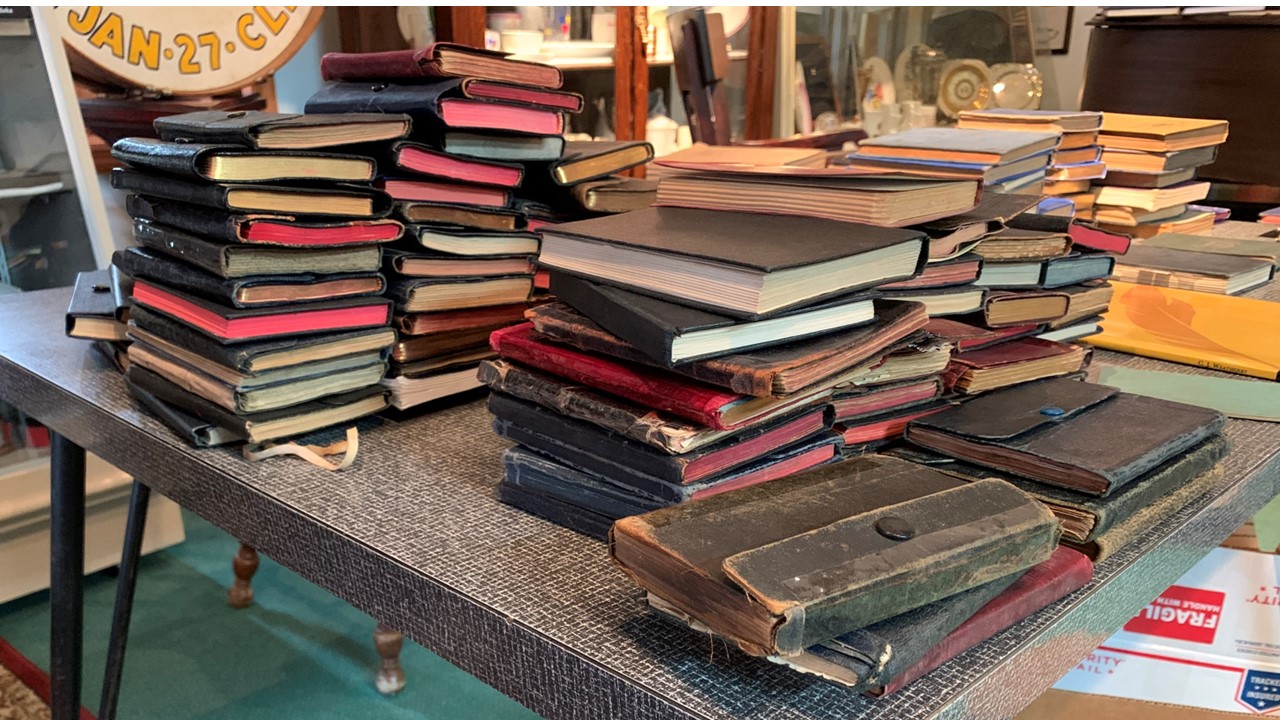
At risk, however, is the loss of culturally significant objects and entire collections of ephemera, records, and artifacts.


Dr. Heather K. Calloway, the current Executive Director of University Collections at Indiana University, is working to manage and preserve collections of fraternal organizations, namely, the Freemasons, that are at serious risk of being discarded.

“Whether a lodge is moving, closing, or downsizing their space, the collections amassed by fraternal groups are at risk of being orphaned… They are often stored in closets, basements, and attics where environmental and storage conditions are abysmal. There is little or no emergency planning for these objects,” says Dr. Calloway.

Dr. Calloway will be presenting her lecture, “Skeletons in the Lodge Hall: Hidden Collections and Fraternal Curiosities,” at the 14th Annual Charles A. Sankey Lecture Series on Sunday, March 26th, in Sean O’Sullivan Theatre.

[snip]

“We are always excited when the Sankey Lecture comes around,” says archivist David Sharron, the Head of Archives and Special Collections at the Brock Library. “Hearing presenters like Heather Calloway and the attending Masons and scholars speak about Freemasonry so intelligently and passionately makes us feel secure that the Masonic book collection we have at Brock will always be needed and regarded in the best light.

As a part of the event, which is back in person for the first time since 2019, Dr. Calloway will be bringing some objects from the Indiana University’s collection of Freemason objects. Along with Mr. Sharron, she invites members of the public to bring in their own Freemason objects to discuss their historical significance.

Dr. Calloway notes that, “Fraternal history and material culture is found everywhere. It is held by private groups, archives, public and academic libraries, historical societies, and museums… Without action to address these needs for collection stewardship, many are at high risk for damage or loss.”

When: Sunday, March 26, 2023, 3:00 pm.
Where: Sean O’Sullivan Theatre 
Please reserve your FREE TICKETS in advance at Eventbrite.

RECEPTION: After the Lecture there will be a reception (from approx. 5:30 to 6:30 pm). All attendees are welcome to stay to chat with the speaker and with members of the Brock and Masonic communities. Light refreshments will be offered free of charge, and a cash bar will be available.

FREEMASON "ANTIQUES ROADSHOW": At the reception attendees are welcome (if they wish) to bring easily portable Masonic or related possessions that might have a historical or personal meaning. While they will not attempt to suggest a monetary value, Prof. Heather Calloway and David Sharron (Brock's University Archivist) will be on hand to discuss the possible significance of your items and strategies for preserving them in the best way possible.

LIVESTREAM OPTION: For those who cannot attend in person, there will also be a livestream during the Lecture. To view the livestream, use your browser to go to http://live.sankeylectures.ca. Participation in the Freemason "Antiques Roadshow" will not be possible via the livestream.

More details can be found on ExperienceBU.

Heather Calloway is currently serving as the Executive Director of University Collections at Indiana University. She spent 14 years at the headquarters of the Scottish Rite Southern Jurisdiction's House of the Temple in Washington, D.C., as the Museum Curator and Managing Director of Digital and Social Media. She's also served as the inaugural archivist for the Archives & Special Collections at Washington College, the University Archivist for the Perdue Museum and Archives at Salisbury University, and as the Librarian/Archivist for the Franciscan Monastery in Washington, D.C.

She is also heading up the creation of Indiana University's Center for Fraternal Collections and Research in Bloomington, Indiana, devoted to the collecting, protecting, and sharing of artifacts from the world of fraternal organizations. Along with the most famous groups like the Freemasons, the Odd Fellows, the Knights of Pythias and the Knights of Columbus, there were over a thousand similar groups that were established during the "Golden Age of Fraternalism" between the end of the American Civil War and the Great Depression of 1929.

Monday, August 30, 2021

Indiana University Establishes New Research Center for Fraternal Organizations


by Christopher Hodapp

Indiana University in Bloomington, Indiana is now home to the newly established Center for Fraternal Collections & Research (CFCR), headed up by Dr. Heather Calloway. The CFCR will collect, preserve, and provide fraternal objects and ephemera for study and research in a permanent and accessible collection. 

During the "Golden Age of Fraternalism" from the end of the American Civil War until the Great Depression, over a thousand fraternal, ritual-based or "secret societies" formed in the U.S. Out of all of those hundreds and hundreds of societies with their millions upon millions of members, few survive today:  Odd Fellows, Eagles, Elks, Moose, Foresters, B'nai Brith, Knights of Columbus, Woodmen of the World, Knights of Pythias, Red Men, along with the Freemasons — these were the most commonly known American fraternal societies, and they still exist. But every year that passes, less and less evidence of them endures, especially the most obscure ones. 

Grand Encampment of the Independent Order of Odd Fellows
in Redding, California in October 1900. (Photo: Shasta Historical Society)

For too long, American fraternalism wasn't considered to be important enough for respectable historians to investigate. Yet the fraternal movement was critical to the building and strengthening of American communities, and every bit as important as churches, politics, activism and other local institutions. The "secret societies" were organized to support immigrant and racial groups, religious communities, to provide social assistance like burial or life insurance and retirement homes, to organize early patriotic or labor movements, or just become welcoming social clubs for the community in an increasingly urban society. Current generations have little or no understanding of the very existence and importance of these organizations, and too many of their publications, artwork, artifacts and jewelry disappear into the garbage or get melted down for their precious metals. 

At long last, there is a place where this important history can be found and preserved. With this announcement, IU becomes a welcome and secure repository for the quickly vanishing ephemera of American fraternal history. And the initial Board for the Center includes some notable names in the study of fraternalism:
  • If you've been around Freemasonry for a while, you may recognize director Dr. Heather Calloway from her fourteen years at the Scottish Rite SJ headquarters, the House of the Temple in Washington, D.C. 
    In 2018, she was hired as the first executive director of collections for Indiana University. The university has an estimated 220 collections comprised of about 30 million individual objects spread all across IU’s many campuses, schools, and departments all over the state.
  • Dr. S. Brent Morris is one of the world's most well-known and respected Masonic authors today. A list of the books he has written or edited and the Masonic organizations he has been associated with could fill a good-sized book by itself. Brent has recently retired from many years as the editor of the Scottish Rite Journal (for the Supreme Council Southern Jurisdiction), and continues to serve as editor for Heredom, the Scottish Rite Research Society's annual collection of papers. Most recently, Brent has resurrected the Masonic Book Club and continues to manage it.
  • Dr. Ken Moder is the founder and director of the J. H. Rathbone Museum of Fraternal History in Lafayette, Indiana. If you don't know of Ken and the Rathbone Museum, it has what may be described as one of the largest collections of fraternal organization artifacts, costumes, furniture, rituals and more in the world. Ken has been active in fraternal organizations for many years, including the Knights of Pythias, (Past Grand Secretary, Past Supreme Representative, and Knights of the Golden Spur for Indiana), Dramatic Order Knights of Khorrason, (Past Imperial Treasurer, Past Imperial Prince, and current Imperial Secretary). Ken also is a 32nd degree Scottish Rite Mason, the current president of Masonic High Twelve Club #99 in Lafayette, and a B.P.O. Elk. Ken also serves as a director of the Historical Society for American Fraternalism and the Tippecanoe County Historical Association. 
  • Seth C. Anthony is a Pennsylvania Mason and the creator of the online Museum of Fezology. The site features items from Seth’s own extensive collection of fezzes, from the apparel of the American Woodmen to the masonic White Shrine of Jerusalem. Seth’s other collecting interests include banners, jewels, and ephemera related to fraternal organizations that are less well-known.
  • Mark Tabbert has been the director of library and museum collections for the George Washington Masonic National Memorial in Alexandria, Virginia for sixteen years. Before that, he was curator for Masonic and fraternal collections at the Scottish Rite Library & Museum in Lexington, Massachusetts. He is the author of American Freemasons: Three Centuries of Building Communities and the upcoming A Deserving Brother, the definitive work about George Washington and his Masonic involvement throughout his life.  In 2012 he co-edited Secret Societies in America & Other Foundational Studies in Fraternalism. Mark is also a past president of the Masonic Library & Museum Association.
  • Wendy Waszut-Barrett, PhD is an author, archivist and artist, specializing in scenic art and stage systems for historic theaters in North America and Europe. For the past thirty-three years, Wendy has documented, preserved, and painted scenes for a variety of performance venues, including fraternal lodges, vaudeville theaters, opera houses, ethnic halls, and film. The preservation of theatrical and fraternal heritage, as well as the continued training of artists in historic painting methodologies and materials, is her passion. Wendy is the president of Historic Stage Services, LLC, a company specializing in historic scenery and stage systems. As an author, Wendy’s past publications include The Santa Fe Scottish Rite Temple: Freemasonry, Architecture and Theatre (Museum of New Mexico Press, 2018), and numerous journal articles. She is a member of the International Organization of Scenographers, Technicians and Theatre Architects (OISTAT), United States Institute of Theatre Technology, the Canadian Institute of Theatre Technology, the Scottish Rite Research Society, and Phi Beta Kappa.
The CFCR is located in the new IU Collections, Teaching, Research and Exhibition Center, located in the historic McCalla building on the IU Bloomington campus. Following a $6 million renovation of this one-time elementary school building, the center now provides a safe, climate controlled facility for collections, plus seven display galleries, meeting areas, and a state-of-the-art media digitization and preservation department, all under one roof.


From their announcement:
We are an Indiana University research center devoted to the collecting, protecting, and sharing of fraternal collections for the sake of research and public engagement. We hope to improve scholarship and understanding of fraternal groups, explore their impact on American society, and elucidate their importance across time and to different social groups.

Whether you are interested in famous fraternal traditions such as Freemasonry, influential women's auxiliaries and orders, fraternal groups that served important roles in African American or other communities, or other orders that have served as cornerstones to American cities and towns, we hope that you will find the Center for Fraternal Collections and Research to be an exciting and welcoming place for your academic and personal inquiry.
Scholarly support
The center will provide three types of scholarly support to IU students and faculty, non-IU scholars, and the public:
  • The collection and stewardship of rare fraternal organization materials donated to Indiana University, for the sake of scholarly research.
  • Creating and supporting research related to fraternal studies at the student and faculty scholarly levels.
  • Disseminating research and information related to fraternal studies via public events, academic symposia, exhibitions, media presentations, and publication.
For more than a decade, our own Masonic Library & Museum of Indiana has benefitted greatly from our association with the Indiana University/Purdue University/Indianapolis Museum Studies program. Interns from that program have been invaluable to us for adopting proper collections and preservation methods, accessioning objects, creating new displays, and much more. Combined with the IU Bloomington Curatorship Program, Indiana University offers one of the top degree and post-graduate programs in the U.S. for students seeking museum and library careers. So the news of the Center for Fraternal Collections & Research is an outstanding development.

As an aside, Dr. Calloway and several of the Center's board members have also formed the Historical Society for American Fraternalism. As the HSAF website says on its home page, "Understanding American Fraternalism is a means to understand how generations of American built stable communities within restless and ever-changing society."

Central to the HSAF's mission is an up-to-date, comprehensive and searchable list of these groups in its online Encyclopedia HERE.) 

Tuesday, September 15, 2020

New UGLE Universities Scheme Outreach Video


by Christopher Hodapp

The United Grand Lodge of England has for many years had a program to promote Freemasonry on college and university campuses around the U.K., including establishing new lodges, as well as linking existing nearby ones, specifically for those institutions. Called The Universities' Scheme, its aim is to help to forge links between well-placed, enthusiastic Lodges and the many students and other local young people who are seeking to become involved in Freemasonry, but who may not know where to begin. There are now about 50 such university-related lodges throughout the UGLE jurisdiction.

A new video has been produced by the Grand Lodge specifically geared to appeal to 'Freshers' - university freshman - about looking into joining the Masonic fraternity. In just 90 seconds, it lays out the basic principles of Masonry, its contributions to communities, and its national and international scope. (See it above.)

One surprise for U.S. Masons is that the video also includes two young lady Masons from the two large, principal feminine grand lodges at work in England today. "So, you think only men can be Freemasons," asks one. There's  no getting round the fact that the question of women will almost immediately arise when Freemasonry gets discussed, most especially on a college campus these days.

Obviously the cultural attitude on college campi these days is more pockmarked with potential social outrage landmines than ever before. All-male fraternal groups are under assault all over the U.S. and Britain as being neanderthal bastions of male superiority or the patriarchy or. . . something. Setting up a booth at a college promoting a male-only group like the Masons is like waving a red cape at an enraged, four-footed pot roast in a bullfighting arena. So England's Masons use a different approach.


Pearl-clutching U.S. Masons take note: England's (and Europe's) rules involving voluntary associations and anti-discrimination laws and requirements differ from the U.S., and the UGLE has openly stated that female Masons are perfectly respectable. They cooperate whenever possible. The UGLE doesn't exactly recognize the female grand lodges, and their members can't sit in open lodge together, but they decided more than 20 years ago to stop acting like they didn't exist and cooperate instead. Bear in mind that England does not have the Order of the Eastern Star, either. So, the UGLE's statement on the matter of lady Masons is quite pragmatic, stating that the two female grand lodges are in all ways regular, apart from the fact that traditional Masons do not permit women to join our lodges. And when a lady approaches them to ask about membership, English Masons are free to say 'here's who to contact, here's their websites, and can I call you a taxi?' 

England's two female grand lodges are Freemasonry For Women (Honourable Fraternity of Ancient Freemasons) and the The Order of Women Freemasons. Both are also actively chartering new female lodges around college and university campuses in England, and all three grand lodges are cooperating with each other on this Universities Scheme to introduce Freemasonry to college students by establishing lodges connected to college and university campuses.


UGLE invited the female grand masters of both the HFAF and OWF to their 300th anniversary gala in London in 2017. Interestingly, UGLE and the HFAF conferred with each other when they crafted their recent transgender policies in 2017, which were forced upon them by changes in English laws.

It's a refreshing approach that I wish Americans would adopt, because this question will continue to dog us in varying degrees for the foreseeable future. Contrast England's statement with the way the Grand Lodge of California addresses it on their website:
"Q: Can women join Masonry?""A: There are three strands of Freemasonry in the world: masculine Masonry (exclusively men), feminine Masonry (exclusively women), and mixed Masonry (men and women). The Masons of California is a fraternity of men. We sponsor Masonic organizations for men, women, and youth."
Of course, the biggest issue in the U.S. is that female Freemasonry is just not that popular here, in comparison to so-called 'malecraft' Freemasonry. It is almost useless to tell a young lady about female lodges if the closest one is a 500 mile drive away.

Tuesday, May 12, 2020

Minnesota Masons Donate $35 Million for Brain Research at University of Minnesota


by Christopher Hodapp

Minnesota Masonic Charities is the charitable giving foundation of the Grand Lodge of Minnesota, and their principal support is for the University of Minnesota's medical facilities. In the midst of the COVID-19 shutdown, the Masons of that state have just announced a $35 million gift to the University to establish the Masonic Institute for the Developing Brain, described as "an interdisciplinary initiative focused on the early diagnosis, prevention and treatment of neuro-developmental disorders in early childhood and adolescence."

Led by the University’s Medical School and College of Education and Human Development (CEHD), this unique institute will bring together teams of researchers and clinicians who study how the brain grows and develops during early childhood and adolescence—formative years when the brain is most receptive to positive intervention.
Working together under one roof at the site of the former Shriners Healthcare for Children campus in Minneapolis, an array of experts will tackle such disorders as autism, ADHD, cognitive delays, drug addiction and severe depression, conditions that can often be identified early and have lifelong consequences.
“Our long-standing partnership with the University of Minnesota aligns with our mission to make meaningful contributions to society,” said Eric Neetenbeek, president and CEO of Minnesota Masonic Charities. “The Masonic Institute for the Developing Brain is another example of how we can unite the incredible expertise of the University with the capacity of Minnesota Masonry to benefit our entire state and, indeed, the world.”
University of Minnesota President Joan T. A. Gabel, who has made student mental health one of her top priorities, believes the support will improve lives when it matters most. “Early support of brain health sets the stage for everything to come in life,” she said. “Thanks to the Masons’ transformative gift, the Masonic Institute for the Developing Brain will help ensure that children have the strongest start for a safe, happy and productive life.”
The Masonic Institute for the Developing Brain will form a research campus with M Health Fairview University of Minnesota Masonic Children’s Hospital and the University’s Biomedical Discovery District. The 10.2-acre property includes a two-level building with a hospital, clinic, and support area, as well as conference space and an attached parking lot. It is expected to open in Fall 2021 at the East River Parkway location.


This is by no means the only massive donation the state's fraternity has made to the University. With its latest gift of $35 million to establish and name the Masonic Institute for the Developing Brain, Minnesota Masonic Charities has contributed more than $160 million to the University of Minnesota to accelerate research discoveries in cancer and children’s health.

The University built the 80-bed Masonic Memorial Hospital in 1958 and the Masonic Cancer Research Building in the mid-’90s with support from Minnesota Masons. A $65 million pledge in 2008 to name the Masonic Cancer Center continues to advance major research discoveries. A $10 million gift from the Masons built the Masonic Cancer Clinic, which provides premier cancer care in the M Health Fairview Clinics and Surgery Center on the Twin Cities campus. In addition, a $25 million gift made in 2014 to enhance pediatric research and care led to the renaming of M Health Fairview University of Minnesota Masonic Children’s Hospital.

H/T: Douglas Campbell

Saturday, March 07, 2020

Masonic Sightseeing in Los Angeles


On Thursday, the KCET website (Los Angeles' PBS affiliate) put together an article for seeking out some of the major Masonic landmarks in that sprawling city. 

From Where to Explore L.A.’s Masonic Past (Without Joining the Fraternal Order) by Sandi Hemmerlein:

It’s the oldest and largest fraternal organization in the world, yet most of us who aren’t a part of it are still mystified by its symbols, rituals and clandestine operations.
Freemasonry may seem like an Old World tradition — but here in Los Angeles, it reached its peak popularity in the late 1960s!
Unfortunately, membership into Masonic fraternities took a nosedive in the latter part of the last century. That’s after having touted top-notch members such as Douglas Fairbanks, John Wayne, Cecil B. DeMille, Walt Disney, D.W. Griffith and Oliver Hardy just decades prior.

Although it may have still been ground zero for the illuminati, at some point freemasonry lost its Hollywood-linked glitterati.
But the Masonic brotherhood seems to have piqued the interest of newer generations — and it’s shown signs of rebounding in the 21st century, with former lodges and temples getting reused for new purposes and introducing the uninitiated to the cryptic and enigmatic world of secret handshakes and ancient iconography...

This list is by no means exhaustive - there are many, many more present and former Masonic halls and temples all across Los Angeles County. But this particular list includes: 
  • Al Malaikah Shrine Auditorium (location of the Academy Awards ceremonies in years past)
  • the Geffen Playhouse in Westwood that was originally built in 1929 as UCLA's Masonic Affiliates Clubhouse (back when there were enough college students over 21, alumni, numerous professors and school employees who were Freemasons to support their own campus clubhouse). It lasted as a Masonic clubhouse up into the 1970s.
  • the magnificent former Hollywood Lodge 355 on Hollywood Boulevard, known better today as the Dolby Theater (part of the El Capitan Entertainment Center) and home to Jimmy Kimmel's show
  • the former Masonic Lodge at the Hollywood Forever Cemetery
  • the former Scottish Rite Cathedral on Wilshire Boulevard that opened very briefly as the Marciano Art Collection Museum before it mysteriously shut down again last year without explanation
  • the former Highland Park Lodge that is now a music venue, but with its beautiful lodge room murals intact
See the full list with photos HERE.

All of these buildings, with the notable exception of the 1960s Scottish Rite Cathedral, were built by Freemasons in the 1920s during the last years of the City Beautiful Movement, as well as the end of the Golden Age of Fraternalism. 

Note all of those "former" adjectives. Less than a century later, it should be noted that only the Shriners still own their's. All the rest of these Masonic halls outlived the ability of our members to support them. Yet today they all remain centerpieces of the community, even if 'the Masons" don't anymore. They were all built to be significant structures for us and the public, and to stand the test of time.

No one in the year 2120 will say that about our modern-day pole barn Masonic Halls. If we can't equal or better our great-grandfathers in their vision, hopes and accomplishments, the very least we can do is protect and improve what they left for us. 

That goes for our remaining important Masonic structures, and for the fraternity itself, too. Are we building and improving the sort of fraternity that the visionary, deep-pocketed, big-thinking, successful business or community leaders of today would want to join as enthusiastically as they did a century ago? 

The answer to that is, of course, no. 

The real question that must be answered is, why not?

Monday, January 20, 2020

If the world thinks you're dead, beat on the coffin lid


We've turned the Airstream eastward at last and are headed back home from California. By sheer accident, we happened to be passing through the curious little wide spot in the Arizona highway called Quartzsite just in time for what is billed as the largest recreational vehicle event in the world. For fifty weeks out of the year, Quartzsite is an outpost in the desert with a handful of gas stations and fast food eateries, a grocery store, three or four trailer service companies, several trailer parks, and surrounded by hundreds of square miles of rugged, empty land overseen by the Bureau of Land Management. But for ten days in January, this tiny burb is invaded by (depending upon whom you ask) anywhere from 250,000 to two MILLION happy campers for a massive recreational vehicle and rock collector's swap meet and trade show. Easily tens of thousands of trailers, RVs and ATV's dot the landscape and clog every street, and the parking and campsites are quite literally anywhere you can pull off the road.

What does this have to do with Freemasonry? That's easy.


Whenever I go out into informal places and events like this one, I usually wear a square and compass symbol around my neck and often on a hat. All of my vehicles feature a large Masonic decal on their rear windows. Almost since I first joined 20 years ago, I've worn a jacket in cold weather with a square and compass you could spot from low-Earth orbit. 

Let's just say I'm not subtle. I make no apologies that I'm a proud and shameless shill for this fraternity.


I've now spent two days wandering around the hundreds of vendor stalls and tents in Quartzsite, and I can honestly say that, had I had a stack of Arizona petitions, I could have signed up enough new candidates and existing Masons on the spot to charter a new lodge. Probably more. Numerous people saw the familiar square and compass and stopped me to chat about their grandfather's membership, or the lodge that used to be in their town, or joke about our 'world domination plans,' or - most important - ask about membership.

Consider this: the Quartzsite RV show draws heavily upon the very demographic that is historically most likely to join a Masonic lodge: the average petitioning age of Masons has been men between 39-50 almost consistently for two centuries now. The bulk of men wandering this show appeared to be between 40-70, mostly married, decidedly middle class, and with a fair amount of spare time and disposable income on their hands (many were full-time RVers driving VERY expensive rigs). I'm just guessing based on the products in the booths, bumper stickers on cars and rigs, and jewelry worn by attendees that the majority espoused a stronger than average religious faith. All of this is based on surface judgements or conversations I had with scores of people, so they are nothing but generalizations. But I think those observations are still sound ones.

So my question is, why is it that American Masons seem reticent to do something as logical as set up a booth or table at this sort of massive event to tell the public who and what the Freemasons are, to remind them we're very much alive and well, and that we're open to admitting new members?   

I'm not picking on Arizona. And it's especially hard here because there are (to the best of my research) precisely NO surviving Masonic lodges in western Arizona along Interstate 10 until you get almost all the way to Phoenix. With no lodge presence really anywhere near the area (Lake Havasu and Yuma are closest, and both are more than 45 minutes away), there's no one locally to keep up any sense of urgency to be seen out here. I'm just saying this is a wasted opportunity.


Since I'm talking about public outreach, consider this one. A UGLE lodge that is located in a university town in England sets up a booth every year at the school's welcome fair for incoming freshmen.  Certainly a fine idea, given that a greater percentage of the population today has less and less awareness of just who and what Freemasons are. What better place to spread the word in a tasteful and informative manner than set up an information booth at a college?

But obviously the cultural attitude on college campi these days is more pockmarked with potential social outrage landmines than ever before. All-male fraternal groups are under assault all over the U.S. and Britain as being neanderthal bastions of male superiority or the patriarchy or. . . something. Setting up a booth at a college promoting a group like the Masons is like waving a red cape at an enraged, four-footed pot roast in a bullfighting arena.

Interestingly, UGLE has a very pragmatic view about female Freemasonry. They don’t plug their ears and pretend they don’t exist. Between modern anti-discrimination laws in the U.K. and the EU alike, it helps inoculate the fraternity if they can cheerfully say, “Lady Masons? Of course, here’s their address and whom to speak with. May we call you a taxi?”

So, this is where the UGLE's pragmatic approach to female Freemasonry comes in. The English brethren at this particular university have teamed up for several years now with the lady Masons of the Order of Women Freemasons in co-sponsoring their Masonry booth.

Don't everybody start yawping all at once with their "Wimmin can't be Masons!' yawps. 

(With all of the men and women I spoke to in Arizona this weekend, no one even mentioned an objection to our proudly male-only fraternity. I think most people really don't have a complaint about it in the real world, and many Masons feel needlessly apologetic about it.)

But I digress. 

I idly wondered on my drive back to our campsite if Arizona has the ability to create a lodge under dispensation for the sole purpose of maybe holding a single outdoor lodge meeting in the desert for all sojourning Masons attending Quartzsite each year. Or if lodges could band together to set up a large tent for visiting Masons on the grounds of the RV show. Or if there are enough Masons in western Arizona interested in flapjackery to set up a breakfast tent as both a fundraiser and outreach program. Maybe get some of the Shrine Temples involved. This show is so huge that ALL Arizona Masons should be thinking about this. In fact, there's an argument to be made that it's TOO huge for a booth or a table to make an impact - two dozen Masons wearing tee shirts proclaiming "Ask Me About The Freemasons" might yield better results.

The ultimate point is that grand lodges and local lodges stand by year after year and watch our membership shrink with no long-range planning and ZERO long-range commitment to reaching out to reacquaint the public about our 300+ year-old fraternity.  Publicity is not a dirty word, and is frankly more important than at any time in our modern history. We will never take our place again as the preeminent leaders of our communities if we sit idly by as succeeding generations lose their direct family connections to our traditions and collectively forget about us. It's up to us reverse that depressing trend.

How many articles, studies and surveys must we read that reinforce the message that Americans are lonelier, more solitary, more isolated, more friendless than at any time in recorded history before we realize that we as Masons have just what society needs at this moment in time?

Again, not to pick on Arizona - I just happen to be here right now. Every state has its own massive public events like state and county fairs, heritage days, period reenactment events, chautauquas, craft fairs, Renaissance fairs, car shows, holiday parades, and countless others. Masons need to be represented at every single one of them.