
"To preserve the reputation of the Fraternity unsullied must be your constant care."

BE A FREEMASON

Showing posts with label degree rituals. Show all posts

Saturday, March 16, 2024

One Score, Five Years and a Couple of Days Ago...


by Christopher Hodapp

On Thursday night, Worshipful Brother Nathan Brindle and I were given our commemorative 25-year pins by the Master, officers and brethren of Broad Ripple Lodge 643 in Indianapolis. I guess the whole city was in on this event—just about the time we got pinned, the Civil Defense klaxon out in the lodge parking lot belted out a one-note fanfare for five solid minutes, followed by a half-hour of spectacular Stürm und Drang-like thunder and lightening. All that was missing was the accompaniment of Thus Sprach Zarathustra on the Wurlitzer.

Why is it I can never find a comb when I need one?
Nathan, on the other hand, NEVER needs one.

So. One score, five years and a couple of days ago... 

It was a Saturday in 1999, and two days short of the 'Ides of March' when Nathan and I were passed to the degree of Fellow Craft, and raised as Master Masons at an 'All Degree Day' at Calvin W. Prather Lodge 717 on Haverstick Road in Indianapolis. 

I remember the day. Vividly. Just as every Freemason remembers his raising.

(This is where the picture suddenly goes all spooky and wavy, accompanied by the sweeping strumming of a harp, heralding the coming of a flashback.)

•   •   •

The surprise cake at my 40th birthday party in 1998 was a bit premature -
my EA degree would come later that week. But friends were already in on it.

Forty is a huge bellwether as life boundaries go. For the first time in my life, I had just bought my first Chrysler (deemed the Official Automaker to the Elderly back in the 80s and 90s), and it had two sets of golf clubs in the trunk, which was spacious enough to conceal several bodies. I had just been prescribed my first high blood pressure pills and found a gray hair in sprouting in my beard. A Midlife Crisis was certain to happen at any second. And so I joined the Masons. I later found out that 40 is almost exactly the average age at which most Masons have historically decided to join. 

Except for Nathan's balding pate, we looked enough 
alike in 1998 that Masons who couldn't remember which was which 
just referred to us interchangeably as Brindapp.

I had originally contacted the Grand Lodge of Indiana seeking membership through its website—one of only five US grand lodges that had such a newfangled thing at the time. The face behind the website answering these early Internet requests turned out to be RW Roger S. VanGorden, who would become Grand Master in 2002-03. He was also a Past Master of Broad Ripple Lodge 643 in Indianapolis. 

(Note: My lodge's odd name comes from a wide hook-shaped bend in the nearby White River that encircles this northside Indianapolis village; hence, 'a broad ripple.' It started life as a weekend holiday area, with an amusement park and boating on the river, but soon became one of the city's first true suburbs in the early 20th century. Today, Broad Ripple Village is loaded with restaurants, shops and nightclubs, and the recent addition of hundreds of new apartments.) 

Broad Ripple Lodge 643 in 1998.

Unbeknownst to us, Roger had a reason to point me and Nathan in Ripple's direction. Quite simply, Broad Ripple Lodge was a mess. They'd lost members and officers, current officers weren't doing their jobs properly (or at all), their 200 members were staying away in droves, their finances were a wreck, and the Grand Master was about to name a special deputy to investigate and find out "What in hell goes on at Broad Ripple??!!" They needed all the help they could get. So he sent us there. 

My initiation as an Entered Apprentice at Ripple came just three days after my birthday, and Nathan followed in January. For our Entered Apprentice degrees, Ripple had put out a distress call to other lodges for assistance in filling parts and giving the lectures. By the January meeting, there was a whole new slate of elected officers—many of them young and quite new to the fraternity—but the lodge still never could find enough of its own members to complete our FC and MM degrees. Meanwhile, the Grand Lodge special deputy delivered the news that the Grand Master was within an inch of yanking their charter from the wall. In the coming months, five of the lodge officers resigned, left town, or just disappeared. 

Already by February, Nathan and I were getting nervous about Ripple's future. We began visiting nearby Calvin Prather Lodge 717 for their Saturday breakfasts and got to know their officers, just in case we needed to find a different lodge. They seemed popular, stable, and they were the home lodge of the Grand Master in 2000, Robert E. Hancock. We figured at least THIS lodge wouldn't lose its charter anytime soon.

Then one Saturday morning, Prather's Past Master Cliff Lewis mentioned that GM Hancock was experimenting with the notion of "one day classes," wherein a group of initiates could experience the Entered Apprentice, Fellow Craft and Master Mason degrees all together. He suggested we ask Broad Ripple to participate in that event so that at least we'd be able to finally complete our FC and MM degrees. He also mentioned that Broad Ripple's WB Donald C. Seeley was one of the finest ritualists in town when it came to the Worshipful Masters' parts. And so, that was our solution.
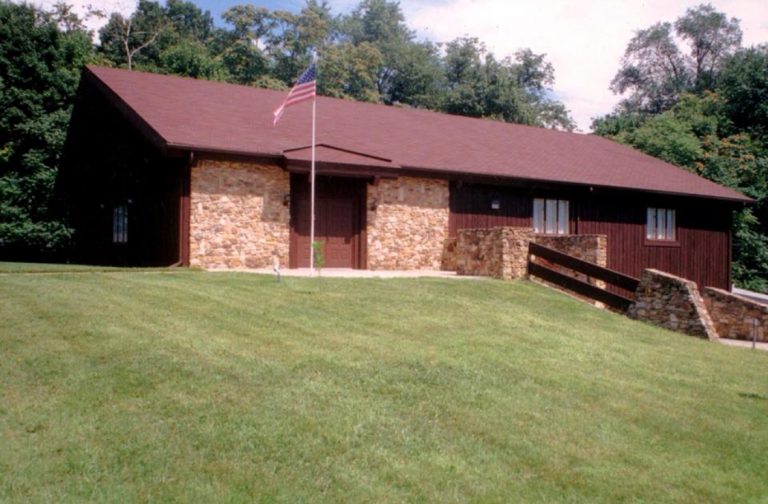
Former temple of Calvin Prather Lodge 717

It was a very long day for all involved, as Don insisted that his two Broad Ripple candidates (the two of us) would each have our MM work done individually, all the way through, and not as part of the large group of Prather's candidates—that was his pound of flesh, in return for conferring all of the degrees that day. He would sit in the East and go through the entire Master Mason degree separately for me, then for Nathan, and then all over again for a third time for the other candidates in a bunch. The Prather organizers grumpily agreed, because they didn't have anyone at the time nearly as proficient as Don to replace him. So Nathan and I became sort of one-day degree hybrids—we took the FC as a group, but our MM's separately.

I despise the term, but if one day classes make "McMasons," 
then Nathan and I were special grill orders.

A family friend of many years, Richard Finch, who hadn't been inside of a Masonic lodge for a very long time, made it a point to be there for me that day. It was amazing how many of my parents' friends turned out to be Freemasons, something I wasn't aware of until after I joined. So, too, were countless men I had admired as a child and a teenager. I would discover so many of them to be brethren decades after first encountering them. Most Masons will tell you the very same thing.

•   •   •


Prather's old lodge building in the Nora area of Indianapolis (actually their third home) is gone today, but the lodge still thrives on the city's east side. 

Gone, too, is James Lindsey, who had only been a Mason for a few months, but acted as the Senior Deacon for the day. 

So is Dave Bosworth, who cooked breakfast and gave all of us candidates crash courses in Masonic education between the breaks. He was actually the Grand Lodge Special Deputy who investigated Broad Ripple Lodge, and we became good friends for the next few years until his death.

PGM Bob Hancock
So is the gregarious Grand Master Robert E. Hancock (photo), who was promoting this one-day class program at the time, along with a lot of other 'crazy ideas,' to the chagrin of many disgruntled Indiana Masons. Little things like requiring business meetings to be opened on the EA degree so all lodge members could attend and participate. Reasonable outreach to invite honorable, worthy men to join instead of just hoping they would ask someday. Encouraging more mutual cooperation with Prince Hall brethren. And once a lodge meeting was closed, reopening the Bible at all times to the passage, "Let your light so shine before men, that they may see your good works, and glorify your Father which is in heaven." He was right on so many things, yet the rank and file despised him for it at the time. ("Geez. Opening on the EA degree means ALL of our officers have to attend a stated meeting, AND it adds almost 5 minutes to the opening and closing! That's outrageous!") Every single one of his proposals that year was voted down by the grand lodge membership. And then, ironically, so many of those very same practices came to fruition in our grand lodge, after he was gone. 

"A prophet is without honor in his own country, among his own relatives, and in his own house..."

Gone, too, is WB David King, Prather's oldest living Past Master at the time. He had been the general contractor back in the 70s who had helped bring Prather's Nora building in for half of its estimated building cost. David gave the Middle Chamber lecture so movingly that day, so perfectly, and with such demonstrable understanding of the words of that long and complex ritual. I was astonished throughout the degree to hear it for the first time that afternoon. 
I was even more shocked to discover afterwards that David had gone almost completely blind at that point in his life, yet he led us through those 'winding stairs' to the Middle Chamber because he had done it with so many Masons before us. 

So is Ripple's then-Secretary Jerry Cowley, the ever cheerful, always optimistic, always outgoing promoter, defender and champion of Broad Ripple Lodge, who greeted every petitioner like a long-lost relative and was a constant fountain of suggestions to keep members coming back to lodge. Nothing ever phased him, and he was always the first to volunteer. Jerry made sure that the rest of us understood that we are all connected to each other, and to never stop inviting and welcoming every Mason we met, to remind ourselves and each other just what this fraternity is supposed to be about. When our lodge was teetering on closing, he always found a way to involve other lodges' members in our activities to shore us up until we could fix ourselves. And as we rebuilt, those very same visitors wound up enjoying our lodge even more than their own, often transferring to us, or becoming dual members. And that wouldn't have happened without Jerry.

So is our then-Treasurer Irv Sacks, the wise old Jewish uncle I never had, and whose warm humor and counsel I valued to the very end. Irv had the unique ability to gently stop arguments, or to encourage brand new members to try new programs and solutions while slipping in just the right amount of advice and caution, followed by a hilarious story.

So is Ripple's then-Senior Steward 'Big John' Gillis, whose sonorous, folksy voice the whole city of Indianapolis knew from his many years on radio stations WIBC and WNAP, often giving traffic reports from a helicopter high above the city. How shocked I was when it was him who appeared with his lavish mustache and lamb chop sideburns to "propound three important questions" to me!

Past Master Don Seeley is gone, too. I really never believed that would happen—he will be King Solomon for all eternity in my mind's eyes and ears, and each time I experience the degrees, it's his voice I always hear. During the MM degree, when a particular aspect of our obligation is demonstrated and explained, Don would look into a candidate's eyes, then softly say, as he turned and gestured to every single Mason in the room, "...and I will inform you, my Brother... That every. Single. Master. Mason... Is under a like obligation... To YOU." With such simple inflections and mannerisms, suddenly the weight and import and meaning of the fraternity's core teachings all became so clear, so embodied in that one, simple message.

And my old family friend Richard Finch is gone, too. He was maybe hardest of all, because Dick and his family have been part of my family for more than 50 years now. Because of our connection as Masonic brothers, I found myself standing in a remote southwest Pennsylvania churchyard five years ago, surrounded by members of his family and my own, beside a group of local Masons, where we laid him to rest beneath the silent clods of the valley.

I fully realize that this sounds to outsiders and to younger men like a long, maudlin dirge of the dead—a cut-rate Hamlet despairing over a whole bowling team of deceased Yoricks. It might sound to the uninitiated that Freemasonry is little more than a slow march to the graveyard. Or the tar pit. Or both. But it's quite the contrary. 

Freemasonry teaches us to live and celebrate each day as if it were our very last one, to learn from, give to, and cherish each other, young and old. To build instead of tear down. To put aside whatever petty nonsense divides us as individuals, and instead unite to become something larger and better than ourselves. To learn from each other's differences and similarities, and to celebrate those differences, instead of recoiling from them, or branding each other as enemies. To leave the world a better place than we found it. Apart from houses of worship, there aren't a lot of institutions left in the world trying to keep that mission alive. 

But the big difference between a church and a Masonic lodge is that religion concerns itself with the afterlife and the disposition of the soul, while Freemasonry is concerned with mankind's life right here on Earth, gently teaching its members to be a better father, son, brother, husband, neighbor, worker or teacher. A better man than he might have otherwise been had he never knocked on a lodge door.

•   •   •

As for the rest of the story? After Broad Ripple continued to hemorrhage officers in 1999, Roger Vangorden would step in at the last second to be Worshipful Master in 2000. In case you're one of those Masons who sneers at 'One-Day McMasons' for being lazy underachievers, I was elected as Roger's Senior Warden, just over a year after my EA degree, and Nathan his Junior Warden. I became Master in 2001, just two years after my initiation, and Nathan followed the year after, during the first half of Roger's term as Grand Master. We were charter members when Lodge Vitruvian 767 opened Under Dispensation in 2001, becoming Indiana's first 'European observant-styled' lodge. Nathan served as Secretary for both lodges, and I'd become Vitruvian's third-serving Master in 2005. Grand Master Richard J. Elman recommended me to the For Dummies people to write a book about the Freemasons in November of 2004, and I'd serve as Master of Vitruvian in 2005. Nathan would eventually serve as Secretary of at least seven Masonic organizations, and became an active officer in the Indianapolis Valley of the Scottish Rite. And we've done a couple of other things here and there since then. 

And Broad Ripple Lodge? It would soon become one of the top lodges in the state when it came to activities, stability, proficiency, and creating lifelong friendships among its members. Less than five years after we almost lost our charter, the state's Grand Lecturer said at our Lodge of Instruction that he'd absolutely place Broad Ripple Lodge among the best he'd ever inspected, and enjoyed visiting more than any other. So maybe joining at its worst made us all stronger, more determined to get it right. 

That's because we had great role models to learn from. 

The lodge room that day back at Prather in 1999 was packed with Masons of all ages. And lots of them went on to remain active and to become leaders in the fraternity in the coming years. But it was a function of the demographics of a fraternity of mature men who overwhelmingly did as I did, and didn't join until their 40s and later. Yes, there were plenty of young men that day, but the wise, older Past Masters who were running the show had more than twenty years of Masonic experience on me then. And it's a full quarter of a century later now. Prather's Past Master Cliff Lewis tells me he will soon receive his 50 year pin, yet he looks to me just as he did at that breakfast so long ago.

My friend, WB Jeff Naylor once lamented, “When you're young, all you ever want to be is older. No one ever explains that the price you pay for that is in the numbers of people you lose who were important in your life.”

And yet, with all of those friends and brothers who were there that day now gone, you would think this is some maudlin, weepy lament over the past. It's not. 
Each of us is the sum total of our experiences and those who shaped our character. Every single one of those men taught me important lessons about Masonry, and people, and life itself. Lessons I never would have learned in a hundred years on my own without men like them, and countless others. 

The central metaphor of Freemasonry is its very premise. Each one of us is capable of being a Temple to God, and we choose to make our ourselves worthy or not. But that Temple isn't built by us alone. It's built, stone by stone, with the help of all those around us, everyone we encounter. Especially Brother Masons, fellow craftsmen engaged in building, not tearing down.

Joining the fraternity of Freemasonry has been the greatest life-changing experience of my 65 years on Earth, and I say that without exaggeration. In 25 years of membership, I have traveled all over the world and met and gotten to know quite literally thousands of men from every walk of life. Every sort of profession. Every economic level. Every race, color, nationality, education, personality, temperament, religion, and every other brand of classification humans beings cook up to categorize and file away strangers we normally don't know or would never otherwise associate with on a bet. Those tribal distinctions that we all arbitrarily use to ignore the people around us are meaningless when it comes to basic human coexistence. That's what being "on the level" is all about, which has been one of the primary principles of Freemasonry from its very beginning.

That 'Undiscovered Country from whose bourn no traveler returns' always seems just out of reach—as Hamlet said, it "puzzles the will." None of us need be in any hurry to actually get there. But such an amazing journey it has all been so far, with the greatest crowd of traveling companions it's ever been my privilege to know. As Cunard used to advertise its shipboard vacations, "Getting there is half the fun!"


I can't wait to see what comes next. Check in with me in 2049, when I get my 50 year pin. I'll only be 90 by then. Perhaps I'll be less inclined to ramble. But don't bet on it.

Monday, November 20, 2023

November 25: Tri-State Degree Exemplification in Dayton, Ohio


by Christopher Hodapp

This coming Saturday, November 25th, all Master Masons are invited to join the Grand Lodge Officers of Ohio, Michigan, and Indiana for the annual Tri-State Degree Exemplification at the magnificent Dayton Masonic Center. The Grand Lodge of Michigan will present the Entered Apprentice; Ohio the Fellow Craft; and Indiana the Master Mason degrees, using each jurisdictions' degree rituals (and yes, there are differences).

Work begins at 1:00PM Eastern Time, and tickets are not required. Following the work, everyone is welcome to join the Grand Lodge Officers from all three jurisdictions for refreshment and fellowship until 6:00 PM.

The Dayton Masonic Center is located at 525 W. Riverview Avenue in downtown Dayton, Ohio.

Take note that your grand lodge must be in amity with the Grand Lodge of Ohio for this event, as it is in their jurisdiction. Attendees need to bring their current dues card and their own Masonic apron.

Wednesday, November 01, 2023

November 25th: Tri-State Degree Exemplification in Dayton, Ohio


by Christopher Hodapp

On Saturday, November 25th, all Master Masons are invited to join the Grand Lodge Officers of Ohio, Michigan, and Indiana for the annual Tri-State Degree Exemplification at the magnificent Dayton Masonic Center. The Grand Lodge of Michigan will present the Entered Apprentice; Ohio the Fellow Craft; and Indiana the Master Mason degrees, using each jurisdictions' degree rituals (and yes, there are differences).

Work begins at 1:00PM Eastern Time, and tickets are not required. Following the work, everyone is welcome to join the Grand Lodge Officers from all three jurisdictions for refreshment and fellowship until 6:00 PM.

The Dayton Masonic Center is located at 525 W. Riverview Avenue in downtown Dayton, Ohio. If you've never been there, take this opportunity to see it in person. It's one of the most beautiful Masonic temples in the U.S.

Take note that your grand lodge must be in amity with the Grand Lodge of Ohio for this event, as it is in their jurisdiction. Attendees need to bring their current dues card and their own Masonic apron.

Wednesday, August 30, 2023

Illustrious Indiana Masons Among Honored With 33° In Louisville


by Christopher Hodapp

I had fervently hoped to attend the Scottish Rite NMJ's Supreme Council meeting in Louisville this week, for several reasons. I had it on my calendar for a year. We'd made the plans months ago. But my last-minute leg injury prevented us going, along with other events I've been forced to cancel. And I'm NOT happy about it.

Congratulations to our new Illustrious 33° Brethren from the Valley of Indianapolis in the photo at the top of this post.

Bradley Keith Keen
Steven John Sonafrank
Paul Irvin Gosnell
James Richard Dillman
Amzie Lee Wenning.
(Illus. James Edward Granneman also received his 33° in a special ceremony on July 20th.)

They were joined by these Illustrious Sirs also honored Tuesday from the other Scottish Rite Valleys across Indiana:


From the Valley of Fort Wayne
Lawrence Albert Davis
Fred Leonard Lucabaugh
Terrence Roe
Christopher Stewart Sanders

From the Valley of Evansville
Thomas Lee Bartelt
Roger Fuchs
David Scott Straw

From the Valley of South Bend
Timothy Francis Lawson
Lucas Pacukovski
Matthew K. Pollard

From the Valley of Terre Haute
Richard Wallace Allen
Stanley Wayne Frank, Jr.
Jason Benton Smith

From the Valley of George Rogers Clark
Richard Edward Milligan
Rex Robertson
Archie R. Smallwood

If you're not a Mason – or even if you are –the 33° of the Ancient Accepted Scottish Rite of Freemasonry is likely the most misunderstood term and Masonic-related degree that people encounter

To slightly paraphrase from the official announcement concerning this honor as it is bestowed by the Northern Masonic Jurisdiction (which covers the 15 US states north of the Ohio River and east of the Mississippi):

[A Scottish Rite member of the 32nd degree] — a Sublime Prince of the Royal Secret — who is not less than 33 years of age, may be elected at an Annual Meeting of the Supreme Council to receive the Degree of Sovereign Grand Inspector General, Honorary Member of the Supreme Council. The Degree of Sovereign Grand Inspector General shall be conferred only at the Annual Meeting of the Supreme Council.

The Sovereign Grand Commander's degree, the Sovereign Grand Inspectors General, cannot be petitioned for, nor purchased, it must be earned through work and dedication to the craft. The 33° is not an endpoint, but a beginning of the continuing work these brothers will give to their Valleys and Masonry in general.

The 33rd degree is NOT hidden from the public - as you can see, their names are openly announced, and there are about 500 holders of this degree in each of the Northern and Southern Jurisdictions. It is considered a great honor, but 33° Masons do not "outrank" other Masons. A man is a "full member" of Freemasonry once he has completed the three degrees of Entered Apprentice, Fellow Craft, and Master Mason in his Masonic lodge. The Scottish Rite is an additional organization a Mason may join to discover and explore further Masonic philosophy, and because they confer such a large number of degrees through the presentation of dramatic ceremonial plays, the Rite numbers theirs from the 4th through the 32nd degrees, with the 33rd conferred on a few members as a penultimate honor for their hard work in Masonry or the community. 

In the North, the degree of Sovereign Grand Inspector General, Honorary is just that – honorary. There is also a separate Sovereign Grand Inspector General, Active who is a voting member of the Supreme Council (which governs the Rite). These SGIG/Actives represent the different Valleys in each state. In the North, the 33rd-degree ceremony for the Honoraries is an elaborate ceremony presented live onstage and can only be attended by other 33rds. The Actives have their own separate conferral and obligation.

The Southern Jurisdiction of the Scottish Rite consists of the other 35 states and the District of Columbia. All their degrees from 4 through 32, plus their 33rd, are based upon the rituals written by Albert Pike in the mid- to late-1800s. Our two organizations impart Scottish Rite lessons in different ways: Pike favored mostly Old Testament-inspired framing for his rituals and included much in the way of ancient symbolism and pre-Enlightenment esotericism, while the North has created more recent scenarios for its ceremonies, including several inspired by American history. 

Another difference between the two US Scottish Rite jurisdictions is that the Supreme Council of the Southern Jurisdiction holds its biennial meeting and 33rd degree conferral in Washington D.C., which is the location of their headquarters, the House of the Temple. The 33° candidates for the Southern Jurisdiction lined up last week in Washington, as seen in this photo from Arturo De Hoyos.


The Northern Jurisdiction takes their biennial meetings on the road and generally tries to hold its 33rd degree conferral in an historic theater, if possible. Recent meetings have been in Indianapolis, Chicago, Rochester, Cleveland, and Louisville this year. 

(Yes, we know – Louisville's on the south side of the river. But it's a great city for big events. And face it: thanks to GPS and Google Maps, Mankind has lost the innate ability to read maps or find his way without asking directions. That's what we get for subverting evolution.)


Sunday, August 13, 2023

HELP WANTED: Lodge Furniture and Vintage German Language U.S. Ritual


by Christopher Hodapp


I've been contacted by brethren from two Indiana lodges in need of some specialized items. If you're able to help with either of these requests, contact me directly ay hodapp@aol.com and I'll connect you with the appropriate brothers:

Fraternal Lodge Room Furniture Needed

If anyone knows of a Masonic lodge that is closing or consolidating, an Indianapolis lodge is moving to a new location later this year and is in need of a (hopefully matching) set of lodge room furniture. According to one of their Past Masters who dropped by our Museum, they are wanting to acquire an altar, the Master's and Wardens' pedestals, and all officers' chairs.

They'd also consider Secretary and Treasurer's desks if they match the rest of the pieces, and the J & B columns, if you have them. They do NOT need sideline seats.

He didn't give me a time frame, but they haven't broken ground on the new building yet, so it's not an immediate need. But they expect to be moved in before December. Obviously, the closer to Indiana, the simpler it will be to arrange transportation. I suspect they'd love to find something that can be reached within a day's drive from Indianapolis – but I'll let others sort that out.

German Language U.S. Ritual Material

Like many states in the midwest, early Indiana was settled by a large contingent of German, Swiss and Dutch immigrants, and we had a small handful of Masonic lodges here that performed their degree ceremonies and monthly work in the German language. (I think we had four or five such lodges at one time.) Lessing Lodge 464 in Evansville was the last chartered Indiana lodge that had official permission from the Grand Lodge to do their work in German — they ceased the practice in the 1960s, as I recall.

Lessing Lodge is now wanting to exemplify the degrees in German as a demonstration project — they believe they have enough German-speaking members and interested participants in the area to pull this off. But they haven't been able to find any sort of existing, German-language printed material of American Preston-Webb ritual. 

Any sort of material like this that may have existed at their lodge 60 years ago has disappeared long ago. As far as I've been able to find, we don't have anything in our Library/Museum. And it's entirely probable that there WAS no such printed material in the days when the German language lodges were active here — mouth-to-ear ritual instruction was the proper way of the Masonic world, regardless of language, up until the 21st century when we all got lazy and isolated. 

Obviously, Pennsylvania had a large German-speaking population, and I believe they still have some lodges today that do their degrees that way. But Pennsylvania's Blue Lodge degrees are so COMPLETELY different from the rest of the country that any German version of their work isn't really going to be appropriate in any other state (although, for demonstration purposes, maybe that's okay).

Another possibility might be material from a lodge in the American-Canadian Grand Lodge of Germany, although I don't know how closely their ritual tracks U.S. Webb Work.

It's certainly possible to scan Indiana ritual, feed it through translation software, and spend days trying to laboriously clean up the inevitable mistakes made by machine translations ("Welcome to the very Great Large Box of Indiana!"). But if anyone has already existing material, that would be extremely helpful. 

Again, contact me directly at hodapp@aol.com and I'll put you in touch with the appropriate brother.


Tuesday, September 06, 2022

Freemasons At Work in the Quarries

In 1898, English Masons conferred the first known Master Mason degree 
 to be held in 'Solomon's Quarry' (Zedekiah’s Cave) 
below the Temple Mount in Jerusalem

by Christopher Hodapp

This coming Saturday,  September 10th, 2022, Eden Lodge No. 477 in Greenfield, Indiana will perform its annual Master Mason degree in a stone quarry east of Indianapolis, and there will be a hog roast beforehand. Contact the lodge for more information.

*   *   *

Because of Freemasonry's stonemason-guild beginnings, the symbolism of cutting, dressing and assembling perfect stones from a rock quarry to build a sacred temple is the central theme that runs throughout Masonic ritual. The rough ashlar stone symbolizes our own rough character, and our desire to smooth and perfect that ashlar and be worthy to become a 'living stone' to as part of a 'House not made with hands, eternal in the Heavens.' And because we use the Temple of Solomon in Jerusalem as that ideal symbol, Masons have had an interest in occasionally enacting the ritual in an actual quarry to mix a little more realism with the symbolism. 

After Napoleon's failed mission of stomping around in Egypt in the early 1800s, the administration of Palestine and the Holy Land was taken over by the Ottoman Turks. But it's not like that part of the world has ever had a stable history. After World War I and the dissolution of the Ottoman Empire, the League of Nations appointed England to superintend the "Mandate for Palestine and Transjordan" and transition the region to create a Jewish homeland and hopefully keep the peace. But the English had already been poking around the Holy Land and Jerusalem for quite some time.

In the late 1860s, England's Sir Charles Warren was hired by the Palestine Exploration Fund to make surveys of the ancient biblically-related sites in and around Jerusalem. They were especially interested in the Old City and the Temple Mount – onetime location of King Solomon's Temple – and Warren conducted excavations that revealed a long-buried cave deep within the complex. The subterranean entrance, known as Zedekiah's Cave, led to an ancient stone quarry underneath the Temple complex, and it was quickly dubbed by Biblical archeologists as 'Solomon's Quarry,' the source of the stones used to construct the sacred Temple three thousand years ago.

Warren would become best known in modern times as the chief of London's Metropolitan Police between 1886-88, specifically because of his role in the investigation of the infamous Jack the Ripper murders. But he was also an enthusiastic Freemason, and he developed a keen interest in the physical sites connected with Masonic ritual. 

Warren was initiated into UGLE's Royal Lodge of Friendship No. 278 in Gibraltar in 1859. He would serve as the District Grand Master of the District Grand Lodge of the Eastern Archipelago from 1891 to 1895. And he served as Grand Deacon in 1887 for the United Grand Lodge of England. Perhaps most important was that in 1884 he was elected as the founding Master of Quatuor Coronati Lodge No. 2076. 

In addition to his papers presented to that lodge and printed in its transactions, he penned two important books on the subject of his biblical archeology work in and around the Temple complex: The Temple or the Tomb in 1880, and The Survey of Western Palestine-Jerusalem in 1884.

Meanwhile in America, Kentucky Freemason and founder of the Order of the Eastern Star, Rob Morris, had made a famous Masonic pilgrimage to the Holy Land himself to see the Temple Mount, 'Solomon's Quarry' and many other sites connected with our ritual, and wrote a book of his travels in 1875 that inspired members of the fraternity all over the world. Between Warren's and Morris' books, articles and speeches, Victorian-era Masons became more and more fascinated with the history and remains of the historical sites referred to in the Hiram legend and subsequent 'higher degrees' of the York and Scottish Rites.

Enthusiastic English Masons who had enough money to get there themselves organized the first degree conferral inside of Solomon's Quarry in 1898. 


A popular Holy Land souvenir for decades was a Masonic gavel set made from stone cut from the Solomon's Quarry site, with a handle and wooden carrying case made from olive wood. But Masons who couldn't make the trip to the Middle East themselves found substitutes closer to home — performing 'quarry degrees' outdoors in a still functioning operative stonemason's rock quarry.

You don't hear all that very often these days about quarry degrees. They're not totally unheard of anymore, but they're nowhere near as popular as they were during the early and mid-20th century. The combination of shrinking memberships, the fraternity's lack of enthusiasm as a whole, and legal liability all seem to have conspired together to make these ceremonies in such incredibly symbolic surroundings much rarer today.

Which brings me to Indiana, home of some of the greatest limestone deposits and quarries anywhere in the United States. Indiana celebrated its 150th Masonic anniversary, its Jubilee Year, between 1967-68. On August 19th, 1967, the nine original founding lodges of the Grand Lodge of Indiana F&AM, or their direct successors assembled under a full moon and reunited in a stone quarry near Salem, Indiana to jointly confer a Master Mason degree. Then Grand Secretary Dwight L. Smith had deemed the evening to be "Freemasonry's Link With Antiquity," and it was perhaps the event dearest to his heart because of the historic symbolism. 

Dwight was not just a Grand Secretary, he was a force of Nature. He began planning the 150th anniversary of the founding of the Grand Lodge of Indiana a full decade before it kicked off. Dwight was a trained journalist. He became editor of his local newspaper in Salem, Indiana in 1934, at the age of just 25, and he had grown up living and breathing Indiana history. He brought that same zeal for Indiana and its founders into Freemasonry when he became a very active young member, also at 25. He would soon take on editing the Indiana Freemason magazine, a position he held more than 40 years. He took an ordinary monthly Masonic newsletter and transformed it into an internationally acclaimed, informative Masonic magazine that was subscribed to by even more readers outside of the state than in it. Every issue contained thought-provoking Masonic education and historical articles, at Dwight's insistence. He demanded it. At the time, it was considered one of the very best and most informative Masonic magazines anywhere in the world.

Dwight was determined to get Indiana’s Masons sufficiently enthusiastic by 1967, and many of the traditions he and his committee started have continued every single year ever since. In my new book Heritage Endures, I devote a big section up front describing the monumental celebration Dwight Smith and the Grand Lodge pulled off for those twelve months between the Mays of 1967-68. Dwight had 250 Indiana Masons working as part of his enormous Sesquicentennial Commission in every corner of the state, and what they did was truly monumental,arranging major events for every month. Sure, Indiana had 175,000 or so members around those years, as opposed to our 50,000 today, so we had a lot more warm bodies then, and more money perhaps. But consider something else. 

We had far more enthusiasm about ourselves as Masons, too. It was an age when we believed just about anything was possible, so we thought and expected the very best of ourselves.

Things don't happen in a vacuum. The world was in enormous turmoil at that precise time in history. A contentious presidential election. The expansion of the military draft and the Vietnam War. The still powerful Soviet Union behind the Iron Curtain, with constant threat of nuclear confrontation. The mysterious nation of Communist China had just exploded their first hydrogen bomb. The Six-Day Arab-Israeli War that we are living with the ramifications of today. Nightly news coverage of race riots, and war dead no one had seen unfold in their living rooms in living color before. The U.S. space program had just lost its first human casualties in the race to the Moon – three astronauts, including Indiana Freemason Gus Grissom perished in the Apollo 1 fire. A breakdown in traditions and morals. Social and racial strife. A sudden national loss of religious faith and the 'God is Dead' movement. Technological changes happening so fast that people were unnerved by the ways their own lives were affected. 

It all sounds so remarkably like the world we are living in right now, doesn't it?

Indiana's Sesquicentennial Masonic celebration was deliberately designed by Dwight Smith to show the world that Freemasonry was the inverse opposite of all of that chaos and turmoil. If society was a wreck, Masonry was a rock. The very day after China exploded their H-Bomb, Indiana Freemasonry was on television all over the state, telling its story instead.

Dwight’s plan all along was to use the 150th anniversary to plant seeds all over Indiana, and the quarry degree in Salem on that August 1967 evening was just one of them.

Site of operative quarry Masonic degree at Salem, Indiana in 1967

Of the original nine founding lodges in Indiana, only Vincennes No. 1 and Brookville’s Harmony No. 11 remained that had enjoyed an uninterrupted existence since January 13, 1818. Three more, Madison’s Union Lodge 2, Lawrenceburg Lodge 4, and Rising Sun Lodge 6, had ceased for a time, but new lodges had been permitted to form again with their same historic names and numbers. The remaining four had dissolved, but were succeeded by new lodges with new numbers: Melchizidek Lodge at Salem was replaced by Salem Lodge 21; Corydon’s Pisgah Lodge 5 was succeeded by Pisgah Lodge 32; Vevay Lodge 7 by Switzerland Lodge 122; and Charlestown’s Blazing Star Lodge 3 by Blazing Star No. 226. The Masonic Heritage Program for the 150th Jubilee Year branded this event as one of the most significant of the entire twelve-month celebration, as it was the only time these historic lodges had ever met together for such a purpose. 

Before the meeting convened, dinner was served to nearly a thousand guests at the local school in Salem. Following the meal, 1,800 Freemasons from Indiana, Kentucky, Florida, California, Canada, and other jurisdictions all marched down Quarry Street and descended deep into the stone pit a mile away for the degree. It took forty-five appointed Tylers stationed around the perimeter of the area just to guard against any approaching cowans and eavesdroppers. A brief period of rainfall caused some panic, as the Masons fled for cover before the opening gavel could be struck. But the rain quickly stopped—Dwight simply wouldn’t permit it. The bleachers installed for the occasion were dried, and by nightfall the full moon peeked over the rim of the high, sheer pit walls from a clear sky. It fell to the officers of Dwight Smith’s own lodge, Salem No. 21, to open the lodge under the star decked canopy in this “low dell,” and the Sublime Degree was conferred by a cast made up of members of all nine of the historic lodges assembled. 

The Grand Secretary had been determined this night would be central to the celebration from almost the first discussions of the Sesquicentennial Commission back in 1960. He even had specially ‘illuminated’ scrolls created by hand as a tribute for each of the nine lodges by artist and calligrapher Arthur G. Duvall, Past Master of Evansville’s Lessing Lodge 464. The individualized certificates duly noted the names of each lodge’s own “Pioneer Freemasons” who had taken part in the formation of the Grand Lodge in January 1818—23 in all. As the meeting was opened, Smith read an introduction to the crowd, giving the historical background of the occasion. In noting that only two of the founding nine lodges had actually survived intact for a century and a half to witness the Jubilee year, he remarked, 
“In a very real sense this assembly is like unto human life: those who lay the foundations seldom live to place the capstone. One generation puts down the working tools: another generation takes them up and carries on.”
The quarry degree was just one single event that year. With erecting almost thirty permanent bronze historical markers all over the state, television programming, countless local and statewide occasions and gatherings, plays, endless press releases, Dwight's new book Goodly Heritage, and all the rest of the “bread and circuses” he and his committee cooked up, what he wanted to do was pass along the IDEA of Freemasonry, to members young and old, and to curious onlookers who might see a spark of light and knock at the door of a lodge someday. That passion was contagious.

Today we have Indiana’s own Dwight L. Smith Lodge of Research U.D. in his memory, but there seems to be a feeling among those who knew him personally that he would never have approved of such a thing at all, let alone one named after him. Dwight felt that it was the role of
everyMason and every lodge everywhere to do research, and to study the history and heritage and symbolism and philosophy of the fraternity, not cloistered away in a single lodge that meets twice a year. You shouldn’t need an excuse to think and work and achieve.

Antoine de Saint-Exupery was a famous world aviator and journalist, and reputed by many to have been a French Freemason. He was the author of The Little Prince, if any of you took French classes and had to read it. He once wrote:
“If you want to build a ship, don’t herd people together to collect wood, and don’t assign them tasks and work, but rather, teach them to long for the endless immensity of the sea.”  
And that’s what Dwight and his committee and the Grand Lodge were really doing — inspiring their brethren 'to long for the endless immensity of the sea' that is Freemasonry. Dwight didn’t do it alone, he had lots of help. But he saw it all, it was his vision years before. And he dragged all of Indiana's Masons along with him on that voyage. He expected better, and he got it in return from his equally enthusiastic brethren.

It's long past time that we started demanding better of ourselves once again, and living up to the same expectations that Dwight had for himself and for this fraternity, and to once again teach others 'to long for that endless immensity of the sea' that is Freemasonry. Nobody is going to do it for us and there’s nobody else to blame now. And guilt is a lousy motivator anyway.

Men don’t join a club called Freemasonry. They join to BECOME Freemasons. They join because of the IDEA of what becoming a Freemason is to them. I certainly did. I suspect you did too. I hope so, anyway. Everybody fixates on the mantra that we need more new members all the time. Well, we've got far bigger troubles than just plumping up our numbers. We can get all the new members we want, if that's all we want. But those new members will never stay, and keep coming back, and they will never come to truly love Freemasonry as an idea until our own existing members truly love it first. Until we all rekindle the passion we all had for the fraternity on the night of our Entered Apprentice degrees. 

We have no business obligating another new Mason until then.

And until every single one of us longs for that endless immensity of the sea that is Freemasonry. 

*   *   *   

With that in mind, if you are in or near Indiana this coming Saturday, you will have an opportunity to experience what those 1,800 Masons did in 1967 in Salem, or those English brethren did in Jerusalem in 1898 — to imagine Hiram walking among the stones in the quarry, surrounded by the workmen all hard at work. 

On September 10th, 2022, Eden Lodge No. 477 in Greenfield, Indiana will perform its annual Master Mason degree in a stone quarry east of Indianapolis, and there will be a hog roast beforehand. Contact the lodge for more information.


Thursday, July 28, 2022

Michael Poll To Speak To Louisiana's New Goose & Gridiron Lodge 1717 Festive Board Saturday 7/30/22


by Christopher Hodapp

Last year while everybody (including myself) was distracted by the Grand Lodge of Louisiana's recognition and establishment of amity with the Most Worshipful Prince Hall Grand Lodge of Maryland, but not Louisiana's (for very good reasons), most of us missed another interesting development in that unique Masonic jurisdiction. 


The GL of Louisiana issued a charter for their own Goose & Gridiron Lodge 1717, named for the London alehouse and the lodge that met there in the churchyard of St. Paul's Cathedral when the premiere Grand Lodge of England was famously formed in June 1717.

Back in October of 2018, I posted a story announcing Ohio's chartering of Goose & Gridiron Lodge 1717. That interesting 
'observant-styled' lodge was established with the unique (for the United States) mission of studying and working English Emulation Craft degree rituals. Back in 2001 when we were establishing Lodge Vitruvian 767 in Indiana, getting dispensation from our Grand Lodge to work the English Emulation Craft rituals had been an elusive dream for us for many years until we finally dropped the subject out of frustration. Despite their widespread use throughout the United Kingdom and the rest of world's UGLE lodges, they are rarely seen in this country.

But Louisiana's new lodge won't be following the lead of the Ohio brethren. Their Goose & Gridiron Lodge 1717 joins ten other lodges within the Grand Lodge of Louisiana that currently are permitted to work the Scottish Rite Craft degree rituals descended from the earliest French lodges that predated statehood. These are often mistakenly referred to by American Masons as Louisiana's 'Red Lodge degrees' (as opposed to our usual 'Blue Lodges').

In addition to Louisiana, these Scottish Rite Craft degrees are also worked upon occasion in certain lodges in California, Hawaii, New York and the District of Columbia. But Louisiana's are by far the best known in the U.S.

According to Mike Poll, editor of the Journal of the Masonic Society, Louisiana's Goose & Gridiron 1717 is the first lodge  to be chartered by Louisiana's Grand Lodge in a century permitted to work these rituals.

Speaking of Michael, he will be delivering a Zoom presentation to the lodge's festive board tomorrow evening, Saturday, July 30th at 7:30PM (central). From their Facebook page:


Master Masons are invited to come learn more about Louisiana's peculiar Masonic history and the Scottish Rite Ritual and Degrees unique to our state, most specifically the New Orleans area.
Visiting Master Masons will be presented with education regarding the Scottish Rite esoteric work in lodge, with an open presentation to follow at the Festive Board.

 At 7:30PM, W∴B∴ Michael Poll, P∴M∴, Masonic Historian and Publisher, will present "The Other Scottish Rite Degrees: A little of what we know and don't know about the Louisiana Scottish Rite Craft Lodges" to those assembled as well as online viewers via Zoom at this link bit.ly/GG1717_SRTALK

NOTE: This will be a public talk and nothing will be discussed that is the reserved for a properly tilled lodge.
There will be a catered meal for $15 a plate for those who would like to eat during the Festive Board. If you plan to attend in person please RSVP at this link: bit.ly/GG1717_RSVP1
Goose & Gridiron No. 1717 is the only lodge in Louisiana outside of the 16th Masonic District working in this ritual, and the only Traditional Observance lodge in the US designated as a "Scottish Rite Craft Lodge." 
Visiting Brethren, please note: G&G No. 1717 has a dress code of a dark colored suit for business meeting attendees. Non-Master Masons may attend the festive board presentation.

Tickets available HERE.

Sunday, April 10, 2022

Welcome Brothers: GL of Ohio Raises 780 in Statewide One Day Class


by Christopher Hodapp

On March 26th, the Grand Lodge of Ohio F&AM conferred the Entered Apprentice, Fellow Craft and Master Mason degrees on a total of 780 candidates as part of a statewide One Day Class at several locations. Naturally, the Masonic Intertube discussion boards, Twitbook, and Facetwit sites went mildly berserk over the news. As many as 780 may sound, it's only about 10% of the record 7,700 Masons raised by the Grand Lodge of Ohio at a similar statewide one day event back in 2002.

Even though these types of mass membership events originated thirty years ago, they continue to remain controversial within the fraternity. Indeed, many online discussions that took up the subject over the last couple of weeks sounded every bit as vitriolic as they did twenty years ago.

Origin

The first 'Grand Master's Class' was held in 1992 as a two-day festival by the Grand Lodge of the District of Columbia . In that single event, their small jurisdiction raised 113 candidates — an astonishing 55% of all of DC's candidates for the entire year of 1992. 

Despite having no internet in those days, it didn’t take long for the word to spread. By the next February, DC's event—the first mass raising of Master Masons of its kind—was the heated talk of the Conference of Grand Masters. The practice picked up steam nationwide in a startlingly short time, especially for an institution as resistant to change as Freemasonry. By 1998, the Grand Lodge of New Jersey trumpeted that 96 lodges participated in their first one-day degree event, and raised 434 new Master Masons.

At the time, the bulk of Freemasons worldwide were aghast, and more than a few foreign grand bodies grumbled about perhaps withdrawing recognition of their U.S. counterparts that had held such mass raisings. While similarly massive events were overwhelmingly typical of degrees conferred on large classes of Scottish Rite members, the vast majority of Masons agreed that they were wholly inappropriate for new initiates into the fraternity. The three Symbolic Lodge degrees—especially for the Entered Apprentice and the Master Mason—were particularly considered to be individual and deeply personal experiences. At best, critics alleged, men made Masons in a day or two would undoubtedly be the fastest ones to leave. They would fail to become proficient in the required memory work. If they remained members at all, they certainly would cease to participate, much less take on the requirements to become officers. Lodges that relied on such classes to do all of their degree work for them would quickly lose any ability to confer their own degrees forever. In short, the naysayers claimed, the entire fraternity would be both cheapened and robbed—from the candidates themselves, right down to the lodges and their own members.

Ohio's Record-Setting Class of 2002

By 2001 at least thirty-one U.S. grand lodges had conducted one or more of these events in varying permutations. Then in April 2002, Ohio left everyone else in the statistical dust, setting the astonishing record of initiating, passing, and raising 7,700 Master Masons in multiple locations throughout the state in a single day. Throughout the seven years prior to their first enormous Grand Master’s Class, the state of Ohio had raised a combined total of 10,341 Master Masons in the traditional, individual manner. Their 2002 Grand Master’s one-day event nearly doubled their entire prior seven-year membership increase in just a matter of hours. The rest of the Masonic world’s nose-counters bolted straight up in their collective seats and took notice.

Ohio’s colossal one-day increase was never again equaled anywhere. They staged two more such events in 2003 and 2005, and studied the after-effects at the end of 2006. In a little more than five years, one-day Masons raised at their three events alone represented more than 10% of Ohio’s total Masonic membership. While their two subsequent classes never came close to equaling their enormous premiere event, other jurisdictions still looked enviously at Ohio and judged them a triumph. Numerically speaking, anyway.

Results

One of the major criticisms from the start was an assumption that one-day Masons would not go on to become active lodge participants, proficient ritualists, or officers. “Easy in, easy out,” was the oft-repeated, doleful warning. But several jurisdictions that amassed enough data over time were able to disprove that assertion.

A study was conducted in 2001 by Paul M. Bessel for the Grand Lodge of the District of Columbia, which was the first of its kind to analyze the long-term results of such conferrals. Their grand lodge was unique, since they had conducted two-day degree events annually for eight years and had the data to analyze. Bessel found that the retention and participation rate of members initiated, passed, and raised in the slower, traditional manner, versus the Grand Master’s Class candidates, were statistically identical. Subsequent years demonstrated the same results, clearly disproving objections based only upon fears that dejected Master Masons who were disappointed or unimpressed by their one day experience would vanish faster than their traditionally raised brethren.

Other jurisdictions that bothered to investigate their own circumstances and results came to the same conclusions. Ohio did its own study in 2007, five years after their record setting class. In the three Grand Master’s Classes held between 2002 and 2005, they found that 8% of one-day class members were serving or had already served as lodge officers. That worked out to more than 1,000 officers in their 534 lodges, or almost two officers per lodge. The actual numbers among lodges varied—several reported as many as five of their current officers were one-day members. 

In addition, lodges reported an average of 15% of one-day members attended meetings regularly, which was virtually identical to (and often greater than) the participation rate of traditionally made Masons. Numerous lodge secretaries expressed the belief that one-day classes had actually “saved” their lodges. 

More recently, a 2015 study of current lodge officers in Washington State revealed that one out of six officers are one-day class members.

As of 2017, my own Grand Lodge of Indiana has raised a total of 6,976 Master Masons via one-day events since its first in 1997. Of those, 3,958 still remain Masons across those twenty years. Many have been officers and Worshipful Masters, and all have simply been as active or inactive as their traditionally-made brethren. To date, there have been several grand masters all across the U.S. who received their degrees at one-day events. 

Tens of thousands of U.S. Masons have been initiated, passed, and raised in one-day classes, and the loss of them due to inactivity and demits is no better or worse than traditionally made members. In Indiana’s case, figures clearly show that one-day Masons have actually remained members in a substantially greater percentage than those traditionally made.

That which was lost

The philosophical question as to the loss to the candidate of a more individual, transformative, initiatic experience is what cannot be measured. What has been commonly echoed by men who received the accelerated degrees is that they returned to their own lodges and discouraged their officers and fellow members from sending future candidates to them. So in their own way, one-day classes actually encourage lodges to increase their proficiency at conducting degree work, and not abandon it, as was initially feared by some. 

Retention and participation comes down solely to the way the members are treated and mentored once they start attending their lodges, and rests on the interest and dedication of each individual Mason. A one day class conferral of the three lodge degrees doesn't let the lodge and its members duck their responsibility to provide a trusted, knowledgable mentor to those brethren who need more coaching and education, not less. 

Maybe more to the point is that we don't have two classifications of Master Mason in this fraternity. If at their next meeting after their raising they are referred to by ostensible brethren as ‘McMasons,’ ‘Blue Lightenings,’ or ‘One Day Wonders,’ receive no mentoring follow up, and suffer through dull stated meetings with no Masonic education and un-Masonic infighting, they will be unlikely to send in their dues renewal in December.

One-day classes were developed largely in response to the screams of lodges over membership losses and their own inability to confer their own degree work. So, those early massive classes did exactly what the lodges begged for—they brought in new members, by the bucketful. One day classes will only end if lodges stop demanding them. As I've said repeatedly, if you have a visceral reaction against the practice, fault the lodge who sent him to the class, not the candidate who is now your Brother. 

The lodges that failed to keep them coming back managed to accomplish that part all by themselves.


This isn't the first time I've tried to tackle this topic, and probably won't be the last. Have a look at: