"To preserve the reputation of the Fraternity unsullied must be your constant care."

BE A FREEMASON

Showing posts with label European Freemasonry. Show all posts

Friday, February 02, 2024

Grand Orient of Italy Wins Court Battle Against Italian Senate Over Mussolini's Confiscation of Their HQ


Photo: Wikipedia Commons

by Christopher Hodapp

The Grande Oriente d'Italia (Grand Orient of Italy) has prevailed in an Italian Supreme Court ruling against the government that restores ownership of their former headquarters. The historic Palazzo Giustiniani was illegally seized in 1925 by dictator Benito Mussolini's Fascist government ,and was never returned to the Masons after the end of World War II. Since that time, the magnificent 16th century palazzo with its beautiful interior frescos has housed the offices of the Senate of the Republic, and is the residence of the President of the Senate.

The landmark decision was handed down on January 26th, and recognizes the fact that the fascist state confiscated the Masons' historic property without any due process, recompense or restitution whatsoever. The verdict comes just one year short of the 100-year anniversary of the building's seizure.

From the close of World War I until the Allied victories against the Axis dictatorships that ended World War II, Freemasonry in Hitler's Germany, Mussolini's Italy, and Franco's Spain was suppressed and declared to be a so-called "secret society." Countless European Masons were persecuted, arrested, and even executed for no other crime than being a Freemason. The Palazzo Giustiniani was seized from the Grand Orient Masons by the Mussolini regime for use by the Italian Senate, and Freemasonry in Italy was banned outright by 1926. After war broke out across Europe, Masonic halls all over Axis-occupied territories were confiscated, along with regalia, furniture, artwork, and especially grand lodge membership files. Masonic buildings were frequently turned into anti-Masonic propaganda displays and museums, luridly staged with the creepiest of props (skeletons were a big hit with the public) to perpetuate the unfounded allegations that the fraternity practiced Satanic worship, blasphemies, plotted revolutions, and other creepy, nefarious intrigues.
NOTE: To clarify: the Grand Orient of Italy is the largest obedience in that country, and it is the body that the overwhelming majority of U.S. grand lodges recognize. The Grand Lodge of Italy is the second largest group, a mixed body that admits both men and women, and is not deemed regular by the overwhelming majority of the Masonic world. But in a rarity, the United Grand Lodge of England—from whom many U.S. grand lodges seek clarity and guidance—recognizes the much smaller and newer Regular Grand Lodge of Italy. The U.S. did not uniformly follow UGLE's action, and continues not to do so.
After the war ended, and Freemasonry returned, the Grand Orient was permitted to move its headquarters back into the palazzo, but it continued to principally be occupied by the Senate offices. By 1981, the Masons again moved out – voluntarily this time – into a smaller building.

From my albeit imperfect understanding of the whole situation, it certainly sounds like the Grand Orient Masons are now the Senate's new absentee landlords.

From a letter circulated this week by the Grande Oriente d'Italia's Grand Master Stefano Bisi:


"Fascist paramilitary squads violently occupied the building on 5 November 1925, as the Court itself recalled. And immediately afterwards the fascist state acquired the building, through a settlement agreement, against which appeals were already presented in various judicial offices at the time, asserting its right of pre-emption on an asset of artistic value, without however first declaring the nullity of the contract stipulated by the GOI in 1911 for the purchase of the building itself.
"This was a condition, the Court said, prejudicial for the state to be able to exercise its right of pre- emption and acquire the property. Consequently, the regime illegally took possession of the property in violation of the 1909 law on artistic assets.
On these legal bases, the United Sections of the Supreme Court of Cassation sent the case back to the Lazio Regional Administrative Court, remitting to it the assessment regarding the legitimacy of the acquisition procedure of Palazzo Giustiniani.
The Grand Orient expressed satisfaction with the court's decision and confirmed that the judicial initiative is aimed exclusively at restoring the truth of the facts to history in the full conviction that it represents the foundation of the essence of the democratic state to which the Grand Orient of Italy is proud to belong.
A victory for the Grand Master Stefano Bisi, his council and the staff of lawyers of the GOI. A very important step forward in the controversy which adds to other historic goals scored in these last years by the Italian Masonic institution.
Located close to Rome's Pantheon, the beginnings of this Roman palace were originally built as a religious residence in the mid-1500s on the Via della Dogana Vecchia. But in 1590, it was acquired by a Genoese prince named Giuseppe Giustiniani. Over time, Giustiniani's descendants bought up surrounding buildings, eventually connecting them together until it comprised the entire city block. 

Great big palazzos can look mighty empty unless they get filled up with statuary, paintings, murals and other tchotchkes, which is just what the Giustiniani's set about doing. The artwork collection was reputed to be comprised of more than 1,600 pieces, including paintings by some of the greatest artists of the Renaissance period, and even 1st century AD statuary excavated from the remains of Emperor Nero's infamous Baths

Many additions and modifications were done to the palace over the centuries. Most of the ancient statuary and the most valuable art pieces were sold off over the 1700 and 1800s, and by 1826, the last of the Giustiniani family died out. The building was then acquired by the Grazoli family, and for a while it was rented out as the diplomatic residence of the Tzarist Russian Ambassador to Italy.

The massive palazzo was finally leased to the Freemasons of the Grand Orient of Italy beginning in 1898 for 11,000 lire a year. Three years after that, the Grand Orient purchased the historic building outright for use as its headquarters, and converted several of the largest rooms into magnificent lodge meeting halls.

The ceiling of one gallery is decorated with images of King Solomon.

The same gallery today, stripped of its Masonic furnishings


Solomon looking over the plans for the Temple, in the background.

"Solomon's Judgement," the famous instance of two women claiming to be mothers of
the same newborn child. Solomon calls their bluff, and threatens to cut the child in half,
causing the liar to confess her fraudulent claim.

The opportunity to acquire the building outright was spearheaded in 1901 by the Grand Master (and Mayor of Rome at the time, by the way) Ernesto Nathan – the 7-story, 405-room palace was sold to the Grand Orient for 1,055,000 lireAccounting for inflation since 1901 and the conversion rate between the Italian Lira and the U.S. Dollar, that original 1,055,000 lire purchase price calculates out to about US$11 billion today. 

That's with a B. Give or take. 

The Senate set aside space in the Palazzo for the Masons' return after WWII, but about 40 years later even that reduced area became too much room for the GOI to deal with. In 1981, the notorious P2 (Propaganda Due) scandal became an international crime headline-grabber. The complex plot involved a former Grand Orient Masonic lodge being operated without a charter by its expelled Worshipful Master, Licio Gelli, with a thousand secret members as a front for organized crime, government corruption, killings, terrorist attacks, bombings, and even the theft of a substantial sum of cash from the Vatican's own bank accounts. Even today, the P2 lodge is often described as having been a "shadow government," made up of evildoing Masons in high-ranking military and government positions. 

Even though the P2 lodge was operating illegally and the Grand Orient expelled and denounced all those involved, the European press rarely took care to explain the reality of the situation or make clear that thousands of rank and file Masons had nothing to do with Gelli's crimes. To this day, Freemasons all across Europe are frequently outed by the press and denounced as criminals primarily because the P2 scandal was so notorious. The reputation of the fraternity worldwide was sullied by the press coverage of the whole affair, even though the actual participants had nothing to do with Freemasonry.

In 1985 the Grand Orient moved its headquarters down the road into a much more modest (but still not-exactly scruffy) home –  the Villa Medici del Vascello in Rome (photo below), purchased at that time from Princess Elvina Pallavicini. 

Current home of the Grand Oriente d'Italia, in the former Villa Medici del Vascello.
Photo from the GOI website.

A departure agreement made in 1991 with the Senate was supposed to provide a large area at the Palazzo for an Italian Museum of Freemasonry – which never materialized. According to a 1985 article in La Repubblica, four floors of the Palazzo remained partially decorated with imagery of the Masonic fraternity.
NOTE: My own mastery of Italian is limited to "Ciao!" and "Pronto!", asking waiters for my dinner check to be handed over to the wealthier-looking guy at the next table, and shouting down the hall for an extra roll of carta igienica. Consequently, my deciphering details from Italian articles can't be trusted. But below is my probably-terrible English translation – aided by Google Translate:
"[T]he Sancta Sanctorum remains, that is, the main temple of the Grand Orient and five other smaller temples. It is here that at least once a week, at the behest of the grand master, Armando Corona, what the Freemasons call their "ritual work" takes place. Here is the "hall of [winding] steps", here are the Workshops, "sacred spaces above and outside the world", with the entrance located to the west, the blue-vaulted roof dotted with constellations with the signs of the zenith and of the nadir, and the black and white checkered floor to recall that of Solomon's Temple.
"The Grand Master's throne is surmounted by a canopy of blue fabric with gold fringes. On the eastern wall stand the initials of the phrase: "To the glory of the great architect of the universe". The statues of Hercules, Venus and Minerva next to the three flame lamps and the three love knots symbolize strength, beauty and wisdom. Wisdom, for the Grand Master Armando Corona, was to give victory to the Senate, which for years and years had been claiming the four floors of Palazzo Giustiniani occupied by the Grand Orient.
"However, I set one condition," says Corona. "Given that our name derives from the Giustiniani Palace, it is right and indispensable that in this palace the Grand Orient preserves at least one "ubi consistam" – some rooms – in order to symbolically justify its denomination". According to the compromise, three floors for a total of approximately three thousand square meters will be sold to the Senate and - in exchange for a symbolic rent with no deadlines - the first floor will instead be kept for the Grand Orient, where Corona intends to set up a permanent exhibition of the history of Freemasonry and in which the main temple will be maintained for its esoteric rites..."
It's true that governments generally have more money than either Elon Musk or God (in that order), but something tells me that the Italian Senate has no intention of offering to buy their longtime digs back from the Masons for US$11 billion.

From Il Tempo: "Giustiniani Palace. A glimmer of light for the Freemasonry museum/Il Tempo" reported by Riccardo Mazzoni:
After a century of battles, the Freemasons managed to reopen the case of Palazzo Giustiniani, the historic seat of the Grand Orient of Italy expropriated by the fascist regime. The Supreme Court of Cassation has in fact annulled the ruling of the Council of State which had established the jurisdiction of the ordinary judge on the issue, and the TAR will therefore have to judge. 
The Grand Orient of Italy had denounced the lack of the preliminary condition of the legitimate exercise of the power of the Italian State, i.e. the failure to declare the nullity of the deed of sale drawn up way back in 1911 in favor of Urbs (real estate company of the Grand Orient of Italy), with the consequence that, since the ownership deed in the company remained in force, the pre-emption decree issued by the government could not constitute a transfer deed in favor of the latter, an argument fully accepted by the Supreme Court.
The Grand Orient of Italy reiterated that the judicial initiative is aimed exclusively at restoring the truth of the facts to history, "in the full conviction that historical truth represents the foundation of the essence of the democratic state".
"The united sections of the Court of Cassation, Grand Master Stefano agreed with us" Bisi told Tempo. "We denounced and argued that the fascist regime could not legitimately exercise the right of pre-emption on the Palazzo Giustiniani because the purchase deed had not been declared null and void in our favor. Now I hope that the President of the Senate Ignazio La Russa will summon us in order to find an agreement to hand over at least those 140 square meters to make the museum of Italian Freemasonry, as foreseen by the agreement signed in 1991 by President Giovanni Spadolini and the Grand Orient of Italy."
The judicial process was restarted by the will of the current council at the end of July 2020: thanks to painstaking work done in the archives of the Grand Orient of Italy, fundamental documents were recovered thanks to which an appeal was presented to the TAR of Lazio on 29 July 2020 against the Senate "for the investigation and declaration of the abusive occupation of Palazzo Giustiniani, the historic seat of Freemasonry which was acquired by force of public property, with a sham transaction which forced the Grand Orient to recognize the legitimacy of the expropriation". But for this renunciation the fascist state promised compensation, and this was the basis that opened the way to the appeal. The one faced by the Freemasons of Palazzo Giustiniani was an authentic judicial ordeal, starting from the sentence of '53 of the Court of Appeal of Rome which declared the action for annulment due to the defect of consent causing violence to be extinguished "by statute of limitations", because the action "should have been carried out within five years of the events", i.e. in the period in which fascism exercised its maximum violence. A paradoxical motivation, therefore.
The Lazio Regional Administrative Court's ruling in December 2021, confirmed by the Council of State, then constituted yet another mockery, sending the dispute back to the jurisdiction of the ordinary judge. Now the Court of Cassation has brought justice, and the hope is that the final word will be put to an end to an affair which certainly does no credit to the republican state, which for decades has in fact legitimized an abuse of power perpetrated by the fascist regime with violence. Alongside judicial truth, therefore, there is also a political and institutional question of great importance: the repudiation of a false right acquired through a crime against humanity, which was in effect the persecution of the Freemasons culminating in the merciless hunt on the night of San Bartolomeo. "It cannot be tolerated," Bisi stated on several occasions, "that an undue claim by a State like Italy, which is the homeland of Democracy, Justice and Freedom, could be based on this crime." 

Monday, October 30, 2023

NEW BOOK: 'Freemasonry From the 1st to the 33rd Degree' (1875) translated by Kamel Oussayef


by Christopher Hodapp

Illus. Kamel Oussayef 33° has just released a new book through the Scottish Rite Northern Masonic Jurisdiction as part of an ongoing program of rediscovering a treasure trove of 18th and 19th century French Masonic manuscripts. Entitled Freemasonry From the 1st to the 33rd Degree: the Complete Ritual of the Sovereign Grand Inspector General of the 33rd and Last Degree of the Ancient Accepted Scottish Rite, it is an English translation of an original document in French, written down in 1875 by an unknown Mason during an international Scottish Rite Congress held at Lausanne, Switzerland. 

They loved book titles in the 19th century that were so long they ended in a different zip code.

While Albert Pike was presenting his newly-revised degrees in the Southern Jurisdiction's Supreme Council in the U.S., this document is a record of the Scottish Rite rituals being worked contemporaneously in Switzerland.

Illus. Brother Kamel has been volunteering for almost 20 years at the Scottish Rite (NMJ) Museum & Library working on this series of very special translation and publication projects. The archives of the museum contain a priceless collection of rare, handwritten French manuscripts that have languished in the vaults for a century or more without ever having been translated into English. His previous books include: Freemasonry By Questions and Answers; Saint Edoüard: A 1748 Masonic Scottish Lodge During the French EnlightenmentThe Spirit of Freemasonryand The Book of Wisdom - all of which have been published in beautiful side-by-side translation editions by the Scottish Rite Northern Masonic Jurisdiction


Like his other books, The Complete Ritual  is presented in a photographic facsimile manner, with a color photo of each original manuscript page on the left side, and the English translation on the right. 


The degree rituals themselves are summarized, and there are no real "dramatic vignettes" as in the American Northern and Southern jurisdictions. They describe the transmission of signs and passwords, designs for aprons, sashes or other regalia for each degree, and perhaps a historical or philosophical explanation, as presented in the original document. 

The degrees include the Entered Apprentice, Fellow Craft and Master Mason as part of the overall Scottish Rite system. The Rite has always been a self-contained system of its own, but in most jurisdictions, they agree not to work their first, second, and third degrees in order to coexist with an established grand lodge's sovereignty. Some countries don't follow this model, and there are many jurisdictions in the world in which the complete Scottish Rite degree system is their grand lodge. In more than a few places, this led to schisms that remain to this day of sovereign grand lodges competing with a parallel Scottish Rite Supreme Council/grand lodge.

There is also an outstanding historical introduction by Illus. Jacques G. Ruelland, Scottish Rite Deputy for the Province of Quebec, Canada that provides much background information about the Lausanne Congress, the circumstance in which this manuscript had been written. He provides a detailed social, political and Masonic background for this important period that has been rarely examined here in the U.S.

The Lausanne Congress of 1875 was important, in part, because pro-secularism French Masons in the Grand Orient de France were attempting to convince French-speaking Masonic bodies to remove all references to God, a "supreme being," or the "Grand Architect of the Universe" from their degree systems and as a requirement for petitioners. 

France's secular Grand Orient craft lodge degrees consisted of (and still do) the Scottish Rite's first three degree rituals, and they were (unsuccessfully) attempting to strong-arm the Swiss into purging God from all of their rituals at this time. Doing so is an awkward situation since many of the Scottish Rite degrees are centered around the Biblical story of building or re-building Solomon's Temple (and are also very similar to what we call in America the York Rite degrees). It's tough to remove references to God successfully from Masonry's Biblical symbolism, especially if you're trying to leave out the Universe's Great Architect from the story of building sacred temples in the hearts of men, patterned after the holiest place on Earth and erected to God by Solomon. Apparently the Swiss thought so too, and didn't follow the Grand Orient's recommendations.

Research has shown that the earliest haute grades ("high degrees") of what we call Scottish Rite Freemasonry had been created or influenced by late-1700s Jacobites - pro-Catholic Scottish and English exiles living in France who had supported the Stuart line of kings back in their homelands. Their Catholic beliefs clashed with the secular forces of the French Revolution period that sought to remove the Church's influence from all government, education, and social aspects of life – even Freemasonry. But even though French movements for "complete freedom of thought" continued to grow in popularity, the French Masonic bodies retained the belief in God as a requirement after the Revolution. That clash of ideologies eventually led to the Grand Orient de France removing the requirement of its members of believing in a Deity in 1877 (two years after the Lausanne Congress), which created a schism in worldwide Freemasonry that exists to this day, and which is why the smaller but widely-recognized Grande Loge Nationale Française is considered the only regular grand lodge in that country by the vast majority of the Masonic world. 

In 2020, Illus. Kamel Oussayef 33° became the 110th author to be admitted into the Society of Blue Friars, a very special organization formed in 1932 to specifically honor Masonic authors.

Friar Oussayef was born in Sétif, Algeria and attended school in France, where he lived for many years. He holds an MA from the Fletcher School of Law and Diplomacy at Tufts University and an MS from the School of Public Communications at Boston University.

Kamel is a Past Master of William Parkman Lodge and Converse Lodge in Massachusetts (
Masons in that state do not number their lodges). He has been awarded the prestigious Henry Price and Joseph Warren medals for distinguished service to Freemasonry in Massachusetts. In the AASR, he is an Assistant Master of Ceremonies with the Massachusetts Consistory of the Valley of Boston.

Freemasonry From the 1st to the 33rd Degree: the Complete Ritual of the Sovereign Grand Inspector General of the 33rd and Last Degree of the Ancient Accepted Scottish Rite is available as an oversize 272-page paperback from the Scottish Rite Northern Masonic jurisdiction's website for $72.80, or as a Kindle edition for $9.99 for cheapskates, skinflints, and starving Masons... (I can't stand e-books myself, but it still does present each full-color manuscript page, followed by the English translation on alternating pages, which makes it a little more cumbersome to read than the dead tree edition.)

Thursday, September 28, 2023

Suspect Arrested in Greece Over Anti-Masonic Bombing in Athens

by Christopher Hodapp

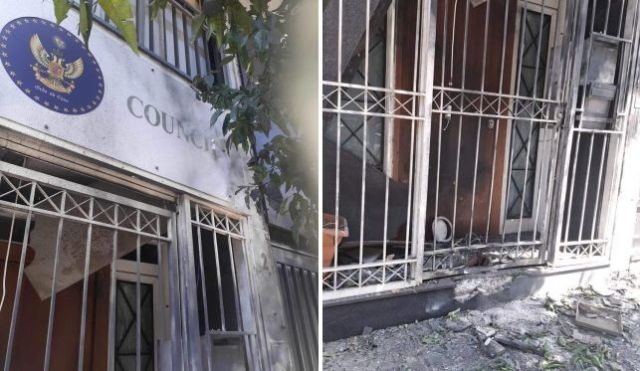
Back in July, the Scottish Rite Supreme Council of Greece building in Athens suffered limited damage after a bomb exploded outside the entrance. A second device was safely detonated outside of the adjacent Grand Lodge of Greece building. A suspect was arrested on July 25th, and I'm only just finding out about that now. 

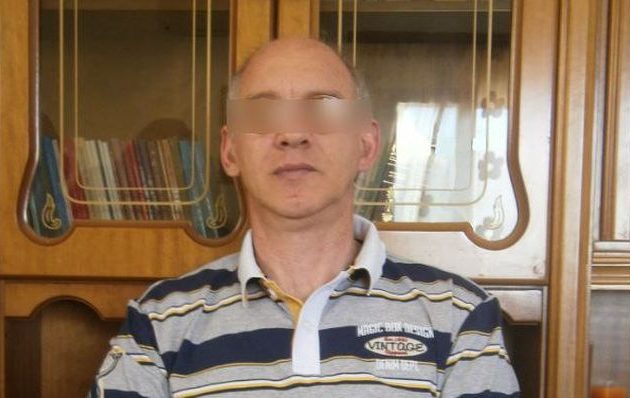
Thanks to Joe Wäges for passing along the story this afternoon. The headline describes him as a follower of the "far-right", but the story does not reveal his face or name. I suspect there have been more updates since this story, but this is the initial report after his arrest.

From the Tribune.gr website on July 25th, 2023, via Google translate (imperfect, I know, but I can't read Greek I'm afraid). 

This is the far-right "sprayer" who planted the bombs outside the Freemasons' buildings

The 61-year-old , alleged bomber of the Masonic Buildings on Sourmeli Street (Scottish Rite and Grand Lodge of Greece), was arrested on Monday (25/07) by the Authorities. He declares himself a fanatical enemy of Freemasonry, "Guardian of the Constitution", but also a follower of Kapodistrias, although Kapodistrias was of course a Freemason, just as the Friendly Society and almost the entire leadership of the Revolution of 1821 were Freemasons.

 He told the police that he is the "Guardian of the Constitution" and invoked Article 120 of the Constitution for what he did.

He was arrested after an investigation by the police at his house in Athens where the police discovered an entire factory of explosive devices.
Specifically, the 61-year-old appears on social media as a protector of the Fatherland and orthodoxy against Freemasonry and the "Satanic Governance of Greece", as he characterizes it, while in several of his posts he expresses anti-Semitic and extremist views.


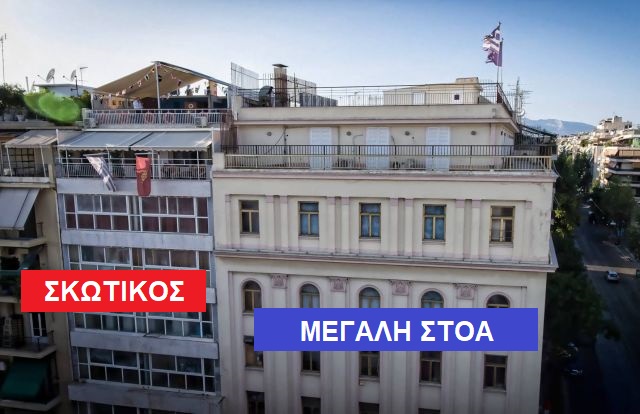
 The building of the Scottish Rite on Sourmeli Street and next to it the building of the Great Lodge of Greece on Sourmeli and Acharnon Streets. The bomb exploded outside the Scots building, [A second bomb was found in the Grand Lodge building and was detonated in a controlled explosion. - CLH ]

His post five days after the attack

A few days after the attack on the Masonic Buildings in Athens, he published an article on his personal website, in which he commented on the explosion on Sourmeli Street, speaking of punishment from the "Warrior of God" who will fight "with weapons" against the satanic forces.
It should be noted that Freemasons have nothing to do with religion but only with Right Reason and Enlightenment.


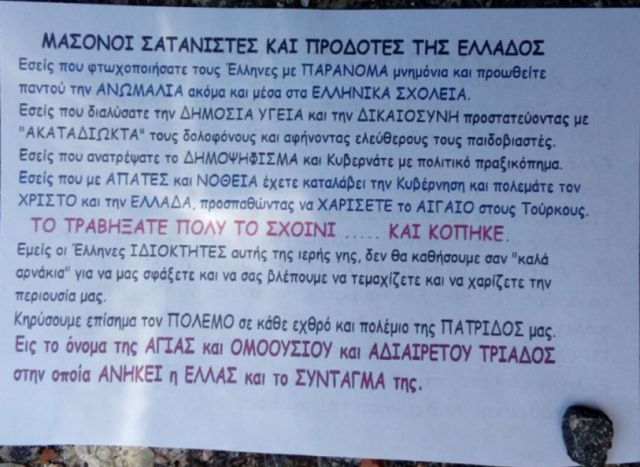
The 61-year-old also published photos of flyers which he presented as a proclamation for the attack on the Masonic Buildings on Sourmeli Street.


The leaflets, entitled "Masonic Satanists and Traitors of Greece", stated among other things "we officially declare war on every enemy and opponent of our country".
 

Furthermore, the arrested person, although he did not take responsibility for the bombing, claimed in his article that the flyers were found in Menidi and referred to the explosion at the Scottish Press building.

Finally, a day later, the 61-year-old wrote on his Facebook profile that the first bombing attack on a Masonic Lodge worldwide is the revenge of Ioannis Kapodistrias on his "Masonic murderers".
 

We repeat that Ioannis Kapodistrias was a mason.
 

Grand Lodge and High Council are not the same.

The Ancient and Accepted Scottish Rite of Freemasonry, also known simply as the Scottish Type, is a spiritually and conceptually unified series of 33 progressive degrees, organized into two distinct series:

• Symbolic Freemasonry (1°- 3°) which usually has a distinct structure and is under the administration of the relevant Grand Lodge.

• Philosophical Freemasonry (4°-33°), governed by the Supreme Council (under the presidency of the Supreme Grand Master), which is also the "guardian" (that is, the spiritual guide and "protector") of the Rite.

Philosophical Freemasonry is one of the two main developments of Symbolic Freemasonry (1°- 3°) that a Master Mason can take to deepen the principles and concepts of Freemasonry. 
The other major development is the York Rite, established in the United States.

The Grand Lodge of Greece was founded and began to operate in Greece under the name Serene Grand Orient of Greece in 1868, after the Grand Orient of Italy by decision of the Grand Master granted a relevant license on February 16, 1867 to the Directorate, which until then was administered by 1864 the existing Greek Freemasonry (with first recorded lodges in the cities of Athens, Piraeus, Chalkida, Patras, Syros, Lamia and Argos).

The Supreme Council of the 33° of the Ancient and Accepted Scottish Rite of Greece was founded and settled in Athens in the year 1872, under Dimitrios Rodokanakis who was raised to the 33rd degree by the Supreme Council of Scotland, with authorization to establish a Supreme Council in Greece.

In 1936, the Serene Grand East of Greece was renamed the Great Lodge of Greece, and is still based in Athens, at 19 Acharnon Street and Sourmeli, while the Scottish Press was the only active Masonic Press in Greece until 1980.

The Supreme Council for Greece accepts members, master masons, from the two regular grand lodges, the Grand Lodge of Greece (MStE) and the National Grand Lodge of Greece (EMStE).
 

Where you can find The Scottish Rite

The Greek High Council under Em. Gerakio is the legal and normal in Greece, according to the masonic traditions and dozens of decisions of the Greek Justice, including the Supreme Court.

As a legal and regular High Council it maintains cordial relations both with the mother tongue of the USA and with French, which is the second in the world and the first in Europe.

The United States, France, Greece alliance, the Washington, Paris, Athens axis, is also strong here.

The Supreme Council has its headquarters at 2 Sourmeli Street in Athens, right next to the Great Lodge Palace, also known as "Acharnon" and its members meet in the building opposite the Great Lodge of Greece, at Averof 30 and Acharnon.

The Supreme Council accepts members from the two regular Grand Lodges of our country, the Grand Lodge of Greece (MSTE) and the National Grand Lodge of Greece (EMSTE).

To join the Scottish Rite one must [be initiated into] the first three degrees of Freemasonry, which are obtained through [lodge] membership under one of the two regular Grand Lodges.

Friday, May 21, 2021

Monday: Conversation With John Dickie, Author of 'The Craft'


by Christopher Hodapp

On Monday, May 24th, the Rubicon Masonic Society, Kentucky's William O. Ware Lodge of research, and Lexington lodge No. 1 will feature an online presentation with Mr. John Dickie, the author of the recent book, The Craft - How The Freemasons Made the Modern World. The program will begin at 7:00 p.m., EST.

I've been remiss for some time now in not mentioning the ongoing video presentations of Rubicon, the WOW LOR, and Lexington Lodge. There continues to be outstanding work and leadership coming out of Lexington, Kentucky, and they have been putting on outstanding video presentations since the COVID shutdowns began last year.


If you haven't read Dickie's The Craft, you should if you have any interest in learning about just how important Freemasonry has been throughout its centuries of existence.

The press' reaction to The Craft has been remarkably unusual for these days. When it was published last fall, English reviewers kept their usual anti-Masonic sniping to themselves and generally praised the book as being informative, evenhanded, and "eye-opening" (in a GOOD way). The book covers a pretty wide breadth, telling the history of the Craft since the 1500s by highlighting various individual Masons (and occasional non-Masons) who influenced its development. Considering the scope of the subject matter, Dickie does a good job of placing the fraternity in the context of the wider society surrounding it in different times and places. As Masons, we often have a bad case of tunnel vision by failing to look at the larger picture of what was happening in society in any given period that had big impact on the fraternity. 


To answer the obvious question, John Dickie is not a Mason — his grandfather was, but he is not a Mason himself. He is a University College of London Professor of Italian studies, and the author of several books about the Italian Mafia, most notably, The Cosa Nostra (2005) and Blood Brotherhoods (2014). 


UPDATE MAY 25, 2021


Monday, August 10, 2020

Spain's Biblioteca Pública Arús


by Christopher Hodapp

At the end of the Spanish Civil War in 1939, Fascist dictator Francisco Franco took power and would rule Spain for another four decades. Like his fascist contemporaries Adolf Hitler and Benito Mussolini, Franco outlawed Freemasonry. Lodges were shuttered, many Masons were persecuted, and more than a few Masonic leaders were imprisoned or killed. And for almost three decades, the top Masonic library in Spain had to remain hidden from view.


In 1895, the Biblioteca Pública Arús (or the Arús Public Library) opened on the second floor of a downtown townhouse in Barcelona as one of the city's first public libraries. The library was donated to the people of Barcelona upon his death by Spanish playwright, journalist, philanthropist and Freemason Rossend Arús for the education of the working classes. Located at 26 Passeig de Sant Joan in Barcelona, the Arús Public Library today is home to 80,000 books, booklets, manuscripts, documents, microforms and more. In addition to being one of the largest reference libraries on Freemasonry in Spain, it also houses one of the world’s most comprehensive Sherlock Holmes collections. It is also has extensive material about labor unions, social and cultural movements, and more. But because of its large Masonic collection, the rise of Franco resulted in the owners of the library closing its doors to the public in 1939, and it remained safely closed and hidden from sight for another 28 years.

According to an article on the Daily Beast website, the closure of the library prevented it from being plundered. While books were destroyed or requisitioned from other libraries throughout Spain, the Arús Public Library’s collection was kept intact. The Library's concierge lived with his family in part of the property and would not let anyone in without express permission from the Barcelona City Council.

A close ally of Adolf Hitler in Germany and Benito Mussolini in Italy, Franco’s sworn enemies included the labor unions, Communists, Jews, homosexuals, and any groups promoting liberal or anti-clerical values, such as the Freemasons. Franco passed specific legislation to outlaw Freemasonry, and thousands of trials were held, resulting in firing squads, extensive prison sentences, property seizures, and exile, for those found guilty of Freemasonry. Following the death of Franco in 1975, it took a further four years for Spanish Freemasons to be legalized and have their rights restored.
“At the end of the war, the library had a reputation for being ‘Red and Masonic’,” explains [Maribel Giner, Director of the Biblioteca Pública Arús]. “Red—or Communist—due to its backing of the labor movement and commitment to educating the working classes, and Masonic, because of the collection it inherited from the private library of its founder.”
[snip]
In 2011, it received a collection on Sherlock Holmes, donated by Catalan collector Joan Proubasta, consisting of more than 6,000 books in 42 languages, and more than 2,000 related objects, from comics to posters, stamps, statues, puppets and insignia. It is one of the most extensive collections in Europe and the largest in Spain. Why did Proubasta make this donation to the Arús Public Library? It turns out that Holmes’ creator, Arthur Conan Doyle, was a Freemason.
For any library enthusiasts staying in Barcelona, Maribel Giner believes the Arús Public Library is worth a visit.
“This is a well-preserved 19th-century library that has maintained its original design details. Stepping in here is like being transported to another era, and also an opportunity to explore a piece of Barcelona's history,” she says.

Photos by Isabelle Kliger/Daily Beast 

Sunday, November 24, 2019

Universal League of Freemasons: How Masons and Esperanto Were Going to Save the World


The journal Ritual, Secrecy and Civil Society Volume 6/Spring 2019 included a fascinating paper by Denis LeFabvre about a group of starry-eyed Masons who created the 'Universal League of Freemasons' - a global association of lodges that began in 1905 to help affect the spread of Esperanto,  a newly-created, neutral and purportedly "universal" language. But their ultimate dreams were much greater than that. They hoped that a universal language combined with a universal fraternity would ultimately save the world.

Esperanto is mostly a strange curiosity these days (pre-Star Trek William Shatner starred in the first notable movie ever made in the language, Incubus in 1966, proving he could overact and chew scenery in any language), but it had its enthusiastic supporters in an earlier age. 

L.L. Zamenhoff
Esperanto was created in the 1870s and 80s by a linguist and Polish Jew named L.L. Zamenhoff using elements of Russian, German, English, French, Polish, Hebrew, plus Greek and Latin. His goal was to create an easy to learn and adopt second language that would transcend all national borders, tribal and cultural divisions. His ultimate hope was that Esperanto would be adopted as the new lingua franca for diplomacy, science, commerce and international understanding, and ultimately end, or at least defuse, the dangers of fervent nationalism that had so torn Europe apart for so long. His dream was born in reality, because those very divisions would plague Europe and kill millions for another 70 years. He himself had been raised in the Jewish ghetto and was surrounded on all sides by people who spoke numerous different languages and were in constant conflict. He saw the two issues linked together - that misunderstanding your neighbors' words often led to violent misunderstandings on a much larger scale. Rinse and repeat.


Zamenhof initially called his language Lingvo internacia ('international language') and attempted to publish a book in Russia to introduce it to the public in the mid-1880s. When the Russian government prevented its initial publication, author Leo Tolstoy became a public supporter and the authorities at last relented. 

The book was published under the pseudonym of 'Doktoro Esperanto' ('Doctor Hopeful'), and the growing fan base for the language soon began to call it Esperanto instead. It had a slow but steady increase in popularity over the next three decades, and Zamenhof was even nominated for the Nobel Peace prize in 1910.


7th International Esperanto Congress in Antwerp, Belgium - 1907
Zamenhoff wasn't a lone dreamer, and the horrors of World War I between 1914-18 ushered in a new sense of commitment to find drastic ways to prevent such future devastations from ever happening again. 

Zamenhoff died while the war still raged, but after hostilities ended in 1918an awful lot of people came to agree with his point of view – that if only stubborn nationalism and artificial divisions could be licked, countries would stop shooting at each other. Esperanto became a sensation. In fact, the newly established League of Nations came within one vote of adopting Esperanto as their official diplomatic language. 

At the same time, some Esperanto utopianists and other advocates sought ways to incorporate Freemasonry and its philosophy of universal brotherhood as one of several ways to unite the people of Europe and the world to prevent future wars. Originally formed in 1905 as 'Esperanto Masona,' ('Hopeful Masonry') the creators of the UFL - Universala Framasona Ligo (Universal League of Freemasons) believed Esperanto, combined with the universal brotherhood of Freemasonry, could ultimately unite the entire world in brotherhood and finally bring global peace. 

The first practical mission of the UFL was to break through Freemasonry's own artificially erected barriers of recognition and regularity and accusations of clandestinism so that Masons could enjoy fellowship with each another in a non­-tyled Masonic environment, all without breaking their respective obligations. The notion was that Freemasons could meet informally from all different jurisdictions and obediences and find that they shared much more in common with one another than what divided them. 


But the harsh realities of the 1930s and the rapid rise of fascism in Germany, Spain and Italy, the atrocities and deprivations of Communism in Soviet Russia, along with the brutal spread of the Japanese Empire in the East, briefly brought the UFL's lofty dreams to a halt. In Mein Kampf, Hitler had declared that 'Esperatism' was a tool of the dreaded world-wide 'Jewish-Masonic Conspiracy.' During the WWII, only the Swiss group of the UFL remained active and their headquarters remained in Geneva.

Bust of Zamenhoff in Budapest
Both the Nazis and Josef Stalin's Russia persecuted and killed advocates for Esperanto. Zamenhof himself died of a heart attack in 1917, but he and his wife Klara Silbernik raised three children, a son, Adam, and two daughters, Sofia and Lidia. All three children were murdered in the Holocaust.

Nevertheless, there are still some 2 million people around the world today who speak or read Esperanto, and it's commonly known enough in pop culture that it even appeared in a Simpsons episode. The Internet has breathed new life into the spread of the language, and some foreign language programs teach Esperanto first as a stepping stone for then teaching more difficult languages. It's a simple one to master with few basic grammar rules that have no irregular exceptions, and advocates say teaching it to toddlers makes mastering many other languages later in life much faster. They regard Esperanto almost as the next step after learning the basic alphabet.

The Universal League of Freemasons didn't die after WWII, but very few Masons know about it these days. While you may never have heard of it, this was not some insignificant little discussion club — at their peak, the Universal League of Freemasons was spread into 72 countries with upwards of 12,000 members worldwide. 

Back in the 1960’s and 70’s the UFL generated an uproar in mainstream U.S. grand lodges who condemned the organization as clandestine because its members associated with irregular and unrecognized, clandestine Masons. There was an American group of the UFL founded by Harvey Newton Brown, who was also a major force behind bringing awareness to mainstream Masons about Prince Hall Freemasonry. Harvey Brown was a powerful advocate for broaching the artificial divisions of regularity and recognition among the world's Freemasons, so naturally he was treated by many American Masons like he had horns and a forked tail sprouting from his body. 

Interestingly, California's own Past Grand Secretary and 2014 PGM, John L. Cooper III (photo) was the last official Secretary for the American wing of the UFL in the 1980s when he was forced by the GL of California to drop out of it. 

The U.S group died soon afterwards, but John wrote his own paper about them. 

See 'The Universal .League of Freemasons: A Twentieth Century Experiment in Masonic Dialogue.'

Although they were pretty free-wheeling in their makeup, the UFL nevertheless restricted their membership to male Masons for a variety of practical reasons — not the least of which being that they knew accepting female Masons into the group would kill it in the cradle among even the most progressive-minded jurisdictions throughout the 20th century. At their World Congress in Berlin in 1992, the UFL voted to also include female and co-Masons for the first time. But they were already diminishing in popularity.

After the UFL faded, the international research group The Philalethes Society took on this same sort of role in the 1980s and 90s after the UFL disappeared, and they frequently invited "irregular and unrecognized" Masons to participate in their conferences and contribute to its magazine. PSOC presidents and editors Allen E. Roberts and later, Nelson King were both strong advocates of encouraging these types of cooperation, participation, education and understanding. It was this sort of informal Masonic interaction that both promoted Prince Hall recognition and stirred up a major brouhaha in the early 2000s in Minnesota over recognizing multiple French grand lodges.


In truth, the Internet did what the UFL couldn't do by the end of the 20th century. Masons from every jurisdiction — regular, recognized or not — began to communicate through online BBS systems, instant messages, chat rooms and forums, much to the chagrin and frustration of grand masters everywhere. 

Those freewheeling years of the CompuServe Masonry Forum and the later PSOC (Philalethes Society) Mailing List did more to advance international communication, understanding and scholarship between mutually unrecognized Masons all over the world than anything in the previous 275 years. Issues like Prince Hall recognition, almost the entire basis for so-called 'traditional observance' and 'European concept' lodges and practices, 'Chambers of Reflection,' and much more that are commonplace topics today would not exist had it not been for those early resources.


If you believe Internet websites, the Universal League of Freemasons still hangs on today. Last updated in 2011, there appear to be groups in Switzerland, Germany, Italy and Canada.

Meanwhile, Denis LeFabvre's paper in Ritual, Secrecy and Civil Society is a fascinating snapshot of these early UFL Masons who gallantly – albeit naively – attempted to use their fraternalism to achieve what politics, religion and traditional avenues of diplomacy could not. And it helps to explain some of the differing attitudes about Freemasonry's role in society between what we in the U.S. and the wider "regular, recognized" Masonic world practice, versus the very politically- and policy-minded attitudes in unrecognized obediences like the Grand Orient de France that developed in Europe. Those differences in philosophies about Freemasonry's proper role in the world and society didn't grow out of a vacuum, and this paper goes a long way in putting that into its proper perspective.
It's just one of the many fascinating papers you will find in the journals of  Ritual, Secrecy, and Civil Society

As I said, John Cooper's paper on the ULF is also well worth reading. He poignantly ended it with a quotation from Socrates to Meno in about 400 B.C., that appeared in the December, 1972, issue of the U.S. Group of the ULF's Newsletter, La Heroldo:
“That we shall be better and braver and less helpless if we think that we ought to enquire, than we should have been if we indulged in the idle fancy that there was no knowing and no use in seeking to know what we do not know; ­­ that is a theme upon which I am ready to fight, in word and deed, to the utmost of my power.”


Wednesday, July 31, 2019

Masonic Museum Is A Snapshot of Spain's Anti-Masonic Past


While many Masons today have at least a passing familiarity with the persecution of the fraternity under the Nazi regime, far less is widely known about similar actions under Spain's long-ruling dictator, Generalissimo Francisco Franco Bahamonde. The Spanish Civil War (often called the dress rehearsal for World War II) raged between 1936 and 1939, resulting in Franco and his Nationalist Party's ascendency to power. The two big name fascist dictators of the period, Adolf Hitler and Benito Mussolini, both fell in 1945. But Franco ruled in Spain all the way through his death in 1975.

Under Franco and his (largely Catholic) Nationalists, Freemasonry was outlawed, and Masons were often arrested solely for their membership. In the wake of Franco’s victory in the civil war, many Freemasons, some of them well-known figures, were either exiled, imprisoned or, in some cases, shot. As was done throughout Europe under the Nazi occupation forces, Franco's regime seized the property of Masonic lodges throughout Spain and occasionally set up spooky museums of Masonic artifacts as propaganda exhibits to frighten the population. In a way, you can blame some of the modern day European distrust of Freemasonry on generational fears first stoked by these attempted exposés under the fascist regimes in the 1930s and 40s.


Franco spared no expense in stamping out Freemasonry in Spain. In 1949 the Spanish government included nearly $100,000 in its budget for ongoing maintenance of a special tribunal to suppress Masonry.

The Generalissimo never tempered his anti-Masonic sentiments. Henderson and Pope's book Freemasonry Universal claims that under Franco's almost 40 years in office, more than 10,000 Freemasons were arrested for their alleged membership, and the Grand Orient of Spain went into exile in Mexico. Even in his final speech before his death in 1975 given from (where else do dictators speak from?) the balcony of his Royal Palace, Franco railed against the imaginary "Jewish-Masonic Conspiracy". 

After Franco died, Spain finally began a slow transition to democracy, but it wasn't until 1979 that the laws against Freemasons were lifted - and only then after their High Court overruled the Interior Ministry’s ongoing refusal to allow Masons to again organize.

A Masonic lodge in Gijon, Spain was plundered by the Spanish Nationalists in 1938, and a propaganda museum was created that year to display its symbols and artifacts in the creepiest manner possible. The exhibit was created by Marcelino de Ulibarri, a member of Franco’s government with the intention of frightening the public with the "dangers" of Masonry. But according to an article on the Atlas Obscura website, the museum was never officially opened during the war. It wasn’t until 1993 that it finally opened to the public as a part of a historical exhibition in the town of Salamanca’s Barrio Antiguo district, housed in a 17th-century building at Saint Ambrose College.

Chamber of Reflection at the Salamanca museum exhibit
From the article:


On display in the temple, you’ll find books, medals, jewelry, documents, ceremonial clothing, Masonic symbols, and a reproduction of a Masonic Chamber of Reflection used by new members. The most shocking details, such as skulls or black masks, received special attention with the aim of shocking the public of the 1930s. Today they look like your usual Halloween decoration.
Ulibarri made sure to include any spooky imagery he could dig up, populated it with black-hooded mannequins and skulls, and prominently displayed an apron showing a severed head.

It is of interest to Masons today in part because of this dark episode of persecution across Europe. But it is also a unique snapshot of Spanish Freemasonry from the pre-1940 era, as long as you bear in mind the sensationalistic nature of the way it's presented. 


The Masonic Lodge Museum today is located inside the National Archives building in Salamanca, Spain at 2 Gibralter in the Barrio Antiguo.  

There's a great story about Franco and American Freemasons that happened in the 1950s. This was in an article from the Spanish El Pais website called "Why did General Franco hate the Freemasons so much?":

Fall 1958, the Pardo Palace in the outskirts of Madrid: Franco’s official residence. Two US senators, along with a high-ranking military man, are received by Generalissimo Francisco Franco. Their mission is to sound out the dictator about a possible visit by the then president of the United States, Dwight D. Eisenhower. What kind of reception would he get? Franco is delighted at the prospect, and begins expanding on the need to eradicate once and for all the Communist threat, and is willing to help the United States in its fight against the Soviet Union, hoping to win the support of the West in the process – after all, it had only been admitted to the United Nations in December 1955.
Carried away in his euphoria, Franco also declares that freemasonry must also be done away with. At which point, one of the senators politely interrupts: “Sir, President Eisenhower is a protestant, I’m a mason, and my colleague here in the Senate is Jewish. We would all be in jail if we lived in Spain.” The military man, Eugene Vidal, an old-school Yankee blueblood and head of aeronautics at West Point military academy, drove home the point with a certain degree of sarcasm: “No, no my dear sir, I’m also a mason and I too would be shot here.” The story of the meeting was told many years later by US writer Gore Vidal, the son of Eugene Vidal and the grandson of another US senator, Thomas P. Gore...
Freemasonry has slowly recovered in Spain. The Gran Logia de España today is widely recognized as regular throughout the Masonic world, and has about 2,700 members and 185 lodges.

(All Museum photos from the Atlas Obscura site)