"To preserve the reputation of the Fraternity unsullied must be your constant care."

BE A FREEMASON

Showing posts with label Freemasonry. Show all posts

Saturday, June 17, 2023

Pennsylvania Masonic Art Exhibition 2023 Call for Entries


by Christopher Hodapp

Calling all Masonic artists! The Masonic Library & Museum of Pennsylvania is holding an open art competition and Grand Exhibition this year, with the theme "Embodying Masonic Values." The call for entries is now open.

All artwork entries must display a visual interpretation of some aspect of Freemasonry in Pennsylvania, whether it be philosophical, historical, scientific, social, fraternal, charitable, architectural, etc. Selected artwork will be exhibited in the Masonic Temple in Philadelphia.

Eligibility
Any amateur or professional artist or college art student may enter, but all will be judged as equals for competition purposes. Artists must be at least 18 years of age. All submissions must be original; they may have been created within the past two years and may have been previously exhibited. No work previously produced on a commission will be accepted. All submissions must be available for purchase.

Categories
Oil, Three-dimensional, Drawing and Print-making, Water-Based Medium, Digital Imagery

Awards
$200 Prize per winner, per category
$500 Grand Master’s Prize
$1,000 Best in Show Prize

Entrance Fee
First entry: $25; Second and Third Entry: $10 (Limit of 3 entries per artist)

Judges will be: Brother Travis Simpkins, Artist; John McDaniel, Artist; and Elaine Erne, Artist/Teacher

Auction
If the artists in the Grand Exhibition choose to participate, their entered works may be auctioned off at the Exhibition Gala, with 80% of the auction value going to them and 20% to The Masonic Library and Museum of Pennsylvania. The artist may set a reserve price, as well as a direct purchase price for the original work to be revealed AFTER the auction.

Entry deadline: Thursday, Aug. 10, by midnight, E.D.T. Submissions must be made through www.callforentry.org

Judges' selections will be announced: Friday, Aug. 25

Opening Reception: The Grand Exhibition Gala will be held at the Masonic Temple in Philadelphia on Friday, Oct. 6, featuring a cocktail and hors d’oeuvres reception, live music, announcement of winners and a silent auction of selected artwork.

Exhibition: The Grand Exhibition will be open to the public to view starting on Tuesday, Oct. 10, 9 a.m. – 5 p.m., Tuesdays – Saturdays, until Nov. 11.

Venue: Masonic Temple, One N. Broad St., Philadelphia, PA 19107-2598

For more information, see the website HERE 


Thursday, March 23, 2023

2023 Sankey Lecture: Heather Calloway Sunday 3/26


by Christopher Hodapp

The Grand Lodge of AF&AM of Canada in the Province of Ontario has a unique relationship with the part of the academic world that studies our fraternity. The annual Dr. Charles A. Sankey Lecture in Masonic Studies at Brock University, St. Catharines, Ontario is presented each year through a unique partnership with the Grand Lodge. Since 2010, the Sankey Lecture has presented significant academic scholars who specialize in Freemasonry or fraternalism, and in recent years, these have been recorded and made available online HERE.


Dr. Heather Calloway will be the presenter for this year's 14th annual Sankey Lecture, this coming Sunday, March 26th from 3:00pm - 5:30pm. Her program will be "Skeletons in the Lodge Hall: Hidden Collections and Fraternal Curiosities," followed by a Masonic 'Antique Roadshow.'


The Marie Kondo Method. Swedish Death Cleaning. “Hoarders” reality TV shows. Downsizing.

De-cluttering is a hot trend in our heavily material culture.

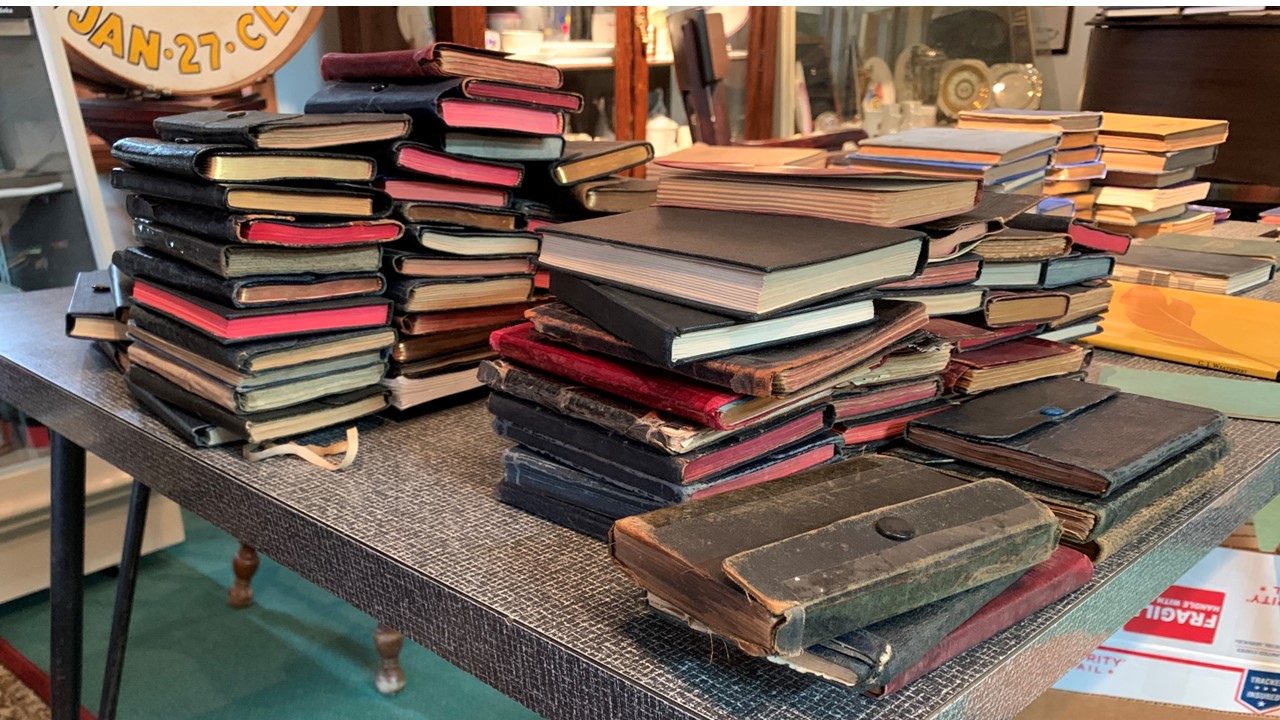
At risk, however, is the loss of culturally significant objects and entire collections of ephemera, records, and artifacts.


Dr. Heather K. Calloway, the current Executive Director of University Collections at Indiana University, is working to manage and preserve collections of fraternal organizations, namely, the Freemasons, that are at serious risk of being discarded.

“Whether a lodge is moving, closing, or downsizing their space, the collections amassed by fraternal groups are at risk of being orphaned… They are often stored in closets, basements, and attics where environmental and storage conditions are abysmal. There is little or no emergency planning for these objects,” says Dr. Calloway.

Dr. Calloway will be presenting her lecture, “Skeletons in the Lodge Hall: Hidden Collections and Fraternal Curiosities,” at the 14th Annual Charles A. Sankey Lecture Series on Sunday, March 26th, in Sean O’Sullivan Theatre.

[snip]

“We are always excited when the Sankey Lecture comes around,” says archivist David Sharron, the Head of Archives and Special Collections at the Brock Library. “Hearing presenters like Heather Calloway and the attending Masons and scholars speak about Freemasonry so intelligently and passionately makes us feel secure that the Masonic book collection we have at Brock will always be needed and regarded in the best light.

As a part of the event, which is back in person for the first time since 2019, Dr. Calloway will be bringing some objects from the Indiana University’s collection of Freemason objects. Along with Mr. Sharron, she invites members of the public to bring in their own Freemason objects to discuss their historical significance.

Dr. Calloway notes that, “Fraternal history and material culture is found everywhere. It is held by private groups, archives, public and academic libraries, historical societies, and museums… Without action to address these needs for collection stewardship, many are at high risk for damage or loss.”

When: Sunday, March 26, 2023, 3:00 pm.
Where: Sean O’Sullivan Theatre 
Please reserve your FREE TICKETS in advance at Eventbrite.

RECEPTION: After the Lecture there will be a reception (from approx. 5:30 to 6:30 pm). All attendees are welcome to stay to chat with the speaker and with members of the Brock and Masonic communities. Light refreshments will be offered free of charge, and a cash bar will be available.

FREEMASON "ANTIQUES ROADSHOW": At the reception attendees are welcome (if they wish) to bring easily portable Masonic or related possessions that might have a historical or personal meaning. While they will not attempt to suggest a monetary value, Prof. Heather Calloway and David Sharron (Brock's University Archivist) will be on hand to discuss the possible significance of your items and strategies for preserving them in the best way possible.

LIVESTREAM OPTION: For those who cannot attend in person, there will also be a livestream during the Lecture. To view the livestream, use your browser to go to http://live.sankeylectures.ca. Participation in the Freemason "Antiques Roadshow" will not be possible via the livestream.

More details can be found on ExperienceBU.

Heather Calloway is currently serving as the Executive Director of University Collections at Indiana University. She spent 14 years at the headquarters of the Scottish Rite Southern Jurisdiction's House of the Temple in Washington, D.C., as the Museum Curator and Managing Director of Digital and Social Media. She's also served as the inaugural archivist for the Archives & Special Collections at Washington College, the University Archivist for the Perdue Museum and Archives at Salisbury University, and as the Librarian/Archivist for the Franciscan Monastery in Washington, D.C.

She is also heading up the creation of Indiana University's Center for Fraternal Collections and Research in Bloomington, Indiana, devoted to the collecting, protecting, and sharing of artifacts from the world of fraternal organizations. Along with the most famous groups like the Freemasons, the Odd Fellows, the Knights of Pythias and the Knights of Columbus, there were over a thousand similar groups that were established during the "Golden Age of Fraternalism" between the end of the American Civil War and the Great Depression of 1929.

Saturday, December 01, 2018

The Ideals of a Freemason


I encountered one of the most moving descriptions of the ideals of a Freemason today on the Grand Lodge of Alberta's website, originally written in 1888 by M.W. Bro. Otto Klotz and published in the Canadian Craftsman magazine:

"If you see a man who quietly and modestly moves in the sphere of his life; who, without blemish, fulfils his duty as a man, a subject, a husband and a father; who is pious without hypocrisy, benevolent without ostentation, and aids his fellow man without self-interest; whose heart beats warm for friendship, whose serene mind is open for licensed pleasures, who in vicissitudes does not despair, nor in fortune will be presumptuous, and who will be resolute in the hour of danger;
"The man who is free from superstition and free from infidelity; who in nature sees the finger of the Eternal Master; who feels and adores the higher destination of man; to whom faith, hope and charity are not mere words without any meaning; to whom property, nay even life, is not too dear for the protection of innocence and virtue, and for the defence of truth;
"The man who towards himself is a severe judge, but who is tolerant with the debilities of his neighbor; who endeavors to oppose errors without arrogance, and to promote intelligence without impatience; who properly understands how to estimate and employ his means; who honors virtue though it may be in the most humble garment, and who does not favor vice though it be clad in purple; and who administers justice to merit whether dwelling in palaces or cottages.
"The man who, without courting applause, is loved by all noble-minded men, respected by his superiors and revered by his subordinates; the man who never proclaims what he has done, can do, or will do, but where need is will lay hold with dispassionate courage, circumspect resolution, indefatigable exertion and a rare power of mind, and who will not cease until he has accomplished his work, and then, without pretension, will retire into the multitude because he did the good act, not for himself, but for the cause of good!"
(Source: The Canadian Craftsman, March 15, 1868. M.W. Bro. Otto Klotz
If you ever meet such men, you will have seen see the personification of brotherly love, relief and truth — and you will have found the ideal of a Freemason. 

Can you envision yourself striving to be such a man?


UPDATED 12/4/2018:

This is why Freemasonry is a lifelong course of study and discovery. After I posted this earlier yesterday, several Canadian brethren informed me that the above is actually a small excerpt of a much longer Charge given at the conclusion of officer installation ceremonies in many Canadian jurisdictions. 

The entire Address to the Brethren, of which Otto Klotz' portion above is a part, can be found HERE, and I heartily recommend it to your attention. I can't help but think it would be a fine unofficial addition to any installation ceremony anywhere, but then, I'm a Masonic heretic. Klotz' description of the 'Ideals of a Mason' is all the more impressive when you realize that the author was a German whose second language was English.

In addition, the story behind the entire Charge and its origins is described in a paper written in 1998 by Mark S. Dwor can be read HERE on the incredible Grand Lodge of British Columbia and Yukon website.

Tuesday, November 20, 2018

Fraternalism and Civics


Several weeks back, Alice and I made our monthly stop at the local bookstore (remember those things?), and I was taken in by the headline on the cover of the October edition of Atlantic Monthly: 'Is Democracy Dying?'

The magazine is freighted too heavily with politically partisan sniping for my tastes. and too many of the writers want to use their own visceral biases to twist their theses. But if you can you get past that, the issue explores a basic societal problem we currently face in America. Mainly, Americans don't know — or care to know — how their own communities, states and nation are supposed to work anymore. We've lost the keys to the Republic, and there it sits in the driveway, up on blocks, rusting away, while the neighborhood kids bust out the windows and steal the tires.

If you think I exaggerate, go to the website of what passes for your local newspaper these days and try to find a daily or even weekly summary of actions at your statehouse or city council meeting. Such news used to be a staple of basic local reporting, but no more.

In particular, take note of the article, Americans Aren’t Practicing Democracy Anymore by Yoni Applebaum. The author makes the strong connection between the Golden Age of Fraternalism and the greatest level of civic engagement in American history. Whether we all knew it or not, the Freemasons, the Knights of Pythias, the Odd fellows - we were all teaching Americans how to govern the Republic. And we're now living out what happens when democratic people all decide "I'm not much of a joiner."

Or as Ben Franklin told the lady who asked him what the Continental Congress had given America in 1787, a republic or a monarchy, "A republic, if you can keep it."

I don't want to paste the whole article here, but let me put a major excerpt up just in case Atlantic's website vanishes in the night:
Like most habits, democratic behavior develops slowly over time, through constant repetition. For two centuries, the United States was distinguished by its mania for democracy: From early childhood, Americans learned to be citizens by creating, joining, and participating in democratic organizations. But in recent decades, Americans have fallen out of practice, or even failed to acquire the habit of democracy in the first place. The results have been catastrophic. As the procedures that once conferred legitimacy on organizations have grown alien to many Americans, contempt for democratic institutions has risen...

in the early years of the United States, Europeans made pilgrimages to the young republic to study its success. How could such a diverse and sprawling nation flourish under a system of government that originated in small, homogeneous city-states?

One after another, they seized upon the most unfamiliar aspect of American culture: its obsession with associations. To almost every challenge in their lives, Americans applied a common solution. They voluntarily bound themselves together, adopting written rules, electing officers, and making decisions by majority vote. This way of life started early. “Children in their games are wont to submit to rules which they have themselves established, and to punish misdemeanors which they have themselves defined,” wrote Alexis de Tocqueville in Democracy in America. “The same spirit pervades every act of social life.”

By the latter half of the 19th century, more and more of these associations mirrored the federal government in form: Local chapters elected representatives to state-level gatherings, which sent delegates to national assemblies. “Associations are created, extended, and worked in the United States more quickly and effectively than in any other country,” marveled the British statesman James Bryce in 1888. These groups had their own systems of checks and balances. Executive officers were accountable to legislative assemblies; independent judiciaries ensured that both complied with the rules. One typical 19th-century legal guide, published by the Knights of Pythias, a fraternal order, compiled 2,827 binding precedents for use in its tribunals.

The model proved remarkably adaptable. In business, shareholders elected boards of directors in accordance with corporate charters, while trade associations bound together independent firms. Labor unions chartered locals that elected officers and dispatched delegates to national gatherings. From churches to mutual insurers to fraternities to volunteer fire companies, America’s civic institutions were run not by aristocratic elites who inherited their offices, nor by centrally appointed administrators, but by democratically elected representatives.

Civic participation was thus the norm, not the exception. In 1892, the University of Georgia’s president, Walter B. Hill, reported (with perhaps only slight exaggeration) that he’d made a test case of a small town “and found that every man, woman, and child (above ten years of age) in the place held an office—with the exception of a few scores of flabby, jellyfish characters.” America, he concluded, is “a nation of presidents.”

This nation of presidents—and judges, representatives, and recording secretaries—obsessed over rules and procedures. Offices turned over at the end of fixed terms; new organizations were constantly formed. Ordinary Americans could expect to find themselves suddenly asked to join a committee or chair a meeting...

Democracy had become the shared civic religion of a people who otherwise had little in common. Its rituals conferred legitimacy regardless of ideology; they could as readily be used to monopolize markets or advance the cause of nativism as to aid laborers or defend the rights of minorities. The Ku Klux Klan and the NAACP relied on similar organizational forms.

Time and again, groups excluded from democratic government turned to democratic governance to practice and press for equal citizenship. In the 1790s, a group of New Yorkers locked in debtors’ jail adopted their own version of the new Constitution, governing themselves with dignity despite their imprisonment.

[snip]

But the United States is no longer a nation of joiners. As the political scientist Robert Putnam famously demonstrated in Bowling Alone, participation in civic groups and organizations of all kinds declined precipitously in the last decades of the 20th century. The trend has, if anything, accelerated since then; one study found that from 1994 to 2004, membership in such groups fell by 21 percent. And even that likely understates the real decline, as a slight uptick in passive memberships has masked a steeper fall in attendance and participation. The United States is no longer a nation of presidents, either. In a 2010 census survey, just 11 percent of respondents said that they had served as an officer or been on a committee of any group or organization in the previous year...

Volunteerism, church attendance, and social-media participation are not schools for self-government; they do not inculcate the habits and rituals of democracy. And as young people participate less in democratically run organizations, they show less faith in democracy itself. In 2011, about a quarter of American Millennials said that democracy was a “bad” or “very bad” way to run a country, and that it was “unimportant” to choose leaders in free and fair elections. By the time Donald Trump launched his presidential campaign, Gallup polling showed that Americans’ faith in most of the nation’s major institutions—the criminal-justice system, the press, public schools, all three branches of government—was below the historical average...

Read the entire article HERE. 

Friday, October 12, 2018

Frontier Masonic Advertising


The annual Feast of the Hunter’s Moon event in West Lafayette, Indiana is one of the largest 18th century festivals in the country. It recreates the period between 1717-1791 around the French Fort Ouiatenon and its trading post along the banks of the Wabash River.  The first European settlement in Indiana, Fort Ouiatenon was the crossroads for numerous peoples and cultures that built our state and the nation.  

Thousands of skilled interpreters, Native Americans, plus French, English and other colonial and military reenactors, musicians, and artisans all converge here each year to share the music, food, cultures, and crafts of the past.  For fifty-one years, tens of thousands people come from across the country and around the world to take part. 


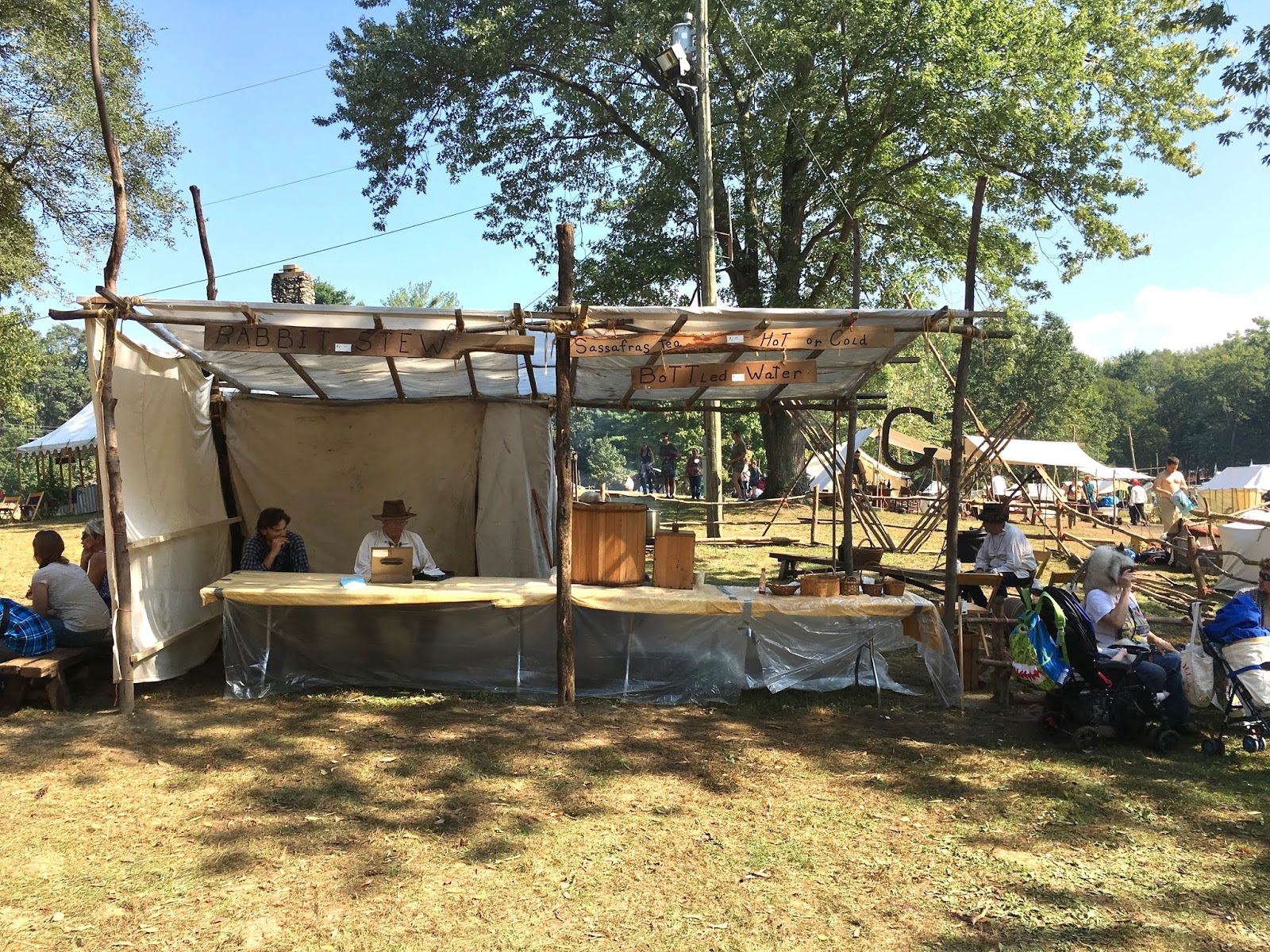
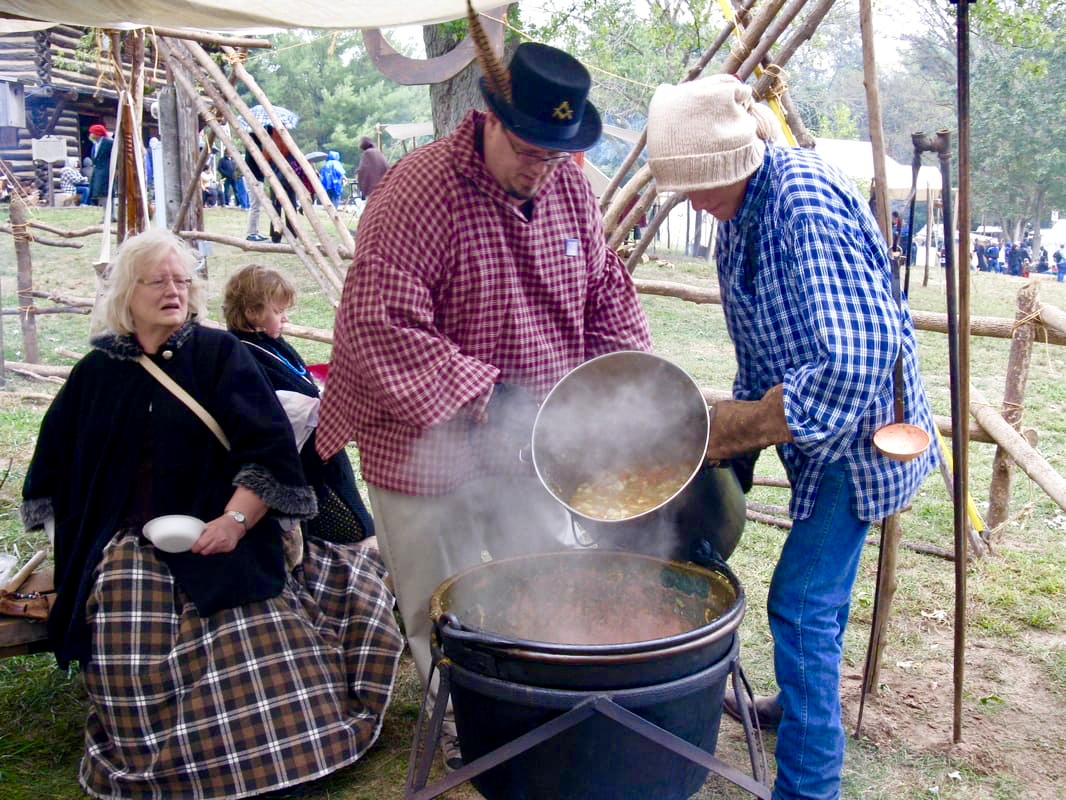
As a regular part of this event, Dayton Lodge 103 and their volunteers annually offer authentic rabbit stew to the crowd at its tent site adjacent to the Fort’s blockhouse.  


Their cook fire area features an enormous, frontier-appropriate square and compass made from tree branches that proudly proclaims their Masonic heritage to the thousands of visitors. 

This year’s Feast was October 6th and 7th.


Thursday, February 04, 2010

Grand Lodge of Indiana F&AM Haiti Relief

The Grand Lodge of Indiana F&AM encourages Indiana Masons to support our brothers and their families in need of relief. The Grand Orient D'Haiti has 51 lodges and our support is critical to the relief of our Brothers, their families and the communities they serve.

The Masonic Service Association of North America has been in contact with The Grand Orient D'Haiti and they are coordinating the distribution of all donations.

Indiana brethren may send your donations made out to "MSA Disaster Relief Fund" to:

Indiana Freemasons' Hall
Attn: MSA Haiti Relief
P.O. Box 44210
525 N. Illinois St.
Indianapolis, IN 46244-0210

Or, the Grand Lodge of Indiana has also set up a Paypal page that will forward donations to the MSA: click here.

Friday, September 11, 2009

Lost Symbol and Freemasonry Website Launched


The Masonic Society, the Masonic Service Association of North America, and the George Washington Masonic Memorial have collaborated on a new website that will address the references to Freemasonry found in Dan Brown's new novel, The Lost Symbol.

http://www.freemasonlostsymbol.com


The website is being provided for the use of lodges and grand lodges to provide factual information to the public and the press, and as a central location for common questions and answers that will arise once the book is officially released on September 15th. The desire of TMS, MSA and the GWMM is to inform the public and Freemasons themselves about the references to the fraternity in the book, and to save us all from reinventing the wheel for hundreds of websites.

The site also contains a link to a recommended reading list, as well as to a master list of grand lodge websites.

Please spread the word.

Thursday, September 10, 2009

Speaking at Missouri Lodge of Research Sept. 22nd


I will be speaking at the Missouri Lodge of Research Breakfast this year during the Annual Communication of the Grand Lodge of Missouri AF&AM, Tuesday, September 22, 2009, between 7:00am - 9:00am. The Grand Lodge of Missouri will meet this year at the Holiday Inn Select Executive Center-Columbia Mall, 2200 I-70 Drive S.W., Columbia, MO

Wednesday, August 19, 2009

Get Ready For the Dan Brown Effect

It’s official. The Dan Brown Effect is rushing headlong at the Masonic fraternity like an angry lodge goat and will be upon us on September 15th. That’s the day 6.5 million copies of Brown’s sequel to The Da Vinci Code, now titled The Lost Symbol, will hit stores worldwide. As reported before, both the U.S. and U.K. covers of The Lost Symbol have Masonic symbols prominently displayed. And the Official Dan Brown website is displaying the following images:
I think Brown will fish heavily from Manly P. Hall's pond. My guess, based on the covers and a growing list of online clues being released by his publisher on a daily basis (we'll see how I do come September) is that Brown will tell a story of some secret brotherhood (possibly the "Knights of the Golden Helmet"), formed by Francis Bacon. The group discovered America, then sailed back and founded the New Atlantis, a utopian experiment in government that became the United States. This brotherhood eventually became the Freemasons. Within it are the super secret group of string-pullers and evil, bald-headed, cat-stroking, super-criminals—the 33rd degree Masons of the Scottish Rite, who meet once a year in their creepy secret fortress, the House of the Temple in Washington. Murders will undoubtedly ensue, probably at all of those “Masonic” zodiac symbols David Ovason droned on and on about in The Secret Architecture of Our Nation’s Capitol, before he admitted in the last five pages the Masons didn’t actually put them there. That 6.5 million copies is just a dribble in the bucket. Da Vinci Code eventually sold 81 million and was the sixth most popular book in the English language. Let’s say The Lost Symbol stinks on ice. Let’s say just half as many folks snap up this one—a paltry 40 million readers, not counting the Scroogy skinflints who go borrow their roommate’s copy or steal it from the library instead of actually buying it. So let’s be charitable and say another 10 million. That’s a minimum of 50 million pairs of eyeballs reading what pours forth from Mr. Brown’s brain about the Freemasons. Plus all of the tie-in books and TV shows that will add further confusion and misinformation in an attempt to cash in. So who cares about a stupid novel, anyway? Well, we Freemasons had better be caring, for one. That’s where the next wave of new members will come from. And consider this: the Baby Boomers who didn’t join in their 20s and 30s are now in their retirement years. The biggest (and richest) demographic wave of retirees in history do a lot of beach reading of books like Dan Brown’s. And the Freemasonry of their fathers and grandfathers is a dim memory from their childhood. It’s hard-wired into their collective conscience. “Didn’t grandad have a Masonic ring?” This is a truly once-in-a-lifetime chance for this fraternity. Not to go trawling in shallow waters for new members, but to educate the public and make sure men know who we are, where we are, and what we offer them. And how to knock on our doors. If we blow this, we deserve to vanish into obscurity. This is a gift that few are given, and it’s being handed to us on at least 50 million platters.
Freemasonry has to be giving the facts, setting the agenda, and most important, directing the media to the true experts. These tasks aren’t just a good idea, they’re vital. We have to be there with the truth: a world of others will be out there serving up lies. This isn’t some argument about whether Masonic billboards or NASCAR sponsorships are appropriate. This is a major development that will affect the public perception of Freemasonry for years. Don’t forget that tens of millions of people think they understood what Opus Dei was after they read Da Vinci Code. This could have as much effect on the fraternity as the Morgan Affair or WWII. That is not hyperbole. Masons all over the world need to polish up their ‘elevator explanations,’ and grand lodges need to be prepared for greater interest, and lots of scrutiny. Stonewalling is not the answer. When reporters come calling attempting to get an interview for the 6 o’clock news, we must not fall victim to what we’ve always done in the past: sending a good-intentioned grand master to stand out in front of the grand lodge building to tell the world we have no secrets except a few funny handshakes, that “all” the founding fathers were Freemasons, that we give 2 or 3 million dollars a day to charity, and that we’re having a CHIPS event next week (“No, heh heh. We don’t microchip the kids. Heh heh.”). Don’t forget to mention George Washington. So that is really the next question—how do we get out in front of this juggernaut and make the preemptive strike? Our official spokesmen had better have read Brown’s book and have the answers for the tough questions, because trust me, every grand lodge and an awful lot of local lodges will be getting these calls on September 16th, and long after that on slow news days. Our people need to know what they are talking about. (“No, heh heh, I haven’t actually read Dan Brown’s book, so I don’t know what you’re asking about, but my granddaughter said it was a real page turner.”). The press isn’t necessarily out to get us. They ARE out to get ratings and sell newspapers. But the reporters themselves don’t know the first thing about who and what Freemasons are. We are an alien species. If they only do cursory Internet ‘research,’ we can appear as a bunch of grumpy old white guys, possibly racists, who can’t even get along with each other at the lodge picnic. Or we’re a bunch of cloistered world takeover plotters. The purportedly serious TV stations aren’t kind to us either. I can think of precisely one documentary on History/Discovery/National Geographic/A&E/TLC in the last ten years that was factually correct, well shot, well edited, and not compelled to put raving madmen on as “counterpoint”. It was made by a Canadian Mason, for Canadian TV, and when it ran in the US, a full hour was chopped out of it. Yet, if we don’t go on these shows, and patiently answer their questions, that crucial job will be handled by the Ralph Eppersons, the Christopher Knights, and the David Ickes, declaring us evil, anti-religious reptilian aliens. The Masonic Society is creating an Internet resource for reporters, curious Lost Symbol readers, and Freemasons alike, that will address the questions raised by Brown’s book. (The site will go live next week.) It will be in partnership with the Masonic Service Association and the George Washington Masonic Memorial. Obviously, we are all mostly in the dark until his book hits the streets on September 15th. But the Masonic Society's goal from the beginning has been to be a research society that educates and stands by the side of regular, recognized Masons, lodges and grand lodges. This is part of that mission. The waves will be coming, whether we agree with why they’re coming or not. Dan Brown’s book will have the same kind of effect on men seeking membership that Born In Blood and National Treasure did, but a thousand fold. How we handle that at the grand lodge and local lodge level will literally determine where the entire fraternity goes. For those who wring their hands and make empty comments about “guarding the West Gate,” there will be no shortage of candidates to investigate thoroughly. This is not just a grand lodge issue—they’ll be pounding on the doors of your Mother Lodge. How will you and your lodge present Freemasonry to them? Be ready. We fail to prepare at our own peril.
(This column appeared in the Summer 2009/Issue 5 of the Journal of The Masonic Society)

Tuesday, August 18, 2009

64th Knights Templar Triennial Conclave

The 64th Knights Templar Triennial Conclave has been going on in Roanoke, Virginia this week. Almost 400 Sir Knights gathered at the Hotel Roanoke for drill team competitions, elections and general business meetings. There were 377 voting members representing 47 states and 6 foreign countries.

William H. Koon II has been elected as the Most Eminent Grand Master, Grand Encampment of Knights Templar of the United States of America. David Godwin has been elected as the Right Eminent Deputy Grand Master, and Indiana's Duane L. Vaught has been elected as the Right Eminent Grand Captain General.

Indiana was well-represented at the Triennial by Grand Commander Larry Brown. In the Class 3 Drill competition, Greenfield Commandery No. 39 took 3rd place, and my own Raper Commandery placed 5th. Commanders Terry Terhune and Carson Smith worked together this year to share drill team members so both commanderies could place teams on the floor. There is talk of working on a battalion-wide level next time to be sure there are A and B teams three years from now, as well. This kind of cooperation could go a long way to keep drill team competition alive, if, for instance, commanderies put together C teams, battalions B teams, and states A teams. Note that there was only one A team at the triennial this year.

Indiana Knights Terry Turner, Phil Whisner and Gary Messer spent Sunday evening touring the hospitality suites in their medieval Levant Preceptory kit, spreading the word about how steel helmets, broadswords and chainmaille are generating new interest in Templars looking for something a little more unusual in their commandery. The reduced interest in drill teams evidenced this year is a barometer that shows new men coming to the door of our asylums aren't wanting to be Templar Knights out of a desire to march in formation. The biggest challenge that faces all of the York Rite bodies is keeping members participating. The York Rite arguably has some of the best written, and most affecting degrees in Masonry. But once the degrees are conferred, we all have to make damn sure there's a reason for men to come back next month. And jamming them into an officer's chair is NOT the way to do it. Unique, entertaining, interesting programming, table meetings, speakers, papers, historical presentations, road trips, cooperation between chapters for degree conferrals—we need to try everything we possibly can.

I spent most of my days hanging out selling and signing books, meeting Knights literally from around the world—Togo, Romania and France were among the countries attending this year.

Toye, Kenning and Spencer had a large vendors' table set up, as they enter the US regalia market. TKS is the world's oldest Masonic regalia manufacturer, and having them in the US at last is a great development. Charles Toye has been working for two years to set up a supply line to America, which will make US shipments much faster (good news for us at Lodge Vitruvian, since they provide our custom aprons). Brother Michael Seay, a regular tour guide at the George Washington Masonic Memorial, is officially TKS' US sales rep. Contact him at mike.seay@toye.com

(Note to Stephen Dafoe: both of your books, Nobly Born and The Compasses and the Cross were flying off Toye's table.)

Many thanks to the brethren who joined The Masonic Society this week. After some conversation with Mark Tabbert and George Seghers of the George Washington Masonic Memorial, we'll have a new development to announce in the coming weeks concerning the Society and the Memorial's digital archiving program.

For photos of the event, Sir Knight John Westervelt of Winchester, Virginia will be putting up an online photo album (check back if it is not up yet). Go to www.seeyourphotos.net , enter as the event "64th Triennial Conclave" and password "20060644"

Our road trip plans have changed a little bit, as we roll through the Virginia countryside in the Dummies Urban Mobile Assault (DUMAss) Command Center. We'll be in Williamsburg and Washington DC the rest of the week, through the weekend.

Friday, July 31, 2009

Amazon's Secret Author's Pages


Amazon.com has made some changes over the last few months for authors, and there is now a little-known feature lurking in a sneaky place on the Amazon book listing pages. Provided an author or publisher has set it up properly, there is a special author's page that can only be found by going to a book listing and hovering (NOT clicking) your mouse over the author's name. A pop up window will appear with links to the author's page. Once there, it will list all of the author's books, plus other features. I have set mine to grab entries from this blog, and it will display the three latest entries.

I'm only mentioning this feature here because Amazon seems to be keeping it a secret from customers and authors.

Thursday, July 30, 2009

276 Years of Freemasonry in Massachusetts

Today, July 30th (in addition to being my bride's birthday) marks the 276th anniversary of the formation of the Grand Lodge of Masons in Massachusetts. In 1733, Henry Price (1697-1780) officially brought Freemasonry to America from England. Price was authorized by the Premier Grand Lodge of England to form lodges in the colonies, and formed the Provincial Grand Lodge of Masons in Massachusetts.

On July 30, 1733, a group met at the Bunch Of Grapes Tavern in Boston, and formed what was appropriately named First Lodge No. 126 (now St. John's Lodge—Massachusetts does not number their Masonic lodges). It was, in fact, the first lodge in America that the Grand Lodge had authorized (unlike earlier lodges that existed in Pennsylvania), and Price’s position as "Provincial Grand Master of New England and Dominions and Territories thereunto belonging" gave him the sole right to charter new lodges in the Colonies.

A replica of the sign that hung over the door of the Bunch of Grapes tavern was carved from a block of wood from the U.S.S. Constitution and now hangs in the Grand Lodge building in Boston.

From the National Heritage Museum blog:

London-born Henry Price apprenticed as a tailor. He arrived in Boston in 1723 to pursue this trade and soon met with success, opening multiple shops. He had become a Freemason in England prior to 1723. In 1733, while in England on business, he approached the Grand Lodge of England with a petition signed by 18 Boston men seeking to form a Masonic lodge. This petition was granted. Price returned home to Massachusetts, where he constituted both the Grand Lodge and St. John’s Lodge, the oldest local lodge in the state.

In the early 1760s, Henry Price retired to Townsend, Massachusetts, where he served as representative to the Provincial Legislature in 1764 and 1765. His several-hundred-acre estate, which included farms, mills and mechanical shops, reflected his prosperity. On May 14, 1780, while splitting rails on his estate, Price’s axe slipped, wounding him in the abdomen. He died six days later, at the age of 83.


The National Heritage Museum in Lexington, Massachusetts, which is owned by the Scottish Rite Northern Masonic Jurisdiction, has a display of Massachusetts Grand Lodge artifacts celebrating the anniversary of the formation of the Grand Lodge through the end of October. The Grand Lodge of Massachusetts is considered to be the third oldest Masonic Grand Lodge in existence, after the United Grand Lodge of England and the Grand Lodge of Ireland.

Tuesday, July 28, 2009

Recent Masonic Newsletters

Thanks to Mark Tabbert for the kind review of Solomon's Builders in the latest edition of The Messenger, the newsletter of the George Washington Masonic Memorial.

While I'm looking at the newest stack of publications, the Summer 2009 issue of the Scottish Rite Research Society's Plumbline is the best I have read in years. This deceivingly small 8 pages is packed with a great article by Brent Morris on "The Royal Secret in America before 1801," and an in depth review by Jay Kinney on Marsha Keith Schuchard's "Restoring The Temple Of Vision: Cabalistic Freemasonry and Stuart Culture." Given the book's $364.00 cover price, Jay has done scholars a great service in thoroughly describing the book so those of us with moths in our wallets can decide whether it is worth owning or simply hoofing it to the library. Hats off to Editor Pete Normand and Asst. Editor Michael Halloran.

Sunday, July 26, 2009

Grand Master of Kentucky Issues Edict on Race

Over the last couple of months with the controversy over Gate City Lodge No. 2 in Atlanta going on, many of us in the Masonic community have lamented the lack of a strong statement concerning the position of the Grand Lodge of Georgia on the subject of race. Interestingly, just such a statement was recently made by MWBro. Herman M. Forrester, Grand Master of Kentucky F&AM in June. I have had several brethren send me messages to that effect, but until today had not seen the actual text. GM Forrester didn't just send it to lodges for the benefit of those attending meetings. It has been published in the GL of Kentucky's magazine, the August 2009 issue of The Masonic Home Journal so there's little chance of any Kentucky brethren claiming they never heard it.

Any grand lodge groping for how to word such a pronouncement need only look to the Grand Master of Kentucky's strong leadership for guidance.

EDICT ISSUED BY GRAND MASTER
The following Edict has been issued by Grand Master, Herman M. Forrester;

EDICT
HERMAN M. FORRESTER, GRANDMASTER
June 23, 2009

To all constituent lodges under the Constitution of theGrand Lodge of Kentucky, Free & Accepted Masons:

Whereas Freemasonry is universal in scope, and professes to be a Brotherhood of man under the Fatherhood of God, and;

Whereas the Grand Lodge of Kentucky, Free & Accepted Masons is a full member of this worldwide Brotherhood, and;

Whereas our Ancient and Honorable Fraternity welcomes to its doors and admits to its privileges worthy men of all faiths, creeds and of every racewho believe in a Supreme Being, as stated in our Degrees and lectures, and;

Whereas there is no reference to the exclusion of any petitioner with regard to race, creed, and/or faith in any of the accepted Rituals and/or Monitors authorized for use within the constituent lodges chartered by the Grand Lodge of Kentucky, F.&A.M., and;

Whereas it is incumbent upon the Brotherhood to abide by the Laws, Rules, Regulations, and Edicts of the Grand Lodge of
Kentucky, F,&A.M. and be what they profess to be;

Therefore be it resolved:

That no negative reference is to bemade by any officer or member of any lodge chartered under the constitution of the Grand Lodge of Kentucky, F.&A.M. in reference to a petitioner’s faith, creed or race at any time in the conferral of the Degrees—i.e. lectures, obligation, by proficiency lecturers, etc.—or during any lodge Communication.

Further, it is the responsibility of the Master of each lodge constituted under the Grand Lodge of Kentucky, F.&A.M. to insure strict compliance with this edict, and, further, have it read by the lodge Secretary at the following three Stated Communication of the lodge following its reception.

Any lodge found in violation of this edict will be subject to Masonic discipline accordingly.

Given under my hand, as Grand Master of the Grand Lodge of Kentucky, F.&A.M., this 23 day of June, 2009.

Herman M. Forrester
Grand Master

Attest: Joseph R. Conway, P.G.M.
Grand Secretary

Congratulations to Tacoma's Krucible Lodge No. 318

Yesterday, July 25th, MWBro. Gale Kenney, Grand Master of Masons in Washington state and the officers of the Grand Lodge of Washington consecrated and installed the officers of Krucible Lodge No. 318 in Tacoma. The lodge has been operating under dispensation since April 2008. Krucible is now officially the newest chartered lodge in the state.

Congratulations to Worshipful Master Kevin Davis and the brethren of Krucible Lodge No. 318!

Saturday, July 25, 2009

Scottish Rite Restores Backdrops


Quick: where is the largest Scottish Rite stage in the SR's Southern Jurisdiction?

If McAlester, Oklahoma didn't spring immediately into your mind, you can be forgiven. But if you've never seen the Scottish Rite Masonic Center in this modest town of about 17,000, have a look. It is amazing.

McAlester is the biggest city in the Choctaw Nation of Oklahoma. It's the home of the Oklahoma State Penitentiary, as well as the McAlester Army Ammunition Plant, where virtually every bomb used by the U.S. military gets made. McAlester is also the headquarters of the Masonic-related youth group, International Order of the Rainbow for Girls.

First constructed in 1907, the Rite outgrew the building, and an expansion and major redesign commenced in 1928, to accommodate more than 6,000 members. The result was a state-of-the-art facility with the biggest stage in the Southern Jurisdiction, including more than 130 of the most massive painted backdrops ever painted, which are still in use today. Will Rogers received his SR degrees here.

One of the largest pipe organs in the entire country was installed in the Egyptian-themed auditorium in 1930. The custom Kimball organ has a 51-bank console and over 3,100 pipes.


The west side of the building is the home of South McAlester Lodge # 96, and the facade is decorated with a giant representation of a 'certain point within a circle' and its parallel lines. One of the most curious items connected with the building is a tall tower topped with an 8 foot diameter glass ball that is illuminated at night, dubbed "The Great Light in Masonry."

The reason the McAlester Scottish Rite Masonic Center came to my attention was from a newspaper article describing their recent program to restore 113 of the massive theatre backdrops. Minneapolis' Wendy Waszut-Barrett is an expert on the restoration of Scottish Rite painted drops, and she is spending the summer at the Rite with a team, as part of a 3-5 year restoration project.

From the article in the McAlester News:

She motioned toward the mammoth 80-by 120 foot backdrop as it lowered to the floor.

“This is the largest size in the Scottish Rite,” she said.

Waszut-Barrett has assembled a team of a few paid workers and some volunteers to work on what will be a long job this summer.

In all, there are 113 of the huge backdrops that need her attention. She plans to spend part of her summers working on the project over the next three-to-five years.

Don Jones, general secretary of the Masonic Center in McAlester, said Waszut-Barrett is considered the foremost expert in restoring theatrical backdrops in Scottish Rite Centers in the United States. She recently obtained a doctorate in the field.

The Center received a matching grant of $75,000 from the McCasland Foundation in Duncan for the project, Jones said.

“They told me they were very interested in historical preservation,” he said.

Many consider the historical backdrops in the Masonic Center in McAlester to be priceless.

“In 1953 they were approved for insurance at $175,000,” said Mark Halyard, the director of work at the center.

Those helping Waszut-Barrett with the project on Friday included Tammy Benson, Monte Hendrix, Michael Brakensiek, Jonathan Lalli, Bill Erkin, Johnny Allford and James Hendrix.

Together, they would lift the rolled-up canvas backdrops and then place them onto a series of tables set up adjacent to each other.

Waszut-Barrett is very familiar with the artist who originally painted the backdrops, Thomas Gibbs Moses. He was born in Liverpool, England in 1856 and died in 1932, she said.

“These were painted between 1928 and 1930,” she said, Moses died in 1932, just two years after finishing painting the backdrops in McAlester.

Moses viewed his work in McAlester as quite an achievement, according to Waszut-Barrett.


Wendy's beautifully illustrated article, “Theatrical Interpretations of the Indispensable Degrees” appeared in Heredom No. 12. It discusses how the Scottish Rite grew so fast and so large, principally by its use of theatrical presentations.

Be sure to take the online tour of McAlester's Scottish Rite Masonic Center here.

The Great Golf Cart of the Universe


I want one of these.

It's even cooler at night.

Friday, July 24, 2009

Jeff Naylor: Gentleman Mason

My friend and Brother Jeff Naylor has just started a new blog directed at the finer things in a gentleman's life, with an emphasis on their Masonic application, titled, appropriately enough, The Gentleman Mason.

Jeff is the founding Master of Indianapolis' Lodge Vitruvian No. 767, Indiana's only European Concept lodge, and one of that shadowy group, The Knights of the North. He is a Founding Fellow of the Masonic Society.

'The Journal of the Masonic Society' Issue #5 On Its Way


Issue No. 5, Summer 2009, of The Journal of the Masonic Society will arrive in our members' mailboxes in the next two weeks.

The Journal is a quarterly magazine containing Masonic information written by authors from all over the world. Speculative papers, news stories, fiction, poetry, great photography, insightful opinion and other editorial elements reviving the golden age of Masonic publishing.


Features in the new issue include:

• 'The Two Confessions of John Whitney: an examination of the conflicting theories as to the fate of William Morgan' by Stephen Dafoe.

• 'Brother Bloom, The Most Influential Mason Who Never Lived' by Kenneth W. Davis.

• 'Debunking Reality: Solomon's Temple and the Power of Allegory' by Randy Williams.

• 'Multiple Dimensions of Silence in Freemasonry' by Shawn Eyer.

• 'The Orders of the Secret Monitor and the Scarlet Cord' By Richard L. Gan.

• 'International Conference on the History of Freemasonry 2009' by Christopher Hodapp.

• 'Masonic Treasures: The Washingtons of Donald De Lue' by Marc Conrad.

• 'The Dan Brown Effect' by Christopher Hodapp.


Plus news of current events, info on upcoming Masonic events, and other news from around the Masonic world. And the Journal accepts advertising from businesses of interest to Masons. It is a high quality, full color publication that is unlike any other magazine in the marketplace for Freemasons.

Since beginning in May 2008, membership in the Masonic Society has grown to nearly 850 members. A subscription to the Journal is only one of the benefits of membership. Our members-only on-line discussion forum has 541 members discussing 2,496 topics. And we're getting ready for our "First Circle Semi-Annual Gathering and Banquet," in Indianapolis on October 24th. The Masonic Society also provides special members-only offers discounts and premiums on books, and even gentlemen's clothing: we have just added a discount card for members at Brooks Brothers.

In addition to a lapel pin and membership card, each member receives an 11x14 patent, on parchment, with a hand-stamped wax seal. It is easily one of the most impressive membership documents in Masonry.

Membership in the Society is just $39, and is open to regular Master Masons in good standing of regular, recognized grand lodges in good standing with the Conference of Grand Masters of Masons in North America (CGMMNA), or a grand lodge in amity with a member grand lodge of CGMMNA.

Non-Masons, libraries, lodges, and members of other obediences may also subscribe to the Journal at the $39 annual rate.