"To preserve the reputation of the Fraternity unsullied must be your constant care."

BE A FREEMASON

Sunday, April 12, 2020

Live: Clifton Daniel, Harry Truman's Grandson Interview Monday 4/13

by Christopher Hodapp


UPDATE: CLICK HERE TO WATCH THE YOUTUBE RECORDING OF THE BROADCAST 

Tomorrow — Monday, April 13th — the Grand Council of the Allied Masonic Degrees (AMD) will be presenting an online discussion with Brother Clifton Truman Daniel about his grandfather, President Harry S Truman. I've been graciously asked to facilitate this presentation. Clifton and I will be discussing some of the quite public Masonic events during Truman's career as a senator, vice-president, and finally as president.


Clifton Truman Daniel is a member of Chicago's Oriental Lodge. If you haven't heard Clifton speak before, he is the eldest grandson of Harry Truman, and he inherited his grandfather's talent for gregariousness and storytelling. I recommend his book, Growing Up With My Grandfather: Memories of Harry S. Truman.

Harry Truman has come up a lot among us Freemasons in the last few weeks as the COVID-10 pandemic shutdown rolled across America. Truman was a Past Grand Master of Missouri, a 33° Scottish Rite Mason, and coincidentally, the 33rd President of the United States. If you watched the video I posted over the weekend of his national address about the Masonic Service Centers during WWII, you know he was an ardent supporter and promoter of Freemasonry. 

What you may not know that he was just as full-throated a promoter of the fraternity all the way back to 1909 when he first joined a lodge after spotting a Masonic ring on the finger of a visitor to the family farm. Even during battles in France in World War I, Truman wrote to his future wife Bess about proudly bringing friends, fellow soldiers and officers into the fraternity. If you've never read Brother Truman by Allen E. Roberts (written back in 1976), it's an exhaustive survey of Truman's letters, statements and activities related to Freemasonry throughout his lifetime. But since Roberts' book came out more than 40 years ago, more has come to light about Truman's remarkable life and his influences both from and on the fraternity.


We'll be chatting about Harry Truman's role in expanding and focussing the mission of the Masonic Service Association, his famous visit to an Indiana lodge for a young sailor's Master Mason degree while on his campaign whistle stop tour across the midwest in 1948, the White House foundation stones with operative stonemason marks he personally had sent to every Masonic grand lodge in the U.S. during the mansion's complete reconstruction in the 1950s, and much, much more.


We'll also be joined by Missouri's MW John W. Hess who has some exciting and recently discovered information about Ray V. Denslow and the 'secret' Masonic mission Truman sent him on across Europe after the end of the war. Denslow was charged by the President to research the suppression of the Masonic fraternity by the fascist regimes in the 30s and 40s, the destruction of lodges, and the looting of their records as the Nazi forces invaded country after country. Truman ultimately wanted Denslow's report to formulate a plan to rebuild European Freemasonry in the post-war years, much as the Marshall Plan would do politically and economically. This is a remarkable and fascinating story all by itself, and I hope much more can be unearthed about it in the coming years. 


The Missouri Lodge of Research has just published a two-volume set of Ray V. Denslow's Masonic Journey  reminiscences, and it opens up an enormous thread of study about this critical moment. Quite honestly, European Freemasonry might not have recovered as it did without the dedication of both Truman and Denslow — something few researchers knew about until these books were released lst year. (By the way, it was Ray Denslow's son William, also a PGM of Missouri, who wrote 10,000 Famous Freemasons.)

Harry Truman's tenure during and after World War II as vice-president and then president following Franklin Roosevelt's sudden death in 1945 marked what was arguably the most complex and world-changing period in history. Historians look back at the period and most agree that Truman was the right man at the right time, and accomplished more in seven years in the Oval Office than two dozen average peacetime presidents combined. The sheer magnitude of plans, programs, conflicts, resolutions, organizations, and truly epochal changes (like the only wartime uses of the new atomic bomb) that occurred on his watch is staggering to behold. And yet, we continue to see these episodes in which he nurtured and publicly promoted Freemasonry while the entire world was upside down. Freemasonry remained important to Truman all his life, and believed with all his heart that the world would be a much better, safer, smarter, more peaceful, more thoughtful place if more men would adopt its precepts. Would that we had that kind of dedicated crop of leaders today anywhere.

So here's the scoop on the interview. 


This presentation will be hosted online via Zoom, and will be simulcast live on Facebook. It will begin at 7:30 CDT (8:30PM Eastern, 6:30 Mountain, 5:30PM Pacific). Because of the pandemic restrictions, we will all be attempting to do this from our respective living rooms. Many thanks to Aaron Shoemaker, Eric Diamond and AMD's Sovereign Grand Master Glen A. Cook for asking me to participate and making this happen so quickly. 


The Grand Council of the Allied Masonic Degrees is sending out a direct link to their members who, will be able to participate in the show live via Zoom, and we will be having a question and answer period hopefully about 40 minutes in.

The first 90 members who marked "going" on the event in AMD's private group will receive details to participate via Zoom.


Everyone else can watch on the PUBLIC AMD USA page at https://www.facebook.com/alliedmasonicdegrees 

We will also simulcast on the Freemasons For Dummies and X-Oriente Facebook pages. But be aware that increased video streaming during the COVID-19 pandemic is causing major issues on the Internet. One of the things being affected is the ability to stream to Facebook directly from Zoom. As a result, the live Facebook simulcast may not work as planned. Eric Diamond and Aaron Shoemaker have been working at this all week long, and it seems to work. But that could all change under actual battle conditions on Monday night.

The Zoom presentation will be recorded in its entirety. and made available on Facebook and Youtube so it can be viewed anytime online. Aaron Shoemaker asks everyone to please visit the brand new AMD YouTube channel and click the "SUBSCRIBE" button at https://www.youtube.com/channel/UCUJmjMZ2CtX5cVd9FBozTmQ when you have a moment. Even though they don't have any videos up and running yet on that site, they need 100 subscribers there to enable some of the features that we hope to utilize in the future.

For more information, check the event posting on Facebook HERE. And this post will be updated as new connection details are finalized.


PAST STORIES ABOUT HARRY TRUMAN

Saturday, April 11, 2020

'Journal of the Masonic Society' Back Issues Now Online

by Christopher Hodapp


Great news for Freemasons in search of a new, untapped resource for quality, thoughtful and informative Masonic reading and research material. The Masonic Society has just made the first twenty issues of the Journal of the Masonic Society available online at no cost via the Issu website.* I understand more issues are coming as soon as their indefatigable Secretary and webmeister can organize and upload the pdfs of even more.

I'm especially proud of these particular issues, as I was the Editor of the Journal for the first four and a half years (through Issue 18), and only reluctantly gave it up as I dealt with some major health issues at the time. I was more than ably succeeded by Michael Halleran and then by Michael Poll, who has been at the helm for many years now. John Bridegroom took over the art direction and design of the magazine when I had to resign, and the Journal has continued to grow and improve year after year.


When we started TMS and first conceived the Journal a dozen years ago, it was our fervent hope that it would look, read and feel very different from any other Masonic magazine out there. The state of most Masonic magazines at the time was pretty lethargic and dull, and the greatest side effect of us hitting mailboxes was that it compelled other magazines about the fraternity to improve their look and appeal, too. Rising tides really do lift all boats, and the fraternity has benefitted by all of us trying to provide better quality publications. To this day, the Masonic Society still publishes the most valuable, useful and beautiful Masonic magazine of original research, artwork, photography and essays anywhere.


Central to the TMS Journal's philosophy all along has been that it strives to have such a wide variety of features, papers, stories, poems, photography and artwork that every Mason can find something of value in every issue. In it you will find articles from brethren you may never have heard of before, instead of the same names and faces year after year. We said from the start that we wanted to be partners with all Masonic research lodges and societies, everywhere. We wanted to give their members an internationally available journal in which to publish their work to a wider audience, instead of just delivering a detailed, killer Power Point presentation that took years of work to a room full of 25 guys at a meeting and having it disappear forever. That offer still stands today, and Michael Poll is always looking for new articles from new authors and researchers — maybe that's you.

Not a member of the Masonic Society, or were you once but are no longer? Membership in the Masonic Society is US$45 per year for US mailing addresses (including APO/FPO/DPO), US$49 per year for Canadian mailing addresses, and US$67 per year outside of the U.S. & Canada. 

You can sign up for full membership if you are a regular, recognized Freemason, or as a non-voting subscriber if you belong to unrecognized obediences, or are an institution like a library, museum or research organization.

TMS is not just a magazine with some spiffy membership certificates (some of the spiffiest, I might add). In its first dozen years now, the Masonic Society has served the entire fraternity worldwide by preserving vital Internet resources like Paul M. Bessel's indispensable research site; created media references about Masonry for the press during the height of Da Vinci Code/Lost Symbol/Dan Brown mania; hosted seminars and symposia all across the country and in the U.K., and much more.


The Masonic Society's Quarry Project Masonic Writer's Guide established widely-adopted writing style guidelines for Masonic authors, historians, researchers, libraries and museums to achieve some sense of uniformity to abbreviations and capitalization questions involving our peculiar and specialized nomenclature. If you aren't sure whether to type Masonry or masonry, Lodge or lodge, St. or Saint, thirty-second degree or 32°, Brethren, bretheren, or botheren, whether or not to use lodge numbers and how, whether to use honorific titles (like Most or Right Worshipful, Illustrious, PGM, WB, KT, WM, etc.), or just how to structure a footnote, check out the Quarry Project Masonic style guide.

For more about the Masonic Society, be sure to visit the website at www.themasonicsociety.com . And stay tuned for more back issues coming online soon.


One thing's for sure - the COVID -19 pandemic shutdown is a golden opportunity for Masons to catch up on their ritual work, maybe learn a new part, or polish up one gathering dust in the back of your brain. But it's also a boon to those who claim they're usually too busy to bother with 'Masonic education.' Even if you don't have a house full of unread Masonic books, there's no shortage of excellent material to be found online.

*One caveat about these full issues of the Journal being available electronically at this time - you cannot download or print from them, they are read-only. TMS has a reprint policy, and physical copies of almost every issue from the last twelve years can be purchased from the website. That policy is for the protection of authors to prevent wholesale piracy of their hard work, which is, sadly, a very real concern in this electronic age.

Friday, April 10, 2020

GL of Ohio Officially Authorizes Virtual Stated Meetings

by Christopher Hodapp


As the COVID-19 pandemic shutdown enters its second month in many states, grand lodges everywhere are scrambling to find ways to permit basic lodge business to go on without holding in-person group meetings. Some are permitting executive meetings of lodge officers by phone or teleconference in order to authorize bill payments and other basic housekeeping business. But others have the sticky problem that their state constitutions have few or no options to skip or postpone their regular monthly business meetings. Extraordinary times sometimes demand unusual solutions.

MW Keith Newton, Grand Master of the Grand Lodge of Ohio has issued a Dispensation to all Ohio Masonic Lodges to hold Virtual Stated Meetings using alternative methods available on the internet or conference calling. Such virtual meetings are not required by his dispensation, but it gives Worshipful Masters the permission to hold them. The GL of Ohio is currently recommending the Zoom conferencing platform.

This is not a minor problem. Ohio has one of the largest Masonic memberships of any state in the country, with more than 70,000 Masons and 450 lodges. Moreover, the state of Ohio enacted some of the earliest and most far-reaching restrictions on meetings in the nation.


The basic requirements of Ohio's Virtual Meetings are:
  • A password protected secure tool for members to utilize for accessing a virtual Lodge Stated meeting (e.g. Zoom, GoToMeeting, WebEx, etc).
  • An email to the lodge members sent from our Grand View membership program and posted on the lodges Grand View dashboard.
  • The Worshipful Master or Warden in charge will proclaim the meeting open: “This Stated Meeting is symbolically opened in the Entered Apprentice Degree.”
  • Conduct business of the lodge.
  • Fellowship with our brethren.
  • Education programs.
  • The Worshipful Master or Warden in charge will proclaim the meeting closed: “This Stated Meeting is symbolically closed in the Entered Apprentice Degree."
  • Ritual work of any type or nature, candidate examinations, and candidate balloting are not permitted.
Note that the GL is essentially permitting Worshipful Masters to open and close in an extremely truncated version of what is called in some jurisdictions 'ample form.' Reduced verbiage for openings and closings is usually only reserved for Grand Masters and Past Grand Masters under normal circumstances, but this dispensation is designed to prevent the use of actual Masonic ritual online by having the Master simply declare the meeting open and closed. 

The Grand Lodge accompanied the dispensation with detailed instructions on using Zoom, paying close attention to its password settings and its 'virtual waiting room' feature that can be used as the online equivalent of the Tyler's door before letting in a participant. 

(To enlarge the images of the dispensation, click the photos below.)


A note of caution: If you are new to the use of Zoom or similar platforms and have no experience as an online host, be sure you try a trial run or two with some friends to be certain you fully understand the password and waiting room controls and functions. Recent overblown articles in the media have made wild claims about hacking and 'zoombombing' meetings by online miscreants who drop in and invade meetings. In truth, these are not really the result of 'hacking' or some failure of encryption, but actually simple failure by the online host or moderator to adequately understand and use the password features.

The same goes for other grand lodges considering issuing similar guidelines. Contact your resident geek squad and get a Mason who is conversant with Zoom or other platforms to write a lodge-specific set of instructions to send out with your missives. Zoom is especially simple and free for less than 100 participants and meetings under 40 minutes (frankly EVERY Masonic business meeting should end in 40 minutes or less, inside of a lodge room or not), so it makes sense to recommend this widely-adopted platform at this time. 

Thursday, April 09, 2020

'Your Son Is My Brother': the Masonic Service Centers of World War II


by Christopher Hodapp

Over the weekend I posted a link to a YouTube video of then-senator and Freemason Harry Truman addressing the nation in 1942 during World War II about the Masonic Service Association and what eventually turned into 90 Army-Navy Masonic Service Centers across the U.S. After I called attention to that clip, I received a sizable raft of feedback from all over the country asking about that program of the MSA and Truman's involvement. 


It seems that Masons today are interested today in how the fraternity banded together with enough solidarity during a time of previous world crises to do something that benefitted their country and their communities on a national basis. And some are asking why we can't do that again.

Since we're all essentially under home detention for the COVID-19 coronavirus pandemic shutdown, I took the opportunity to update and slightly revise a Power Point presentation I did about the Masonic Service Centers last January for Indiana's Dwight L. Smith Lodge of Research U.D. 

It's available now on YouTube and on Facebook.

Your Son Is My Brother - Youtube

Your Son Is My Brother - Facebook

On Monday I'll be facilitating an online conversation with Harry Truman's grandson, Brother Clifton Truman Daniel talking about some of the important Masonic influences in President Truman's life and several important Masonic events he was involved with, even during his presidency. The Service Centers were only one of many Masonic projects he was involved in. Throughout his lifetime he was an active participant and supporter of the fraternity. The online program is being sponsored by the Grand Council of the Allied Masonic Degrees, and I'll post login details as soon as I know them.

Tuesday, April 07, 2020

Indiana's Masonic Museum Artifact Highlighted

by Christopher Hodapp


Ah, timing is everything. On my local front, we were gearing up for summer visitors at the Masonic Library & Museum of Indiana. New banners, new promotions, new graphics, maybe some public programs — now all on hold indefinitely until the COVID-19 pandemic nationwide shutdown finally comes to an end.


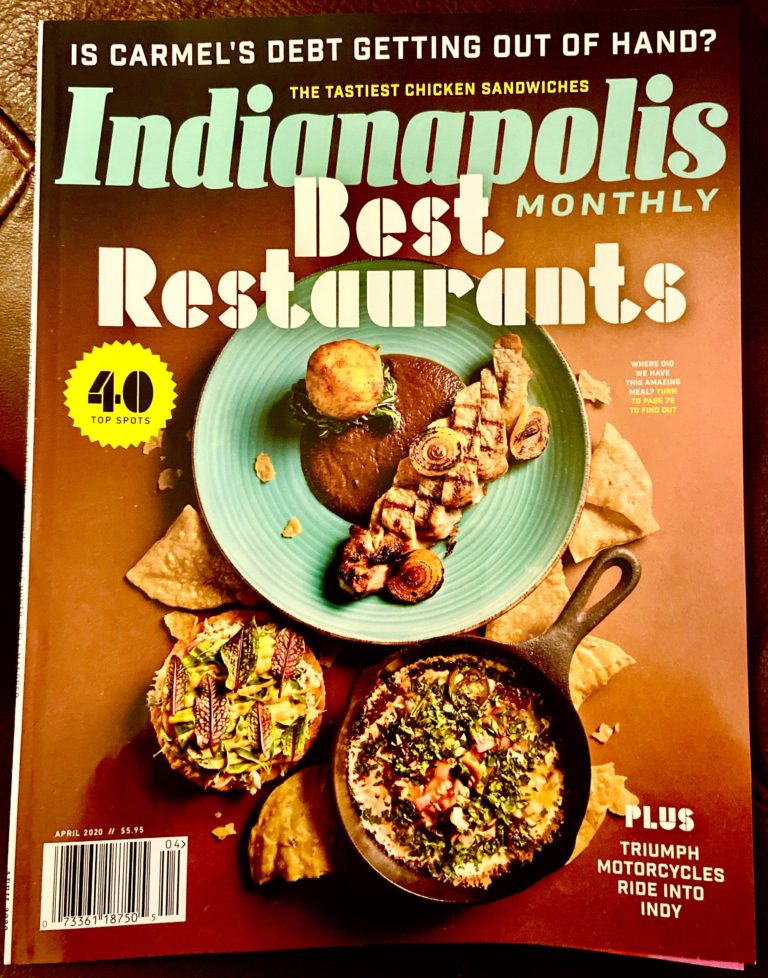
So naturally, the April 2020 issue of Indianapolis Monthly magazine just arrived arrived today, especially highlighting all of our capitol city’s great restaurants — that we can’t go visit until the state's pandemic restrictions are lifted. Such are the odd vicissitudes of magazine deadlines closing sometimes months in advance of actual publication.

The back page of the magazine always features an unusual artifact from around the City every month. April’s artifact is none other than the Masonic Library and Museum of Indiana’s unique folk art sculpture by nineteenth century Indiana Mason George S. Frank. It is shown in a beautiful, full-page photo by Tony Valainis with a description of the piece, complete with a few words from our director Mike Brumback (click the image up top to enlarge it).

The magazine should be on news stands this week. It's a terrific mention of our little-known museum to the general public, and just in time for us to be shut down to all visitors and workers.

So it goes.


For more about this unique and complex hand-carved artifact from the late 19th century, have a look at this more detailed article: Symbolism in Wood: The Enigmatic Masonic Puzzle of Brother George S. Frank

Someday, when the world regains its health and sanity, stop in and see us on the 5th floor of the Indianapolis Masonic Temple at 525 N. Illinois Street in Indianapolis. Someday.

Saturday, April 04, 2020

Truman: "None will look askance and say, 'Where was Freemasonry in this hour of need?'"

by Christopher Hodapp


Last year I was researching information about Masonic communities activities during World War II and the creation of a national network of U.S.O.-like service clubs by grand lodges and the Masonic Service Association. By the war's end there were 90 Army-Navy Masonic Service Centers located in major Masonic halls all across the country that provided meals, recreation, transportation, letter-writing material and services, and free long-distance phone calls to military personnel.

Now the Truman Presidential Library in Missouri has just posted this Youtube video of a later radio and newsreel address by Harry Truman about those very Masonic Service Centers. It was his second such message widely disseminated to the public about how Freemasonry served the military at the time.

(If it doesn't play above, visit the link HERE.)

The program was the brainchild of the MSA's director Carl H. Claudy and Missouri Past Grand Master, Senator Harry S Truman. In July 1941, Senator Truman gave a national radio address entitled “Masonry Serves the Armed Forces” in which he outlined programs being proposed by the Masonic Service Association to help, aid and assist servicemen in the event of war, and he exhorted brethren across the country to get busy immediately putting them into practice. It was clear that war in Europe and Asia was coming to the American soldier sooner than later, and Truman’s radio message was the official call to action for the nation’s Freemasons. Truman’s encouragement would become even more influential to Masons and the public in general, as he would soon be named as Roosevelt’s vice presidential running mate. 

The video above is actually a follow up message reporting on the activities of the Centers a year into the program.

Between 1941 and 1945, more than 16 million American men and women would eventually serve in the U.S. Armed Forces, and another 3.5 million worked as federal civilian employees during the war. Those are all sobering statistics today in an age when just one half of one percent of Americans are in uniform. Never before would so many Americans be uprooted from the familiar surroundings of their homes, families and communities, and moved to so many unfamiliar regions of the nation and the world with so little preparation and support.

The more than two and a half million U.S. Freemasons across the country had a major stake in the lives of military personnel. By 1944 during the height of the war, the MSA would estimate that 25% of all servicemen and women were either Masons, or from the families of Masons.

Years before the attack on Pearl Harbor and America’s entry into World War II, the national Masonic Service Association had done a national survey of Masonic halls and military bases. It was determined that they already had ideal social facilities sitting in nearly every American city and town, large and small, in the form of existing Masonic temples. The post-WWI building boom of the 1920s meant the Masons had plenty of big, centrally located buildings that would could accommodate visiting soldiers in large numbers. 


With a little bit of work, combined with their own dedicated volunteers from within the wider Masonic family of organizations, the Masonic Service Centers were born. The first center was officially opened in 1941 in the large Masonic temple in Columbus, South Carolina. By the war’s end, there were about 90 centers nationwide.


The Masonic Service Centers were designed to address the huge morale problem of hundreds of thousands of young soldiers far from home for the first time in their lives, suddenly finding themselves in strange towns without friends or relatives. The Centers received no funding from the USO or any other federal agency. Many religious groups also sponsored their own similar sorts of social centers for soldiers, but in public notices about the Masonic centers it was stressed that they were open to all service personnel regardless of race, creed, color or Masonic affiliation. That made them different from other church-related centers across the country, or private membership clubs that often had racial or religious restrictions, which were so common to the period. 


In my own state, just between January 1944 and the official end of the war in August of 1945, Indiana’s Masons hosted more than 80,000 service personnel at its two Service Centers. Agents, hostesses and Cadettes wrote thousands of letters and made hundreds of phone calls on behalf of soldiers unable to contact home on their own, and even communicated with lodges in other jurisdictions to report on the status of their military members while in the state. Throughout the course of the war, an average of 100 soldiers a day came through each of our centers.

Harry Truman assumed the presidency upon the death of Franklin Roosevelt in 1945. After the conclusion of the war, President Truman and Carl Claudy still saw an ongoing purpose for the fraternity and the MSA’s national leadership in helping the military. At Truman’s encouragement, the Masonic volunteerism of the Service Centers was converted into the MSA’s hospital visitation program in 1947, which continues to this very day. 

There may be a very simple motivating factor that drove men to join the ranks of our fraternity during and after the war. Truman's messages went nationwide, on radio and in movie houses. In this one he says something that may have resonated with a bigger cross-section of the American public than you might imagine today when most of us don't hear common messages from influencers and newsmakers anymore. He says, 
"At this very moment, in foxholes and on shipboard, beneath the sea and in the air, countless hands are being clasped in fraternal recognition as brothers find one another in the darkness as well as in the daylight. And countless fathers bravely wishing 'Godspeed' to their departing sons are saying, "Boy, when your hour of darkness and loneliness comes, find a Freemason, and tell him you are the son of a Freemason, and you'll find a friend..."
Stop and think for a moment about the power that message must have had, coming from the man who would soon be Vice-President and then President himself, and the tens of thousands who remembered it and took it to heart, both during and after the war. Fourteen years after the end of the war, American Masonry hit its membership record of more than 4 million members.

It's no wonder they joined in droves.

SRRS Posts 'Future of Freemasonry' Issue of Plumbline Online - Read It Now

by Christopher Hodapp
http://scottishriteresearch.com/wp-content/uploads/2020/04/SRRS-The-Plumbline-Winter-2019-Angel-Millar.pdf

About a month ago I called attention to the Winter issue of the Scottish Rite Research Society publication, The Plumbline and the feature article by Angel Millar, The Future of Freemasonry and What We Have To Offer.  At the time, I said it was important enough that every Masonic leader today needs to get hold of a copy and read it - Worshipful Masters, Wardens, and absolutely every grand lodge officer of any jurisdiction.

It really is that important.

The SRRS normally doesn't post their publications for free online, but they've just done so with this particular issue. It is available in its entirety at the link below:


The nationwide COVID pandemic shutdown makes this the perfect time to read this issue and ponder on the issues it discusses. In six pages, Brother Millar encapsulates a whole raft of topics and articles I've been posting about for three years now concerning the current social, economic and emotional issues facing men in American (and Western) society, and the generational changes over the last decades that are all having a transformative effect on our fraternity. 

We don't exist in a vacuum, and what happens in the world around us has good and bad transformational effects on our lodges and the men in them. The longstanding bonds that passed the traditions of Freemasonry from one generation to the next have almost all been shattered in the last 50 years. Diminishing male role models, single mother households, fewer (if any) siblings, the decline of religious worship and its related group activities, and the rise of the nebulous "I'm spiritual, not religious" mindset are all having measurable repercussions for us. Angel covers a lot of ground in this essay, and especially cites recent, vital survey results by Jon Ruark about attitudes of our members.

For two decades I've been weary with Masons who only want to proclaim, "Ya know what's WRONG with this fraternity...?" Those types of articles and speeches have little more value than the average barstool philosopher. That's not what this is. Angel is not trying to do an autopsy on a dead organization. The rest of the article discusses the new wave of bottom-up changes being made in local lodges that are reinvigorating — and redefining — Masonic education, and driving the evolution of the fraternity at the grassroots level. He spends time especially discussing the MasonicCon concept pioneered by Ezekiel Bates Lodge in Attleboro, Massachusetts, and notes its growing numbers of imitators. He also discusses a New York program, 'Brothers For Brothers,' that teaches the basic life skills to new generations who haven't otherwise had the opportunity to learn them before: communication, public speaking, personal grooming and sartorial care, professional development — all are confidence-building skills that used to be passed from father to son, but rarely are anymore.

Freemasonry started out as a fraternity of gentleman with the aim of educating and improving a growing class of rough and rugged middle-class men - making those good men into better ones by example and education. We have that very same mission today, and society needs us just as much as it did in London in 1717, or western Kentucky in 1800, or California in 1849.

Most of us have just been given a long period of time away from our day to day grind at this bizarre moment in time. Don't waste it. Use it to study the past, contemplate the present, and plan for the future. Our fraternity needs all of us going forward, and we can't waste our efforts just doing the same things we've been doing that have been shrinking our membership rolls and our roles within our communities for decades. It's long past time to act for positive and constructive programs and changes. And this issue of the Plumbline is a good starting place.

Thanks to everyone at the SRRS for making this happen. 

If you're not a member of the Scottish Rite Research Societythe Plumbline is their excellent quarterly publication of papers and articles, edited by Adam Kendall. This is in addition to the annual collection of Heredom, AND their annual bonus book or publication. It's truly the greatest value in the entire Masonic research world.


Additional reading from this site on these topics:


Robert Putnam's seminal study of the decline in social capital since the 1950s that is cited in countless articles, Bowling Alone, was released twenty years ago, yet it seems that frustrated Masonic leaders just keep freshly discovering it year after year. 

Putnam is releasing a new, updated edition of the book in June of this year: Bowling Alone: Revised and Updated: The Collapse and Revival of American Community. 

It is available for pre-order now.

Two good starting references for recent examinations of the post-Bowling Alone era breakdown in social capital and the current results on U.S. society are Charles Murray's Coming Apart, and Timothy Carney's Alienated America: Why Some Places Thrive While Others Collapse. There are many more, but these are good beginnings.

And every Masonic leader needs to be conversant with the General Social Survey, taken since 1972, which is the baseline study for almost anyone with an interest in studying the attitudes and activities of Americans.

http://gss.norc.org

Friday, April 03, 2020

"Freemasonry, notwithstanding, has still survived. "

by Christopher Hodapp


RW Michael Halleran, Past Grand Master of Kansas and former editor of the Journal of the Masonic Society, just passed along this artwork for a Masonic/COVID graphic. 

"Wanted to do something to help," Mike wrote. "Enclosed is a 6x9 jpg poster I did up today that any lodge or grand lodge can freely use...if it helps, please post it. The poster is suitable for social media posting as is, and can be printed (if that is still a thing) at a 1:1 ratio at 6 inches by 9 inches."

The quote, "Freemasonry, notwithstanding, has still survived," is taken from the explanation of Geometry that appears just before the Charge to the Fellow Craft that is fairly commonly heard throughout North American Masonic rituals in most jurisdictions. William Preston printed it in his Illustrations in 1779, and it quickly began to encircle the globe as Masons traveled on English ships to distant colonies.*

That passage is one of my favorites in all of Masonic ritual, and was part of the first extended lecture I ever learned in my whirlwind trip to the Worshipful Master's chair. 
"The lapse of time, the ruthless hand of ignorance, and the devastations of war have laid waste and destroyed many valuable monuments of antiquity, on which the utmost exertions of human genius have been employed. Even the Temple of Solomon, so spacious and magnificent, and constructed by so many celebrated artists, escaped not the ravages of barbarous force. 
Freemasonry, notwithstanding, has still survived.  
Indeed, it has. 

After the American Revolution. the Antients' lodges spread across the new nation and quickly supplanted the Moderns, who were largely seen as Loyalists. By then, Preston's lectures were already being incorporated into American lodge rituals. In 1797, Thomas Smith Webb's Freemason’s Monitor or Illustrations of Masonry, was published and was quickly adopted across America as the closest thing to an 'official ritual' most grand lodges would have for another century. Webb included the lecture verbatim. 

Since our beginnings, American Masonry and Masons have suffered revolution, persecution, numerous wars, countless diseases, epidemics and pandemics, multiple economic depressions, and more. 

But Freemasonry, notwithstanding, has still survived. 

Stay safe, Brethren.


By the way, here's one for my home jurisdiction in Indiana.


* (Yes, I've updated this post to reflect that the phrase did NOT originate with Dermott's Ahiman Rezon in the 1750s. Serves me right for not double checking my sources. It doesn't appear in an edition of Ahiman Rezon until Stickle's greatly expanded edition in the 1860s.)

Thursday, April 02, 2020

Jacksonville, Illinois Masonic Temple Hits the Market

by Christopher Hodapp

The truly unique art-deco Masonic hall of Harmony Lodge No. 3 in Jacksonville, Illinois has just hit the market. Their temple board voted last week to offer the Depression era for sale via an online auction.
The hall is also home to Zingabad Grotto. Both groups will continue to reside there until the building is sold. And some members have expressed a desire to continue to rent their lodge room space from new owners, if possible. 

I came across the early story of Harmony Lodge in an 1870 volume of The Masonic Trowel magazine. Following the shuttering of the first Grand Lodge of Illinois by 1827 during the most rabid years of the Anti-Masonic period, Masons in Jacksonville were issued a dispensation in 1837 by the Grand Lodge of Missouri, and chartered as Missouri's Jacksonville Harmony Lodge No. 24. In fact, the Grand Lodge of Illinois AF&AM was actually resurrected and organized at the original Masonic hall in Jacksonville on April 6, 1840. At that time, six Illinois lodges were issued their new Illinois charters and it became Harmony Lodge No. 3. Jacksonville was later the site of several annual communications of the revived Grand Lodge over the years. That's a significant milestone for Illinois Masons, and Harmony Lodge 3 deserves to have a significant home bespeaking its vital historical role. Let us hope they can remain in this unique temple, or erect a new one worthy of that heritage, and not just another anonymous steel shed in a cornfield. 

According to an article last Thursday in the Journal Courier, the Masonic center will be sold through an online, no-reserve auction by Cory Craig Auction Service at corycraig.com. Bidding will begin April 1 and continue through 6 p.m. April 30.

Jacksonville sits about 35 miles west of the state capitol of Springfield. According to the article, at its peak the lodge reportedly had almost 1,200 dues-paying members, likely during the height of Masonic popularity in the late 1950s—today, they are down to 250 (although it's unclear whether they meant the lodge or the Grotto). 

Brother Jerry Maples down in Texas has family ties to Jacksonville, Illinois , and he penned a thoughtful letter to the newspaper over the weekend. 
While I realize that membership is declining and rental revenues are declining from businesses that occupy parts of such eloquent buildings, I still feel sad over such sales.
I know they are needed, given those realities. Still, at one time the Masonic Hall of nearly any given city was a hub of community life. Masonry existed long before radio, TV, telephone or internet. Going to a lodge meeting was more than mere “male-bonding” — it was where one learned of births, weddings, community news, deaths and notices of people in need … and the Masons are noted as a benevolent association that endeavors to help others, both members and non-members.
Although the members constitute “the lodge,” I still maintain that the historic ambiance of some lodges add to the initiation experience of a candidate. Freemasonry is not a religion, yet it inculcates virtues lessons in ethics. The lodge halls can be downsized.
Masonry will survive, but somehow I don’t feel it will quite be the same. Yet I encourage any man interested in good moral virtues who wishes to associate with other like-minded men men to consider joining.
You’ll be glad you did.
James A. Marples, Longview, Texas

Amen, Brother. Amen.

Saturday, March 28, 2020

Isolation Is A(nother) Good Reason For New Books

by Christopher Hodapp


UPDATE APRIL 6, 2020: 
I just received word as of today that the MSA is now officially sold out of ALL editions of these books - both the Master Mason cloth bindings and the grand Master leather ones! Richard asks that you please not try to order any more.


That said, Carl Davis' weekly devotional book also mentioned in this original post , Making Good Men Better, is NOT sold out and still very much available!


--------

A major bargain on expensive Masonic books doesn't happen very often, but this is a real opportunity for lodges, libraries and individual Masons seeking a massive educational resource. 

As reported here several months ago, the Masonic Service Association is moving its headquarters from Maryland to Iowa. The complete six-volume set of hardbound editions of the Short Talk Bulletins starting in the 1920s is now on sale at what is almost a giveaway price. The full set of the Master Mason cloth-bound, hardback edition is just $120, and this combined set contains over 1,000 Short Talk Bulletins. 

If you are looking for the higher quality leather bound Grand Master editions, they are going for $40 apiece. All of these prices are less than a third of their original cover price.

This means you could have a complete set of these books for less than the price of two of them when they were first printed. Don't let this deal slip by. Every Masonic Lodge and Masonic research library really should have these sets.

There are hundreds of hidden gems, historical tales, ritual information, symbolism explanations and exploration, and scores of other sorts of topics to be found in these beautiful volumes. Every Single Short Talk Bulletin from 1923 through 2017 has been edited, re-typeset and blessedly indexed for these books by S. Brent Morris of the Scottish Rite Research Society. You could literally read one article every single day for almost the next three years. Never be at a loss for 'Masonic education' at you meetings ever again - you can walk into your lodge, literally open any of these books and start reading one aloud (once we can all meet again).

The sale was announced in the most recent mailing of the MSA Short Talk Bulletin and Emessay Notes. Note that the sale price is NOT reflected on the MSA's webpage, so you'll need to contact them directly. (Nothing on the MSA website seems to have been updated since Simon LaPlace left several months ago.)

Email: msaoffice@msana.com
Tel: (301) 476-7330
Toll-free: (855) 476-4010


A new book has just been released by WB Carl W. Davis, and it couldn't come at a more opportune time. Making Good Men Better: A 52 Week Personal Growth Plan Based on the Teachings of Freemasonry is designed as a weekly Masonic devotional designed to instruct and inspire the contemplative Brother with a year’s worth of lessons about our symbolism, our philosophy, and even the phrases we use. Since we are all trapped in our houses for the duration of the COVID pandemic, Carl's book gives you the chance to advance your own personal thinking about Masonic principles and concepts as the weeks go by.

The daily or weekly devotional reader was once one of those common items that almost everyone in the Western world was familiar with, at least until the last 50 years or so. Most commonly circulated in the Christian tradition, these little booklets provided short readings, Biblical quotations, homilies, stories, and other inspirational content to be used during a daily time of prayer or spiritual meditation. The brief passages were meant to inspire or prompt the reader’s own deeper thoughts and reflection throughout the course of a week, a month, or a year.

Making Good Men Better is divided into 52 chapters, intended to be read one per week, and each chapter is followed by space to record your own reflections or notes. Because Carl has traveled extensively and visited Masonic lodges in a wide variation of jurisdictions, he combines concepts from several rituals with which you may not be entirely familiar with in an effort to examine and broaden our understanding of them. Sometimes it's helpful to look at a very different expression of the same symbol or ritualistic aspect through the eyes from a different state or country. Our rituals weren't carved in stone in most cases until the late 19th century when printed ciphers began to unify the work in any given state. Up until then, jurisdictions or individual lodges often added or subtracted paragraphs or entire lectures seen or heard or invented elsewhere.

WB Davis' book covers all kinds of elements, from ritual and symbolism, to certain practices and traditions we observe in lodge every day without examining how or why we do them. And the book is designed to digest these interpretations in small chunks, with space to record your own thoughts. Put it on your bedside table, set a weekly reminder on your phone, and try to use it as it was intended. It's a worthwhile habit to take up.
Sadly, the widespread tradition of the devotional reader has fallen by the wayside among the wider population today (although ironically, in these days of self-publishing, there is no shortage of them to be found in print and online today).

Society could use more quiet contemplation these days. 
The current enforced isolation gives us all a new opportunity to pick up new habits. This is a good one.