"To preserve the reputation of the Fraternity unsullied must be your constant care."

BE A FREEMASON

Showing posts with label American Revolution. Show all posts

Friday, June 13, 2025

250 Years of Prince Hall Freemasonry in Boston

Photo: WGBH

by Christopher Hodapp

THIS STORY HAS BEEN UPDATED ON JUNE 25, 2025 AT 1:00PM

On Memorial Day, the Most Worshipful Prince Hall Grand Lodge of Massachusetts celebrated a true milestone for their unique branch of the fraternity of Freemasonry, marking the traditional 250th anniversary of the raising of Prince Hall and 14 other free black men as Masons in Boston. The Boston Memorial Day event saw a large procession to Copp's Hill burial ground, led by Grand Master Justin A. Petty, where a striking monument to WB Hall stands today.


The long-standing story goes that, back in March 1775, Hall and his brethren were initiated by an Irish military lodge of Masons in the British Army just before the American Revolution broke out.*  At the time, Boston's established lodges wouldn’t admit them. So after the war ended, Hall took matters into his own hands and got a proper charter from England in 1784 to start African Lodge No. 459. From that beginning, what became known first as 'African,' then Prince Hall, Freemasonry spread across the country, peaking nationwide in the 1960s with 310,000 members in 5,100 lodges. 

Early Prince Hall Masons pushed hard for abolition, education, and community uplift, sponsoring schools, signing petitions, providing for impoverished families, offering scholarships, and more. Arguably, they became as important and influential within their communities as the black churches, frequently cooperating on countless programs. 

Their downtown temples and grand lodge buildings often became important office hubs for black professionals like doctors, dentists and attorneys. During the 1950s and 60s, these places often were home to the headquarters of civil rights organizations. Within the rolls of Prince Hall Grand Lodges you'll find politicians, educators, entertainers, sports figures, community leaders and businessmen. 

So, for Prince Hall Freemasonry to grow, thrive and survive for 250 years as the nation's oldest black fraternal organization is a very big deal. 

Today, Prince Hall Affiliated Freemasonry shares recognition with so-called 'mainstream' grand lodges in all but four states in the U.S.: Arkansas, Mississippi, South Carolina and West Virginia.

WBGH in Boston has a long article about Hall and the festivities that day HERE:
In 1775, Boston’s Prince Hall broke Freemasonry’s racial barrier. His global movement marches on.

* I say "the longstanding story" for a reason. Several years ago, researcher John Hairston (a Prince Hall Mason in Washington state) published Landmarks of our Fathers: The Critical Analysis of the Start and Origin of African Lodge No. 1 in which he painstakingly looked into the existing evidence of the formation of African Lodge. What he found alters the dates of the degrees of Hall and his 14 brethren to 1778, after the Revolution was already underway, and shows that the Irish military lodge had nothing to do with the event. Former sergeant John Batt, who conferred their degrees, was a dicey character who had left the British Army and may very well have been a degree peddler who took advantage of the situation and duped the black men into thinking he had authority he didn't possess. None of that alters the ultimate legitimacy of African Lodge once it received its English charter, and certainly has no bearing on the long heritage of Prince Hall Freemasonry, but calling into question anything about their founding risks the slaughter of sacred cattle. The 1775 date was loudly defended for more than 150 years as white Masons refused to accept the Prince Hall/African Lodge story as legitimate and would use any excuse or deviation from the original story to attack them. There's probably no harm in the general acceptance of the 1775 story when it comes to legendary heritage. Nevertheless, Brother Hairston's evidence should not be ignored or discounted by serious researchers and historians.

Massachusetts Masons To Rededicate Bunker Hill Monument June 16th

Photo: National Parks Service

by Christopher Hodapp

As the 250th anniversary (the Semiquincentennial, in case you were wondering) of the Declaration of Independence and the American Revolution gets underway this year, Boston-area Freemasons and the Grand Lodge of Massachusetts A.F.&A.M. will take part in a rededication of the monument marking the Battle of Bunker Hill at Charlestown next Monday, June 16th.

From the Charlestown Patriot-Bridge website yesterday:

On Monday, June 16, Charlestown will become the center of national remembrance as the Bunker Hill Monument Association leads a full-day commemoration marking the 200th anniversary of the laying of the Bunker Hill Monument’s cornerstone and the 250th anniversary of the Battle of Bunker Hill.

Titled “Two Centuries of Glory,” the event will blend pageantry, history, and patriotism. The day begins with a ceremonial procession at 9:30 AM from the Charlestown Navy Yard, featuring more than 500 participants — Freemasons in full regalia, veterans, military groups, civic leaders, and historical reenactors — retracing the symbolic path toward the monument.

At 10:00 AM, a traditional Masonic cornerstone-laying ritual will take place at the base of the Bunker Hill Monument, replicating the original 1825 ceremony that drew thousands and helped define the commemorative landscape of early America. Attendees will witness stirring musical tributes form 20 musicians and historical readings, including portrayals of Daniel Webster and the Marquis de Lafayette — key figures in the monument’s founding.

The celebration continues in the evening at 6:00 PM at the Old South Meeting House with “It Has Begun!” — A Grand Monumental Celebration. This culminating event will include authentic spirited toasts each followed by a lively interpretation form the Dee Orchestra and Chorus of the orginal odes and songs that 60,000 people heard in 1825. Lafayette’s 1825 tribute to freedom and liberty, read aloud once more in the very city where American independence first found its voice will be followed by the Marseillaise and the Star Spangled Banner.

Presented by the Bunker Hill Monument Association in collaboration with Boston National Historical Park, The Grand Lodge of Masons in Massachusetts, Revolutionary Spaces, the American Friends of Lafayette, and additional partners, the day promises to be a fitting tribute to two centuries of American memory and the enduring legacy of Bunker Hill.

For details about the Grand Lodge's involvement and for contact information, visit the Grand Lodge of Massachusetts event page HERE.

Unfortunately, the article doesn't explain just how much the Freemasons in the Boston area really had to do with the battle and with the erection of the monument itself two centuries ago, in 1825. Dr. Joseph Warren was the Master of St. Andrews Lodge and Provincial Grand Master under the Grand Lodge of Scotland (St. Andrews originally started out as a completely independent, un-chartered lodge of its own, but finally took enough flak over it that they obtained a charter from the GL of Scotland to give itself more legitimacy.) Warren died leading revolutionary troops against the English on Breeds Hill. After the revolutionKing Solomon Lodge purchased the land in 1783 and erected a monument to Warren and the other Masons who died there with him during that desperate fight. 

To prepare for the 50th anniversary of the battle, the city of Charlestown decided that a more impressive monument needed to be constructed. In 1823, King Solomon Lodge donated their property to the newly-formed Bunker Hill Monument Association, with the provision that any future monument had to preserve 'some trace of its former existence.' 

Photo: National Parks Service

The Association did just that, and built a replica of the original Masonic monument inside the building adjacent to the present obelisk. Today, visitors can see a beautiful marble sculpture of WB Warren, and his Masonic apron is also on display there.

Photo: Sarah Oliver/flickr

When the official dedication of the cornerstone was done in 1825, it coincided with the visit of Brother Maj. General LaFayette on his nationwide tour. He symbolically laid the cornerstone, and Brother Senator Daniel Webster gave the address to the crowd. In fact, Webster was still alive in 1843 when the monument was finally completed, and he spoke again at that ceremony. At that time, the country was still in the final vestiges of its anti-Masonic period, and the Masons chose not to take an official role at the event.

LaFayette's grave in Paris (Photo: Parisology)

One final connection to Lafayette was that he took a box of soil from Bunker Hill back home to France, which he had spread over his grave in Paris upon his death. The General wanted to be buried beneath both French and American ground, and the flags of both nations have flown over his resting place ever since 1834.

Local ABC station WCVB-TV in Boston put together a great feature on the monument and the Masonic involvement HERE.

Read the story of the Monument and the Freemasons on the National Parks Service site HERE.


And to keep with the many activities and events being planned as part of the Semiquincentennial (I'll never get used to THAT one) celebrations over the next two years, visit the America 250 website.

NOTE: In case you're wondering, Massachusetts and Hawaii are the only two U.S. grand lodges that do not number their lodges. Massachusetts did it because of the confusion immediately after the Revolution caused by the formation of multiple competing grand lodge bodies in that state. (By 1784, there were two competing grand lodges, plus two completely independent upstart lodges, PLUS Prince Hall's African Lodge No. 459, which had just been issued its own charter from the Grand Lodge of England/Moderns.) 

Once they finally all settled down, buried the hatchet, and merged into one single Grand Lodge of Massachusetts (except for African Lodge), ego arguments began to fly over whose lodge was oldest, which No. 1s should really be THE No. 1, etc. King Solomon Lodge was the 9th oldest lodge in the state, but that number is not assigned to them or anyone else there.

And Hawaii doesn't number theirs because their first lodges were originally charted without numbers by the Grand Lodge of Massachusetts, and they've followed that practice ever since.

Sunday, July 14, 2024

New Book by Chris Ruli: 'Brother Lafayette' Available for Presale


by Christopher Hodapp

It's Bastille Day today, so I think it's appropriate to post this story. Macoy Publishing has announced the pre-sale of Brother Christopher Ruli's newest book, Brother Lafayette: the Marquis de Lafayette's Masonic Travels in America 1824-25 (Macoy, 2024, $24.95) now through September 24th, when it's expected to begin shipping. 

UPDATE 7/23/2024: Chris is also offering to personalize and autograph copies of Brother Lafayette for $27. CLICK HERE TO ORDER YOURS. NOTE: please include signature instructions, with preferred name, in the "add a note to seller" box while at checkout.

This year marks the 200th anniversary of Major General Marie-Joseph-Paul-Yves-Roch-Gilbert du Motier, Marquis de La Fayette’s triumphant goodwill tour of America between 1824-25. Fewer and fewer Americans these days have been taught about Major General Lafayette and his role in the American Revolution, and even fewer know of just how dedicated he was to the cause of liberty, before he arrived in America, and long after he returned home to France where he was swept up in its own revolution. But in addition to his long career as a military figure, statesman, revolutionary, protector, political prisoner, and so much more, he was also a Freemason.

In 1824, Lafayette visited America at the invitation of President James Monroe, and began traveling the country. The American Revolution’s 50th anniversary was approaching, and Lafayette was the last of George Washington's major generals who was still alive. During his whirlwind goodwill tour, he spoke in many places, including several Masonic lodges. He was treated with much the same sort of awe and adoration that had been reserved for George Washington himself, which never ceased to astonish him. Everywhere Lafayette went, adoring crowds followed him through the streets. Balls, dinners, tours, concerts, parades, and public honors of every kind were arranged to honor him, and what started out to be a three-month trip lasted over a year. It was during that visit that the park north of the White House was renamed to honor him. Literally hundreds of other parks, towns, cities, and counties throughout the United States are named after him. And there were more than a few Masonic lodges chartered in his name.


Lafayette's famed American tour took him to all 24 of the United States at that time – 6,000 miles in all – and in the decades following his visit, it seemed as though every Masonic lodge in the country wanted to claim their members had some kind of meaningful contact with the legendary general and Freemason.

Ironically, despite the high-profile visitations and associations with Freemasons while he was here, just a year later, William Morgan would disappear in Western New York, allegedly murdered by Brother Masons, and the most vehement period of American anti-Masonic persecution would erupt throughout the country.

Now, author and Washington DC Mason Christopher Ruli has done a deep dive into the itineraries, letters, diaries, minute books, and press reports of the time to create a full and definitive account of Brother Lafayette’s Masonic contacts and travels throughout his famed trip. The result is 
Brother Lafayette: the Marquis de Lafayette's Masonic Travels in America 1824-25a detailed, fascinating, and eminently absorbing travelogue with a uniquely Masonic focus. 

Similar in nature to Chris' previous Masonic history of the Presidential Mansion in Washington, DC, (The White House & the Freemasons, Macoy, 2023, $29.95-39.95) Chris has meticulously tracked down every known instance of Lafayette visiting Masonic lodges, grand lodges, and individual Freemasons. Through diaries, newspaper accounts, even lodge minute books, he has provided the best documented evidence of Lafayette's interactions with Masons all along the route. And they were considerable in number!

You'll find letters, transcripts of speeches, tributes, toasts, diplomas, songs written for the occasion, descriptions of medals and other gifts given to Lafayette. He was granted honorary memberships in lodges and grand lodges. When the weather turned cold in November 1824, he wintered at Alexandria, Virginia's famed Gadsby's Tavern. In January of 1925, halfway through the trip, he wrote to his friend Thomas Jefferson, "I contemplate to set out for the Carolinas, Georgia, Alabama, New Orleans, and the western states, upwards of 5,000 miles to be performed in 99 days with only 13 days rest...and 300 miles through a sort of wilderness. We will do the best we can." 

He was 69 years old, and the trip would have been grueling for men half his age.

(Typically for my own state of Indiana, which had only been granted statehood less than 10 years before, our legislature, our governor, and our grand lodge made no effort to issue Lafayette an invitation, and the only reason he set shore here was when his steamboat ran aground—the 19th century version of only stopping at an Indiana truck stop on the way someplace else.)

Macoy's is offering the book for pre-sale now for $24.94, and delivery is expected in September. CLICK HERE TO ORDER.


Just as an added aside, the 
American Friends of Lafayette have been preparing for celebrating the bicentennial of Lafayette's farewell tour, erecting historical markers, arranging for events all along the 6,000-mile route of his original trip. Festivities will begin August 16, 2024 in New York City and wind up at Mount Vernon in September 2025. If you live or belong to a lodge in an area that Lafayette actually visited, you should consider erecting a permanent historical marker describing the visit. Or if your city or town is already doing so this year, be sure your lodge contacts the local group arranging for the marker and ask if your lodge or grand lodge can take part in the dedication and other festivities.

If you don't know much about Lafayette or can't fathom why he was so adored by Americans at the time, read the excerpt below adapted from my 2005 book, Solomon's Builders:

Monday, May 06, 2024

MAGI: Robert Cooper and Mark Tabbert Launch Masonic Book Review Podcast


by Christopher Hodapp

Masonic authors and historians Mark Tabbert and Scotland's Robert Cooper have recently embarked on a new joint podcast, a unique book review program called MAGI Reviews: The Masonic Authors' Guild International.  Mark and Robert started their podcast a couple of months ago, and they've done 16 episodes so far. 

Mark Tabbert

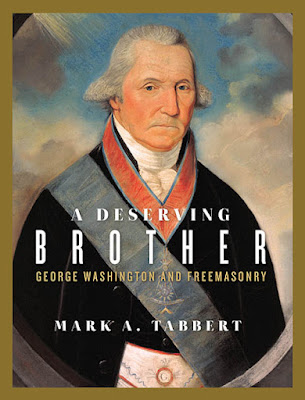
Both of these knowledgeable Brothers have held unique positions over the last couple of decades, and as Masonic authors and researchers, neither of them could be considered to be a slouch. Mark Tabbert is a past president of the Masonic Library & Museum Association, a former curator for the Scottish Rite NMJ's museum in Lexington, Massachusetts, and most recently, curator at the George Washington Masonic National Memorial's museum in Alexandria, Virginia. He's the author of American Freemasonry: Three Centuries of Building Communities and most recently, A Deserving Brother: George Washington and Freemasonry

Robert L.D. Cooper

Robert L.D. Cooper served for almost 30 years as the curator for the Grand Lodge of Scotland's Library & Museum in Edinburgh. He the author of The Red Triangle, an indispensable work about the history of anti-Masonic movements and persecutions; the outstanding Rosslyn Hoax, that examines the many legends and theories about the Knights Templar, Freemasonry, and the enigmatic Rosslyn Chapel in Scotland. Both of these brethren are members of the Society of Blue Friars, an honorary organization of  Masonic authors.

Because they are academic historians and not just a couple of aged, obsessive Masons with a warm glow in their hearts for dusty old Masonic books (not that there's anything wrong with that), they approach their reviews by discussing the pedagogical, academic value of the works themselves. Are they well-researched and well documented? Are they truthful? Are they backed up by useful, in-depth footnotes and references? Are their premises serious, looney, or just plain wishful thinking? Are they really thought-provoking, or are they so far off the rails that you'd be better off using them to prop up a rocky table leg? And what makes a more useful and more trustworthy Masonic book, from an academic point of view, anyway?

Consequently, there's been a good mix on the podcast so far – Masonic classics like Joseph Fort Newton's The Builders and David Stephenson's excellent Origins of Freemasonry: Scotland's Century; academic works like Mark C. Carnes’ Secret Ritual and Manhood in Victorian America and Steven C. Bullock's indispensable Revolutionary Brotherhood: Freemasonry and the Transformation of the American Social Order, 1730-1840. Over in the deep end of the pool are the more... let's call them speculative books, like Stephen Knight's paranoid fairy tale book The Brotherhood: Secret World of the Freemasons (the completely unsubstantiated book of nonsense that launched England into a three-decade anti-Masonic fervor) and David Ovason's inexplicably popular astrological Secret Architecture of our Nation’s Capital: The Masons and the Building of Washington, DC. 

So imagine my surprise when Mark and Robert featured my second book:  Season 1, Episode 16 reviewed Solomon's Builders: Freemasons, Founding Fathers and the Secrets of Washington, D.C., which was written some 14 years ago. After all this time, and despite the panicked circumstances under which it was written, I was pleasantly surprised that they felt it still was of value today.


Let me explain.

Back in the early 2000s when the world was young and dinosaurs ruled the Earth, the entire publishing industry was attempting to cash in on novelist Dan Brown's as yet-unreleased sequel to The DaVinci Code, rumored at that time to be entitled The Solomon Key (eventually The Lost Symbol). By 2003, Da Vinci Code was already the 6th most popular book in the history of the English language, and readers all over the world were breathlessly awaiting the next entry in his series of stories featuring Harvard University 'symbologist' (whatever that is), Robert Langdon. While speaking off the record at a small gathering of local citizens in his New Hampshire hometown, he let it slip that the title of his next book would likely be The Solomon Key and be about Freemasons in Washington D.C. That bit of seemingly innocuous news turned into an international headline, and the feeding frenzy began. 

Stacks of books about the Masons were hurled out by the mainstream press; History Channel shows began talking about the Masons; everyone from National Geographic to the stuffy US News & World Report published expensive, glossy, full-color specialty magazines about Freemasonry, the Knights Templar, old cathedrals, the Illuminati, Bohemian Grove, and anything else they could possibly heave into the mix that sounded ancient, mysterious, spooky, and secret society-ish. Then, Disney rushed the Masonic-themed movie National Treasure into production, and it was released in November 2004. National Treasure would never have been made if not for Dan Brown's tardiness in delivering his sequel manuscript; and my own Freemasons For Dummies would never have been published if National Treasure hadn't been the #1 box office hit of 2004. In fact, Bob Cooper's own book, Cracking the Freemasons Code, was released during this same period for much the same reason – to get a jump on what Masons everywhere feared might be bad fictional treatment by Brown's book.

So. In 2005 I was contacted by Ulysses Press, a small, independent publisher located in Berkeley, California, and asked to write a book that would attempt to second-guess Brown's still as-yet unknown story points, debunk any sort of Masonic claims that he might include in his sequel, and explain his as-yet unseen storyline—whatever that might be—from the standpoint of the Masonic fraternity. And I was given a whopping four months to deliver the manuscript (a month longer than Wiley gave me to write Freemasons For Dummies). 

It hit on the Masonic membership and activities of several of America's founding fathers, talked about possible Masonic influences on the Constitution, and explored the run-up to the Enlightenment period in England and how the Freemasons sprung from it. It detailed the Masonic cornerstone ceremonies for the White House, the U.S. Capitol building, the Washington Monument and more. Chapters debunked some of the most common fantasies about the Masons – Albert Pike, All-Seeing Eyes, the 'Masonic' symbols on the dollar bill and why they aren't actually 'Masonic', and, of course, the nonsense about the supposed 'Masonic' patterns in the streets of America's federal city. The back half of the book was a Masonic travel guide to Washington D.C., listing the many Masonic halls around the city, current and former grand lodge locations, Alexandria's George Washington Masonic National Memorial, the Scottish Rite SJ's House of the Temple, the city's original 'cornerstone', plus other noteworthy landmarks, buildings and monuments with both real and imaginary Masonic connections. 

Solomon's Builders still holds up pretty well 18 years after it was published, if I do say so myself.  When I wrote it, I tried to keep the specific Brown-related mentions to a minimum so it wouldn't become obsolete. I'm gratified that it still remains in print today, because so many other really excellent books that were released about the same time by respected Masonic authors have gone out of print and vanished into the anonymity of Half-Price Books metaphysical section. 

Masonic/Dan Brown mania had a big die-back after his The Lost Symbol  was finally published in 2009 – fortunately for us, the Masons actually turned out to be the good guys in the book, and not the evil, bald-headed, cat-stroking supervillains most of us feared. And the fraternity did have a momentary uptick in men joining lodges who were inspired either by Brown's novel or by one of the myriad Masonic books that came out at the time. But that faded after a couple of years.

Yet, Solomon's Builders remains a decent, handy Masonic guide to D.C. today. Albert Pike's statue in Judiciary Square did get yanked down in the fevered summer of George Floyd riot-related statue toppling. And the city of Alexandria and the parks department put some decent money into sprucing up the area around the first boundary marker for the District of Columbia that was installed and dedicated by Freemasons. And a few other changes have happened throughout the city. But most of the information is still valid today. So, many thanks to Mark and Bob for hitting it with a spotlight again. I'm honored just by the mere mention.

Saturday, November 11, 2023

December 15-17: Masons To Celebrate Boston Tea Party's 250th Anniversary in Grand Style!


by Christopher Hodapp


(From the Grand Lodge of Massachusetts Facebook page. As an old ad guy, I have to say I really like their tag line: "Same Men. Different Times." CH)

The Grand Lodge of Masons in Massachusetts has partnered with the Massachusetts Sons of the American Revolution and the Dr. Joseph Warren Foundation to commemorate the 250th anniversary of the Boston Tea Party. From December 15 through the 17th, Freemasons and their families will be joining us from across the country, and we hope you will also. 

54 Grand Jurisdictions have been invited to join us.


Friday, December 15, 2023
(Open to the public)
A Historic Tavern Tour has been created in collaboration with Revolution 250, which is an organization that the Massachusetts Historical Society created to support the commemorative events leading up to 2026. 

(Open to Freemasons, their families, and invited guests)
If visiting from another jurisdiction, attend St. John's Lodge's annual installation. St. John's Lodge was chartered in 1733 and is the oldest lodge in the Western Hemisphere. 

Saturday, December 16, 2023
(Open to the public free of charge)
We will host a world-class speaker symposium at the Grand Lodge beginning at 8:30 a.m. and ending at 5:00 p.m. Through the generosity of our event sponsors, we can provide the events to the public at no cost.

  • 8:30-9:10-Dr. Brooke Barbier "Radicalizing John Hancock: The Tea Act and the Boston Tea Party."
  • 9:15-10:00-RW Walter Hunt "Freemasonry Before the Revolution"
  • 10:15-11:20-Boston-Lafayette Lodge of Perfection performing "Treason to the Crown"
  • 11:30-12:15-Dr. Jayne Triber "Brother Revere: How Freemasonry Shaped Paul Revere's Revolutionary Role"
12:15 -1:00 Break for Lunch
  • 1:30-2:00 -Dr. William Fowler "A Fireside chat with famed author Dr. Fowler."
  • 2:00-3:00 -JL Bell "How Bostonians Learned to Talk about the Destruction of the Tea."
  • 3:00-4:00 -Dr. James Fichter "Tea: Consumption, Politics, and Revolution, 1773–1776."
  • 4:00-5:00 -Dr. Ben Carp "Teapot in a Tempest: The Boston Tea Party of 1773."
There will be guided tours of the Grand Lodge from 9:00 a.m. to 5:00 p.m. on a first come, first served basis. The Grand Lodge will also have several rare artifacts on display for you to view. 

(For Freemasons and their families)
There will also be opportunities to attend a group tour of a few local historic locations. The historic sites set prices for tours.

Following the symposium, Freemasons can join a procession with the Grand Master from the Grand Lodge to the Old South Meeting House, then to the Boston Tea Party Museum. Retracing the steps of our forefathers 250 years ago. (Registration will be $10 per Brother and include a commemorative apron for the event).

Sunday, December 17, 2023 
(Open to the public)
The Grand Chaplains will lead a non-denominational ecumenical service at the Grand Lodge at 10:00 a.m.

Following the service, there will be a celebratory brunch with the Massachusetts Sons of the American Revolution. Tickets will be $50 and limited to 150 people. This will be held in the Grand Master's Banquet Hall. 

To purchase custom swag, please visit this link and order now. Purchases will not be available on the day of the event. The store opens on November 1

The event's registration link is available now at https://massfreemasonry.org/250th/

For all questions and concerns, contact the 250th Committee at 250committee@gmail.com


Sunday, February 27, 2022

Grand Lodge of Massachusetts Co-Sponsoring Revolutionary War Lecture Series


by Christopher Hodapp

As the U.S. inches its way to the 250th anniversary of America’s declaration of independence in 2026, the Grand Lodge of Massachusetts has announced its participation in a series of lectures and presentations on the pre-revolutionary war years. Entitled Boston’s Revolutionary Martyrs, the speaker series is a joint effort between the Framingham History Center, Revolution 250, the Dr. Joseph Warren Foundation, the Massachusetts Society of the Sons of the Revolution, and the Massachusetts Freemasons. It will feature scholars, historians and authors. 

According to a story in the MetroWest Daily News, the first presentation in the series will be held this Friday through Sunday and will highlight the events that led to the 'Boston Massacre' and its aftermath. This weekend commemorates the 250th anniversary of Dr. Joseph Warren’s first 'Boston Massacre Oration' in 1772.

Crispus Attucks is generally regarded as the first person killed on the night of March 5th, 1770 in what was quickly dubbed the 'Boston Massacre' by the pro-independence press. Six British soldiers and their commanding officer were surrounded and attacked by an angry mob of 400 Bostonians. When one soldier was struck with a club and knocked to the ground, the soldiers opened fire on the crowd, killing five men and wounding six. Revolutionary Mason Paul Revere quickly put together what became the most famous depiction of the event, an engraving that depicted the steely-eyed soldiers firing into the helpless crowd.

Attucks was of African-American and Native-American descent, and is generally regarded as the first American martyr of pre-revolutionary America. But many details of the Boston Massacre remain mysterious today. Questions that loom large include “Was the Boston Massacre the first fatal violence of the Revolution?" "How do leaders like Dr. Joseph Warren who have been whitewashed from history keep the memory of the Massacre alive?" and "How did this initial massacre shape the ideology of the Martyrdom in American liberty?” The inaugural series of lectures answers these and other questions.

The Grand Lodge Massachusetts is marking its 289th anniversary this year. It is the oldest Masonic grand lodge in the Western Hemisphere and the third-oldest in the world. It was chartered in 1733, following the establishment of the Grand Lodge of England in 1717, and Ireland in 1725. Many of the participants in the runup to the American Revolution were Freemasons in Boston, at the English-chartered St. John’s Lodge (the first chartered Masonic lodge in the American colonies, established by the "Moderns" Grand Lodge of England), and the independently established Lodge of St. Andrew (which eventually secured a charter from the Grand Lodge of Scotland, and ultimately became a part of the "Ancients" Grand Lodge in North America). 

Each event will display artifacts, documents and period pieces that have never been available for public viewing, such as the lost archives of Warren’s medical diary, the only painting of Warren (by John Copley of the Museum of Fine Arts in Boston) and more. 

Presentations include:
  • “Trial by Massacre” by Dr. Robert J. Allison (Charlestown only)
  • “The Ongoing Search for Crispus Attucks” by J.L. Bell (Framingham, New England Historic Genealogical Society, Dedham)
  • “The Martyr & the Massacre: The Story of Dr. Joseph Warren” by Christian Di Spigna
  • “Women Witnessing a Massacre” by Katie Turner Getty (Framingham, New England Historic Genealogical Society, Charlestown, Dedham)
  • “The Boston Massacre and its place on the Road to American Independence” by Jonathan Lane (New Bedford only)
The lectures will be held at five locations between Friday, March 4 and Sunday, March 6 to commemorate the 250th anniversary of Dr. Joseph Warren’s first Boston Massacre Oration in 1772, including:
The events are open to the public. Join the presenters as they discuss and explore how that “Bloody Massacre perpetrated in King Street…” became an indelible part of our national memory. Tickets are $15 and may be purchased using the links embedded in the schedule above. The New Bedford event is free of charge.


Monday, February 21, 2022

Book Review: 'A Deserving Brother: George Washington and Freemasonry' by Mark Tabbert


by Christopher Hodapp

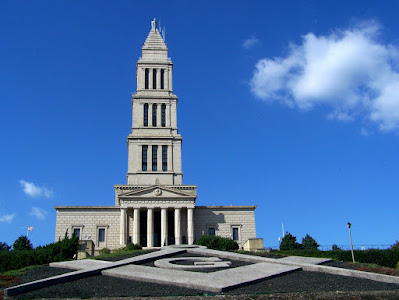
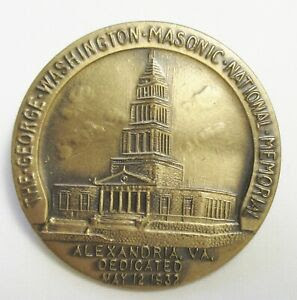
When the George Washington National Masonic Memorial in Alexandria, Virginia was first proposed in 1910, it was designed as a magnificent monument to America’s most famous Mason, along with being a safe and secure repository for priceless Masonic objects owned by Virginia’s Alexandria-Washington Lodge 22 that were associated with Brother George. The lodge possessed an original, contemporary portrait of Washington showing him dressed in Masonic regalia. And they had a collection of irreplaceable items which had originally been owned by Washington or utilized by him for the cornerstone ceremony for the U.S. Capitol building in 1798. 


But a fire at the lodge in the late 1800s resulted in the loss of several their priceless objects. So the Memorial was proposed as a national Masonic project that would be supported by all regular, recognized grand lodges in the U.S. in order to more safely house and display these almost sacred items for the public and for Masons alike. Today, the Memorial houses one of the largest collections of Washington-associated memorabilia outside of his estate, Mount Vernon and the Smithsonian Museum.


Many years ago, Mark Tabbert told me of an ongoing project he was working on. He has been the head of collections at the Memorial for many years, and the physical resources at the Memorial are preserved for future historians and Masons. Like the fairytales of Parson Weems’ chop-down-the-cherry-tree “biography” of the general, president and founding father, Masonic tall tales about Washington began propagating with great abandon after his death, and continue through today. 

Despite the endless (and frequently bogus) claims some Masons have made over the years about Worshipful Brother George and his enthusiasm for the fraternity, the truth is that Washington really only provably attended a handful of lodge meetings in person throughout his entire lifetime. Tabbert has always insisted that it is vital to honestly understand the role Freemasonry legitimately played in Washington’s life (and conversely, the role he played for the fraternity) instead of just breezily and blindly accepting legends that were told, retold and embellished by well-intentioned brethren over the last two and a half centuries. 


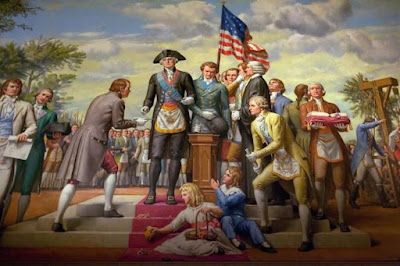
For instance, although Washington was named as the Master of Alexandria Lodge when it was chartered, he never actually sat in that position, or even as a sideliner in that lodge, and the famous drawings and paintings of him dressed in a jewel and apron as the Worshipful Master and presiding over a meeting were simply artistic flights of fancy on the part of painters and sculptors, and nothing more.

The result of Mark’s ongoing labors over the last decade is an ambitious new book being released this week by the University of Virginia Press: A Deserving Brother: George Washington and Freemasonry. In it, Tabbert has researched quite literally every single reference, claim, rumor, letter, declaration, newspaper article or offhanded remark that ever connected George Washington to the Masonic fraternity. Every known bit of physical evidence associated with Washington and his Masonic membership is presented in the book in chronological order, while explaining, debunking or ignoring the unsubstantiated claims. Tabbert’s intention has been to correct the historical record and create the standard reference work for future researchers on the trail of Washington and the influence Freemasonry may or may not have had on his life and his character.

Freemasonry during America’s formative years was instrumental in reinforcing the notion of a non-secular, “civic religion” that was so vital to the creation and success of this new constitutional, democratic republic. Washington’s membership in the fraternity was influential in both directions. In practical terms, Masonry demonstrated mutual cooperation, respect, religious toleration, and social egalitarianism that informed Washington’s understanding of democracy. And his membership in the fraternity gave Freemasonry a status that few other organizations could achieve at the time. His Masonic membership and support drew more and more merchants, community and business leaders, and men of all political and religious persuasions to join its ranks.

A Deserving Brother straddles the line between being an historical narrative and an itemized, encyclopedic catalogue. An extensive introductory chapter by Washington historian Edward G. Lengel gives a general chronological sketch of George’s life and where it coincided with the Masonic fraternity. But the main body of the work is its meticulously researched catalogue. The book is divided into several major periods of Washington’s life: as a British subject; General and Commander in Chief; private citizen; President of the United States; and his retirement and death. Each chapter is introduced by a general outline of the time period covered. Following that, descriptions of each reference include photos, dates, locations, circumstances, and in the case of letters and other documents, transcriptions of the text itself. In an effort to be as complete as possible, Mark has included correspondence whenever someone would send Washington a note, a Masonic book or other gift related in any way to the fraternity. And to aid future researchers, each item’s provenance and current location today are provided.

Notably, Tabbert has been careful to include verified details of several important, oft-cited milestones concerning Washington and the Masons, including his first inauguration in New York City and the circumstances involving the famous St. John’s Lodge Bible upon which he took the oath of office; the Masonic cornerstone ceremony of the U.S. Capitol in 1793 and the surviving working tools and related objects used at that event; and details of Washington’s Masonic funeral service in December 1799. An epilogue goes on to cite references about Washington used both by Masons and anti-Masons in the 1800s, as well as celebrations held by Masons in 1899 on the 100th anniversary of his death, and in 1902 for the 150th anniversary of his raising as a Master Mason. The major books written about Washington’s Masonic experiences and involvement are described, as well as the formation of what would become the George Washington National Masonic Memorial Association. 


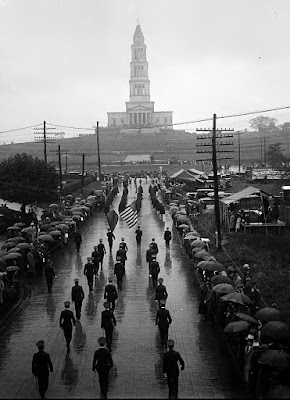
The Memorial itself was officially dedicated in 1932, some 22 years after it was first proposed, and Tabbert provides a synopsis of its mission and exhibits then and now, as well as an explanation of the changes that have occurred there since its opening.

In short, Mark Tabbert’s A Deserving Brother is without question the most extensive, detailed and truthful accounting of Washington and his Freemasonry as he lived it. As an historical research tool it is invaluable, and will unquestionably be the most important reference work on George Washington and the fraternity available for decades to come.

This book is being distributed by Macoy Publishing under a special partnership with the George Washington Masonic National Memorial Association. Priced at $34.95 for the 304-page hardback edition, CLICK HERE TO ORDER.

Thursday, April 18, 2019

Paul Revere, Freemason


By sheer accident, I'm in Massachusetts this week, south of Boston in Middleboro. And this happens to be the 244th anniversary of the famous ride of Brother Paul Revere.

In popular culture and what passes for history these days, Paul Revere’s role in the American Revolution has been reduced to a town crier on horseback, albeit a romantic one. Paul Revere, a well-known silversmith, would become immortalized for his nighttime ride as the messenger proclaiming the approach of British troops at Lexington and Concord in April of 1775, when he and fellow Freemason William Dawes succeeded in warning the local militias.


Longfellow's legendary telling aside, author David Hackett Fischer’s 1994 book Paul Revere’s Ride has gone a long way to place him in a much more important position than just Brown Beauty’s screaming jockey. He was a large, burly man, and hardly had the appearance of an artisan skilled in silversmithing and engraving. 


Paul Revere first came to the attention of British authorities and the general public back in 1765 when he began to engrave and publish pro-dissident political drawings and cartoons.  In 1770, he created a notorious (and largely fictitious) engraving dramatizing the so-called 'Boston Massacre' that demonized British troops as murderers of Boston citizens, and proudly signed his name to the work. The famous work cemented the image of English tyranny in the minds of colonists.

Revere was a central figure in all of the many pro-revolutionary groups that met at the Green Dragon Tavern, famed meeting place of Boston's Lodge of St. Andrews. In 1773, Revere was one of the ringleaders of the Boston Tea Party, along with Dr. Charles Warren, as members of the North End caucus. He would serve the lodge as its Worshipful Master in 1770-71, 1777-79 and again for 1780-82. 


In 1775, Paul Revere was the Senior Grand Deacon in the St. Andrew’s Grand Lodge officer’s line and Dr. Joseph Warren’s right-hand man. When the word came in from all over Boston that the British troops were assembling a small fleet of longboats on April 18, 1775, Warren, the Sons of Liberty and the St. Andrew’s members all knew British General Gage’s troops would be on the move.


The events of April 18th and 19th are the shared folklore of America. Revere and fellow Mason William Dawes were dispatched to alert Lexington and Concord to the impending arrival of the British regulars, and to warn Brother Mason John Hancock, Sam Adams, and other members of the Massachusetts Provincial Congress that they were being hunted. The “one if by land” lantern that was hung in the steeple of the Old North Church was placed there by church sexton Robert Newman, who would go on to join Boston's St. John’s Lodge in 1783 and then St. Andrew’s Royal Arch Chapter in 1794.

The long-attributed claim that Revere hollered "The British are coming!" is inaccurate, since technically at the time the Massachusetts colonists were mostly British. His warning was more accurately that "The Regulars are coming out!"

Revere's mission took him through Charlestown and across the Charles River, then onward toward Lexington dodging British army patrols and alerting patriots all along the route.
At Lexington, Revere and Dawes met up with Dr. Samuel Prescott, and headed out to warn Concord, where patriots were storing a large cache of weapons and gunpowder. 

At Medford, Revere was briefly captured by a patrol of British soldiers. Some say he talked his way out of being arrested or shot, but Masonic folklore claims that he gave a Masonic sign and was released by soldiers who were brethren. Revere managed to make it to Woburn, but Dawes was also detained. Prescott managed to get all the way to Concord and completed the mission. Adams and Hancock were successfully warned and hid out in Burlington, escaping arrest.

April 19th brought "the shot heard round the world" and the official beginning of the American Revolution, which is another story for another time.

Paul Revere would serve the Patriot cause throughout the war, and tried his hand as a military commander. After the British evacuated Boston, a regiment of artillery was raised, of which Paul Revere was made Major. Among other things, he restored the cannon to usefulness which the British had put out of commission. Later, in 1776, he was made Lieutenant-Colonel and remained in service throughout the war with mixed results.

Later in the war, he would be the artillery commander at the humiliating Penobscot Expedition, which would go down in history as the greatest naval disaster in American history until Pearl Harbor. But he would continue to serve as a cannon maker and gunpowder manufacturer until the war’s end and even made anchors, spikes, sheathing and pumps for warships like the U.S.S. Constitution. He survived the war, and he fittingly engraved the first Great Seal of the United States. 


Massachusetts' Masonic grand lodge history before and after the Revolution is more hectic than most American states. When the Massachusetts Grand Lodge was chartered by the Grand Lodge of Scotland in 1769, with Dr. Joseph Warren as its Grand Master, the independently established Lodge of St. Andrew was a part of it. Paul Revere served as Junior Grand Warden 1777-79, Senior Grand Warden 1780-83, and Deputy Grand Master 1784-85 and 1791-92.

When a union of the Massachusetts Grand Lodge and the Saint John's Grand Lodge was agreed to, forming the Grand Lodge of Masons in Massachusetts in 1792, Revere was its second Grand Master from 1795-97.


As Grand Master, he laid the cornerstone of the Massachusetts statehouse in Boston, with Masonic ceremonies. One of the greatest treasures of the Grand Lodge AF&AM of Massachusetts is small golden urn created by Revere that holds a lock of George Washington's hair (photo).


The Revere Charge


While serving as Grand Master, MW Paul Revere chartered 23 new lodges during his tenure, and installed many Worshipful Masters. In that capacity, he wrote a unique charge for Masters that he delivered at those installations. It is every bit as applicable today as it was 225 years ago:

"Worshipful Master:
"This W. Lodge, having chosen you for their Master and Representative, it is now incumbent upon you, diligently and upon every proper occasion, to enquire into the knowledge of your fellows, and to find them dayly imployment, that the Art which they profess may not be forgotten or neglected: you must avoid partiality, giving praise where it is due, and imploying those ln the most honorable part of the work who have made the greatest advancement, for the encouragement of the Art. You must preserve union, and judge in all causes amicably and mildly, preferring peace.
"That the Society may prosper, you must preserve the dignity of your office, requiring submission from the perverse and refractory, always acting and being guided by the principles on which your authority is founded. You must, to the extent of your power, pay a constant attendance on your Lodge, that you may see how your work flourishes, and your instructions are obeyed: You must take care that neither your words or actions shall render your authority to be less regarded, but that your prudent and careful behavior may set an example, and give a sanction to your power.
"And as brotherly love is the cement of our Society, so cherish and encourage it that the Brethren may be more willing to obey the dictates of Masons, than you have occasion to command.
"And you, the Officers of this Worshipful Lodge, must carefully assist the Master in the discharge and execution of his office; diffusing light and imparting knowledge to all the fellows under your care, keeping the Brethren in just order and decorum, that nothing may disturb the peaceable serenity or obstruct the glorious effects of Harmony and Concord; and that this may be the better preserved, you must carefully inquire into the character of all candidates to this honorable Society, and recommend none to the Master who in your opinion are unworthy of the privileges and advantages of Masonry, keeping the Cynic far from the Ancient Fraternity, where Harmony is obstructed by the superstitious and morose. You must discharge the Lodge quietly, encouraging the Brethren assembled to work cheerfully, that none when dismissed may go away dissatisfied.
"And you, Brethren of this Worshipful Lodge, learn to follow the advice and instruction of your officers, submitting cheerfully to their amicable decisions, throwing by all resentments and prejudices towards each other; let your chief care be to the advancement of the Society you have the honor to be members of; let there be a modest and friendly emulation among you in do ing good to each other; let complacency and benevolency flourish among you; let your actions be squared by the Rules of Masonry; let friendship be cherished, and all advantages of that title by which we distinguish each other, that we may be Brothers, not only in name, but in the full import, extent and latitude of so glorious an appellation.
"Finally, my Brethren, as this association has been carried on with so much unanimity and concord (in which we greatly rejoice), so may it continue to the latest ages. May your love be reciprocal and harmonious. While these principles are uniformly supported, this Lodge will be an Honor to Masonry, an example to the world, and therefore a blessing to mankind.
"From this happy prospect I rest assured of your steady perseverance, and conclude with wishing you all, my Brethren, joy of your Master, Wardens, and other officers, and of your Constitutional union as Brethren.
"Brother Grand Secretary,— It is my will and pleasure that you register this Lodge in the Grand Lodge Book, in the order of Constitutions, and that you notify the same to the several Lodges."
Partially adapted from Solomon's Builders: Freemasons, Founding Fathers, and the Secrets of Washington DC by Christopher L. Hodapp.

For more Masonic information about Paul Revere, see the extensive Masonic genealogy page HERE.