"To preserve the reputation of the Fraternity unsullied must be your constant care."

BE A FREEMASON

Showing posts with label Alabama. Show all posts

Sunday, May 05, 2019

Alabama Community and Masons Restore Historic Temple


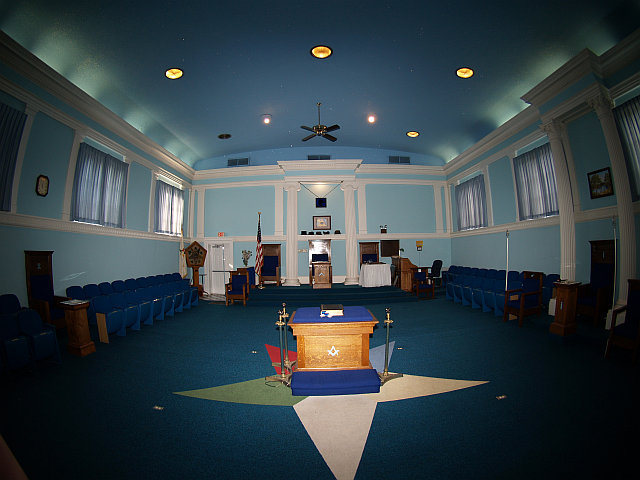
Crawford, Alabama was originally named Crockettsville after Davy Crockett, and it served as the seat of Russell County from 1833 to 1868. In 1848, the Freemasons of Alabama's Tuckabatchee Lodge No. 96 in Russell County proudly erected their two-story clapboard Greek Revival Masonic Temple. Their historic hall survived the lapse of time, the ruthless hands of ignorance, and even the devastations of war - it was famously passed by when Union Army troops set fire to other buildings in the town of Crawford during the Civil War, legendarily because their commander was himself a Freemason.

Eventually, Tuckabatchee Lodge merged or consolidated to become Crawford Lodge 863. But just short of the building's 150th anniversary, the lodge decided to move out in 1995 and erect a newer temple on the same property. The decision was then made to allow a local landowner to purchase and move the old lodge building about 100 feet to the east where it still sits today. 


The original lodge hall was the sole remaining building from Crawford's county seat days. In addition to its purpose as a Masonic temple, it also hosted local church services and a school room, as so many other lodges did in our communities over the years. This historic building was added to the Alabama Register of Landmarks and Heritage on September 6, 1978. 


Local preservationists and community leaders finally saw the historic significance of the Masonic temple and decided to save the empty hall instead of letting it be consumed by the elements. In 2012, newly elected Russell County Commissioner, Chance Corbett, proposed creating a committee of the community in an effort to lead a restoration effort. The Tuckabatchee Masonic Lodge was officially listed on the Alabama Historic Commission’s Places in Peril. 


The restoration project began in late 2013. Spearheaded by the Russell County Commission, a committee of local citizens and the members of the Crawford Lodge 863, many volunteers and local contractors also helped in the restoration project. 


Donations were made by the community to aid in the restoration efforts and brick pavers were purchased and placed on the front walkway to show the community's dedication and support for the project. In 2015, prior to opening the doors to the public, the downstairs was restored for use as a community center and the upstairs was restored and designated as a museum to pay tribute to the original intended use as a Masonic Lodge. Additionally, a playground was added to the property through a state grant and matching vendors' grant.


Crawford Lodge sits just next door in a new, steel building.


A video of the dedication event can be seen on YouTube below:


Monday, April 01, 2019

More: What's In A Building?


The anonymously written alleged "Masonic" "satire" website, "The Past Bastard," ran a post today - April Fools Day - alleging that I'm creating an alleged TV series, allegedly called Flip This Temple:
"A television series in which he will feature various lodge buildings around the US, as the lodge members decide to renovate the old buildings, and either keep them or sell them off."
Allegedly. 

Utter crap, but it's not a bad idea. With the advent of on-demand streaming video and the fracturing of the viewing public into tinier and tinier sub-atomic groups, I'm sure A&E would be thrilled to launch such a show with a guaranteed audience of seven guys forced to watch it in the lodge basement on their 16" Zenith because the Master left his Monitor at home in his other jacket so he couldn't read the Ancient Charges and he couldn't think of anything else for Masonic education that month. ("Where's the HDMI input? All I see are two screws and some wire rabbit ears back here.")

While I await that breathless call from New York producers, I don't want to disappoint anyone who clicked over here hunting that story. So I'll offer up the latest entry in my ongoing quest to encourage Masons to build better temple buildings. As long as we're going to have the damn things, then let's make them special. 

I want to call attention to Rising Virtue Lodge 4 in Tuscaloosa, Alabama. 

On April 11, 2011, two Masonic lodges - Rising Virtue 4, which is in the Forest Lake neighborhood, and its sister lodge, Von Bayer Lodge 699 in Alberta - were both destroyed by a terrible tornado that swept through the area. If someone really was going to "Flip This Temple," this was a helluva way to get the demolition done.

Rising Virtue's old temple in ruins after the 2011 tornado
After the storm, the city of Tuscaloosa took the opportunity to strengthen its building codes and permitting requirements, along with demanding more landscaping because of the loss of so many trees and shrubs from the damage. Rising Virtue's original building was a sprawling 11,000 square foot hall that was all on one level, but they couldn't rebuild anywhere near that size and had to plan on a smaller two-story building to fit the lot and still have parking spaces.

Von Bayer Lodge 669 temple was also destroyed by the tornado
Meanwhile, Von Bayer Lodge couldn't rebuild at all on their original lot because of the new city regulations and requirements. In the aftermath, the two lodges decided to merge and rebuild a single Masonic temple. The result is this beautiful 7,500 square foot facility that opened in August 2013.


It took two architects before the project was realized, but the end result is a modern Masonic temple that demonstrates its members' pride and proudly proclaims to the community exactly what it is. It looks like a Masonic temple. It looks like great things happen there. It looks significant. It looks like a temple built for the ages, and not one that another tornado will rip away anytime soon. 


Most of all, it looks like a place that a man who has read or heard about the Freemasons imagines a Masonic temple should look like.

With all due respect, that's not something a pole barn in a bean field can claim. 

Sunday, February 04, 2018

Secretary Of Historic Alabama Lodge Arrested For Arson And Theft


Freemasonry first came officially into the state of Alabama just as it did in Indiana - with a lodge chartered by the Grand Lodge of Kentucky, in 1811—one of what would eventually be nine states that Kentucky established lodges in as the country expanded westward. That first Alabama lodge (prior to statehood) was Kentucky's Madison Lodge 11 in Twickenham, a settlement that would eventually grow and turn into Huntsville. After statehood was granted to Alabama in 1819, Madison Lodge and two more lodges previously chartered by Tennessee all combined to become Huntsville's Helion Lodge No. 1 under the new Grand Lodge of Alabama. 


Helion Lodge still thrives today, just shy of its 200th anniversary, in their historic 1917 temple building, Eunomia Hall. Today, it is home to York Rite bodies and youth groups. Or it was until about a month ago.


Early this year, Eunomia Hall had a very close call. On January 6th, a fire was discovered burning in the office of the building. Fortunately, a Rainbow International event was scheduled for the afternoon, and one of their advisors entered the building. She smelled smoke and immediately called firefighters, who rescued books and records from the office and put out the flames before they could spread to the rest of the irreplaceable building. Eunomia Hall was saved, but is heavily smoke and fire damaged, and they are currently holding their meetings at another local lodge while repairs are being carried out.

Investigators quickly determined that the fire was no accident and had been deliberately set. The biggest clue in the case had to do with where the fire started and what was burned: the recent paper financial records and receipts of the lodge. 

Subsequently, Chad Evers Rodriguez, 39, was arrested Wednesday and charged with second-degree arson and theft by deception (stolen property, wire fraud). Rodriguez had been the lodge Secretary since 2015, and a substantial amount of the lodge's financial assets are missing and unaccounted for. Lodge members had been questioning Rodriguez about unusually expensive invoices in recent weeks, and the fire would have destroyed any financial trail.

As John Wooden once wrote, “The true test of a man's character is what he does when no one is watching.” The overwhelming majority of us who have been elected as Secretaries and Treasurers would rather take a harpoon to the gut than cheat, wrong, or defraud the members of the organizations that trust us with their treasuries. But proper lodge management can be time consuming and tedious. It is sometimes tempting to cut corners when it comes to accurate record keeping between the Secretary and Treasurer — I know, I've been guilty of some of it myself over the years. 

Pre-signing two-signature checks, or just letting the Secretary handle opening and paying the bills, or scanning over a list of warrant totals instead of the actual invoices for a few seconds while a stated meeting is being opened, or never seeing anything besides a Quicken monthly recapitulation or summary, and much more can so easily become "the usual way we do it here." The age of debit cards, online bill paying, paperless invoicing, and all of those time saving things that vendors and suppliers and banks want us to eagerly sign up for make modern lodge management even more fraught with potential sloppiness. And every once in a great while, sloppiness can lead to temptation for someone with less than pure motives, or with personal issues. 

That's why it's our job to be our Brother's keeper, to take an interest in every one of our members, to pay attention to what's happening in his life, and help him before a problem becomes too big for him to handle. Or becomes a lodge problem.

Proper oversight of lodge finances by our own membership should be welcomed and encouraged at all times. Every Secretary and Treasurer should make it a reflex action to conclude their monthly reports with the phrase, "As always, my books and records are available at any time for complete inspection, should anyone wish to do so." They shouldn't be offended when somebody actually takes them up on that pledge, either. And every lodge needs to have a serious, annual, line-item audit of its financial records, by either qualified members of the lodge (and not the same faces every year), or better still, by an outside, independent accountant. A lodge needs to be run every bit as responsibly as any business, and rank and file members are the best check and balance against error. Or temptation. That's also why we have TWO officers through whom lodge finances pass, instead of just a combined Secretary/Treasurer.

A crusty Secretary or Treasurer who's been doing things the same way for 10 years might at first take offense at suddenly having his methods questioned. That's human nature. But use your best sense of tactfulness and explain that you're asking because you are trying to take an active interest in the well-being of the lodge. Explain it's as much for HIS protection as anything else, especially since the whiz-bang internet world of bill paying keeps demanding less and less oversight and care every year.

Meanwhile, when a Brother is having problems at home or in his business or is suddenly doing something unusual that seems out of character, take an immediate interest. That's what this whole tree fort is supposed to be about in the first place.

Lodge photos by Steve McGlocklin

Wednesday, January 10, 2018

Martin Luther King, Jr. and the Freemasons


by Christopher L. Hodapp

A bill was just signed into law by President Trump aboard Air Force One while he was visiting Atlanta, Georgia on Monday. A week before the national holiday of Martin Luther King, Jr. Day, Donald Trump signed into law the Martin Luther King, Jr. National Historical Park Act of 2017. Alveda King, the niece of the slain civil rights leader, joined the President for the mostly private signing ceremony. It didn't get much press notice, didn't make the nightly news, and at first glance, it might be hard to see the connection to Freemasonry. 

Yet, it's actually central to this new Act.


The Auburn Avenue Prince Hall Masonic Temple in Atlanta, Georgia

The bill was sponsored by US Representative John Lewis, (D-GA), who is a member of Atlanta's St. James Lodge No. 4 PHA. What this new law signed by President Trump does is to establish the area around Rev. Martin Luther King Jr.'s birthplace in Atlanta to officially become a national historical park, making it the first such park in Georgia. (It's currently just designated as a national historic site, and this changes its status and importance within the National Park Service system.) The site is established "to preserve, protect, and interpret for the benefit, inspiration, and education of present and future generations, the places where Martin Luther King, Jr. was born, where he lived, worked, and worshiped, and where he is buried, while ensuring connections are made to his life and legacy." It already includes King's birthplace, the church where he was baptized, and his burial place. But the legislation also slightly enlarges the existing designated area in order to also specifically include Atlanta's Auburn Avenue Prince Hall Masonic Temple. 


After the end of our Civil War in 1865, Freemasonry among African Americans began to spread from the Northern states into the South, where it had previously been a damned dangerous thing to openly attempt. The twists and turns of segregated Freemasonry in America are complex, and the story does not lend itself to simple explanations. Freemasonry was far from the only lofty-sounding organization that talked about equality while strictly enforcing a color barrier. Countless other fraternal groups had their own parallel black and white counterparts that operated without any acknowledgement between each other.  When slavery was abolished, the practices of "separate but equal' institutions sprouted and flourished, and by 1896, Plessy v. Ferguson carved them into stone for another half century.

After the war, three black lodges were soon organized in Georgia in 1866, forming into an F&AM grand lodge by 1870. Because the National Compact era was going through its own internal and external pangs and schisms, a second AF&AM grand lodge was formed in 1874, with both finally merging in 1888. Both groups could trace their origins back to Prince Hall's English chartered African Lodge No. 459 in Boston. Today, that merged body is the Most Worshipful Prince Hall Grand Lodge of Georgia, F&AM.

In 1871, Atlanta's first lodge of African Americans was chartered, St. James Lodge No. 4 (F&AM), with Frances J. Peck as its Worshipful Master. Peck was also the pastor of Atlanta's Big Bethel African Methodist Episcopal Church at the time, the oldest predominately African American congregation in metropolitan Atlanta. The church became a center of the black community there, as well as a gathering place for social action. The strong connection between Big Bethel and St. James Lodge also made Freemasonry among Atlanta's black population a vital part of that community, binding faith and fraternalism, and creating a strong atmosphere for leadership at every level within the then still deeply segregated society. 

John Wesley Dobbs and Rev. Emory Searcy dedicating a local cornerstone in about 1956


Starting in 1937, the Prince Hall Masonic Temple and the attached Tabor Building at 332-34 Auburn Avenue were built. The main Renaissance Revival-style building was designed by architects Charles Hopson and Ross Howard at the behest of then Grand Master, John Wesley Dobbs. Atlanta at that time was home to about 90,000 African Americans, and Dobbs was instrumental as a local political leader and organizer. He had been elected as the 10th Grand Master of the Most Worshipful Prince Hall Grand Lodge of Georgia in 1932. Dobbs would serve as Grand Master in Georgia for 29 years, 1932-1961, and was widely known in Atlanta simply as "The Grand" and the unofficial "Mayor of Auburn Avenue." 

At the time, Auburn Avenue was a prosperous commercial district in Atlanta. If you have any question just how popular fraternalism was in the black community in the 20th century, consider that by 1945, along with the Masons and the Odd Fellows (who had their own enormous theater and auditorium building), there were twenty-five other fraternal groups also located on Auburn Avenue.

Martin Luther King, Jr. was not a Mason during his lifetime, but both his father and his grandfather were Prince Hall Masons. Interviews from 1968 indicate that Grand Master X. L. Neal of the Most Worshipful Prince Hall Grand Lodge of Georgia had arranged for Dr. King to become a Freemason upon his return to Atlanta that year. King's assassination in Memphis on April 4th of 1968 had abruptly prevented that event from happening. 

But that was not the end of the question about King's association with Freemasonry. Not by a long shot.

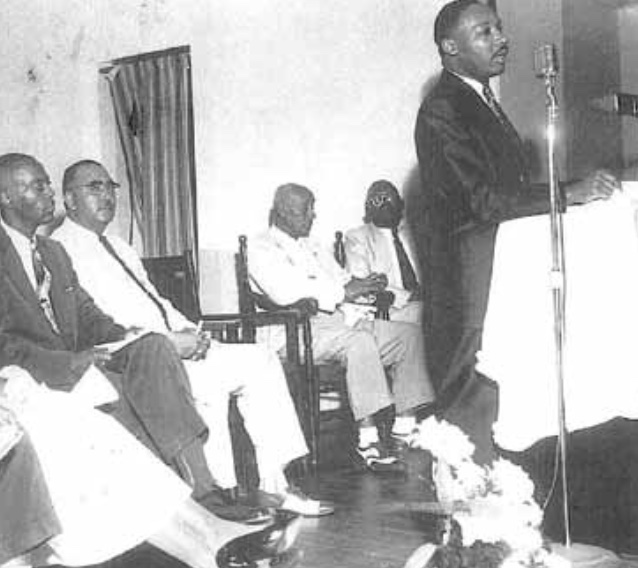
Dr. Martin Luther King speaking at the Prince Hall Masonic Temple in Columbus, Georgia, 
circa 1959. Behind him sits Grand Master John Wesley Dobbs. 


Starting in 2000, a rumor snowballed into a controversy, widely claiming that sometime between 1999 and 2000, then Grand Master Benjamin Barksdale of the MWPHGL of Georgia made Dr. Martin Luther King, Jr. a Mason "at sight" posthumously. As word spread of it, the Masonic world went berserk. Shrieks over the violation of "Landmarks" went out around the internet and in Masonic magazines, and there was a great gnashing of teeth. 

A decade after the alleged incident, the website for the MWPHGL of Georgia said the following about it:
“There is one local Masonic legend that claims that Dr. King, Jr. was good friends with Grand Master X.L. Neal, both of whom came out of Morehouse College. The legend claims that Grand Master Neal had promised to make Dr. King a Mason when he came back from the Sanitation Strike in Memphis; but as fate would have it, Dr. King never made it back from Memphis. However, in 1999, Grand Master Benjamin Barksdale gave him a posthumous honor by declaring him a member of the Craft and presenting it to his widow, Coretta Scott King, at a Morehouse celebration for our Civil Rights icon.”
At the time this allegedly happened, it was one of those explosive topics guaranteed to start a good old fashioned flame war in the early days of online Masonic discussion groups. Masons all over the world went collectively hysterical, and railed that no grand master could constitutionally confer the degrees of Masonry on a dead man. Conflicting definitions of making Masons "at sight" got trotted out and endlessly flogged over jurisdictional differences, along with the usual sagely chin wagging and general air bending. Most wound up dejectedly admitting that grand masters will do whatever they intend to do, like it or not, and if their own members of their grand lodge don't fix problems left in their wake, all the carping in the world isn't going to change anything. Nevertheless, there remain today a few lists of "Famous Freemasons" floating around that include King as a Mason without explanation. 

And yet, no one who was actually there that day finally stepped forward to definitively say whether or not the action really even took place.

Finally in 2012, in Vol. 39, No. 1 of the Phylaxis Magazine (p. 16), Brother Burrell D. Parmer of the PHGL of Texas researched this contentious and thorny event, and actually decided to go straight to the source. Brother Parmer actually asked PGM Barksdale what happened. 

The event in question occurred  at King's alma mater, Morehouse College. On April 1st, 2000, 'Millennium Sunday,' Dr. Lawrence Carter officially founded the 'Gandhi King Ikeda Hassan Institute for Ethics and Reconciliation.' That Sunday was the 40th anniversary of the Atlanta Civil Rights Movement and the inaugural celebration of the 'Season of Nonviolence' in 1960. Among the dignitaries assembled there that day were then Grand Master Barksdale, Mrs. Coretta Scott King, and Martin Luther King III, along with members of the Gandhi family

Prince Hall Masons had a longstanding connection to the site at Morehouse College, and they had dedicated the cornerstone in 1992 for the Martin Luther King, Jr. International Chapel on the Morehouse campus where the event in 2000 took place. The gathering on Millennium Sunday was for the unveiling of a large bronze plaque that contains the entire text of King's famous “I Have a Dream Speech.” An estimated 1,000 people attended that day, including 200 PHA Masons dressed n full regalia. It was when GM Barksdale stepped to the podium and spoke that the confusion came about. 

Parmer's article explains, in part:
As the event occurred over a decade ago, PGM Barksdale cannot recollect the date or year, but remembers that he did not make Dr. Martin Luther King, Jr. a Mason, neither “at Sight” nor provide him with honorary membership posthumously. “Dr. King is not a Mason; you cannot make a dead person a Freemason,” said PGM Barksdale.

To the reference that GM Dr. X.L. Neal stated that he will make Dr. King a Prince Hall Mason “at Sight” when he returned from Memphis:

“The above is true. I was Grand Senior Warden when GM Neal made the statement which was in the presence of the Grand Lodge membership in Augusta, GA,” said PGM Barksdale. “Again Dr. King was never a Prince Hall Mason; however, with the permission of Mrs. Coretta Scott King, I was given permission to name a Dr. Martin Luther King, Jr. Scholarship to assist a worthy young man to attend Morehouse College.”

[Past Master Douglas Evans, Past Grand Historian of Georgia] remembers some details about that day.
“I was in the audience as a young five-year-old Mason when (an) honor was read by PGM Barksdale in the company of Mrs. King and King III along with other Grand Lodge officers while on stage inside the King Chapel, and I, as many others, thought that they were making Dr. King a ‘Mason at Sight,’” said PM Evans. “I do not think that PGM Barksdale may have made it clear that a dead person could not be made a Mason.”

“I believe that during the ceremony as Mrs. King was on the stage was when PGM Barksdale and the Masons announced that it was “honoring Dr. King’s death posthumously.” None of us really knew what this meant since it wasn’t previously disclosed to us before the event,” said PM Evans. “We heard it all at the same time. I took it as something you might honor the governor or someone with, but the word posthumously made many feel as if Dr. King was being given the honor of being a Mason. I tend to believe that this was not the intent of PGM Barksdale but maybe the wording of the statement was not filtered or edited enough.”

According to PM Evans there was neither a proclamation nor similar communications that would have informed the Craft that such an honor of membership for Dr. King would be bestowed.

“I’ll be the first to echo PGM Barksdale’s statement that he did not make Dr. King a Mason. He couldn’t if he tried; it’s unmasonic,” said PM Evans. “I will offer that the language used at that ceremony may have been misleading.”
“During my historical tours in Atlanta, I offer that Dr. King is NOT a Mason, but an Alpha (a Greek college fraternity). If he had lived longer we believe that he would have joined since his father (Daddy King) and grandfather were all preachers and Prince Hall Masons,” said PM Evans. “We think Dr. King would have joined W. C. Thomas Lodge No. 112 since it is thought that this is where Daddy King was Raised, and due to GM Neal belonging to the same Lodge and knowing Dr. King from Morehouse College.”
In any case, the real reason for the expansion of the historical site in this new legislation Trump signed is because Atlanta's Prince Hall Temple was where the Southern Christian Leadership Conference (SCLC) established its initial headquarters on Auburn Avenue in Atlanta in 1957. That historic civil rights organization was co-founded by Dr. King, who also served as its first president until his murder in 1968. The SCLC became one of the most prominent non-violent groups in the country, and was instrumental in the growing efforts to finally end racial segregation in the U.S., starting in the late 1950s.

The cooperation between Prince Hall Masons, their temples. and civil rights groups was not at all unusual. These landmark buildings frequently were also home to offices of black professionals like lawyers, doctors, dentists, and accountants, along with other businesses and organizations vital to their segregated communities. Birmingham, Alabama's historic Colored Masonic Temple, for example, was built by the Most Worshipful Prince Hall Grand Lodge, Free and Accepted Masons of Alabama between 1922-24. That temple became the headquarters of the NAACP in Alabama and housed the legal teams during the time of the Freedom Riders in the 1960s. It was declared by the National Parks Service in 2016 as part of the History Birmingham Civil Rights District, a wide area of that city that encompasses many significant buildings in the same general area. 

Trump also signed two other related bills into law on Monday. The African American Civil Rights Network Act of 2017 instructs the National Park Service to link together various historical sites related to the civil rights movement, making it easier to trace the development, growth and success of the fight against racial segregation. He also signed the 400 Years of African-American History Commission Act to commemorate the arrival of the first Africans in the English colonies at Point Comfort, Virginia. in 1619.

I would be remiss if I didn't add as a footnote to this post that the Grand Lodge of Georgia F&AM at their annual meeting in October 2017 tabled without action yet another attempt at recognition of the MW Prince Hall Grand Lodge of Georgia, in spite of now PGM Gary Leazer's efforts and the encouragement of several others. I've lost track at this point of how many times the Prince Hall Masons have been turned down or ignored in Georgia. Alabama, on the other hand, passed joint recognition with their Prince Hall counterparts on November 14, 2017. Counting Georgia, there remain eight U.S. states that continue to deny Prince Hall recognition. 

A visual aid may be helpful to understanding this.


There is one last bit of confusion over Martin Luther King and Freemasonry. His final speech before his assassination on April 4th of 1968, his stirring "I've Been To The Mountaintop" address, was given in Memphis, Tennessee at the Church of God in Christ headquarters. That landmark building is known as "Mason Temple," but it was not then, and never has been, a Masonic temple. It was purpose built as a church and enormous auditorium complex in 1945, and is actually named for Bishop C. H. Mason of Memphis, the church's founder. 

Wednesday, November 15, 2017

Mutual Recognition Approved in Alabama; Not in Georgia


Welcome news coming out of Alabama's Annual Communication on Tuesday is that the Grand Lodge of Alabama F&AM has voted unanimously to recognize the Most Worshipful Prince Hall Grand Lodge of Alabama F&AM. The Prince Hall Grand Lodge requested recognition only, and the Grand Lodge of Alabama approved their request as it was written. There has been an initial stipulation by them of no inter-visitation or affiliation at this time, to be renegotiated in ten years, but that has historically not been an unusual first step around the country. That will undoubtedly soon change. For example, in Kentucky a similar situation was first stipulated, and they achieved full recognition in two years. So these are all basic beginnings. 

Bravo to all who helped this development to come about. 

Meanwhile over in Georgia at the Grand Lodge of Georgia F&AM at their October 27th Annual Communication, I understand they once again tabled a request to recognize their own Prince Hall counterpart, without so much as any discussion of it. And another attempt to remove the by-law wording banning homosexual members from Masonic membership in that state failed. 70% of attendees voting against removing it.


UPDATE 1/10/2018:

The MWPHGL of Alabama announced the joint recognition vote in its official communication issued on December 1, 2017 by MW Corey D. Hawkins, Grand Master. It reads as follows:

AMITY/MUTUAL RECOGNITION
As voted upon and passed unanimously at our 147th Annual Communication, to go into effect simultaneously with their passing of the same, the Most Worshipful Prince Hall Grand Lodge Free and Accepted Masons of Alabama has entered into an amity/mutual recognition agreement with the Most Worshipful Grand Lodge Free and Accepted Masons of Alabama (Caucasians). The amity/mutual recognition went into effect on November 14, 2017, when the Most Worshipful Grand Lodge Free and Accepted Masons of Alabama (Caucasians) voted in favor of the amity/mutual recognition agreement.
The amity/mutual recognition agreement contains the following safeguards in addition to both Grand Lodges maintaining our separate existence:
1.) There shall be no visitation at neither the Subordinate Lodge nor Grand Lodge levels;
2.)The Amity/Recognition Agreement shall never constitute future merger;
3.) There shall be no instance of demitting to the other Jurisdiction; and 4.) The Amity/Recognition Agreement shall not be amended nor revisited within ten (10) years from the date of acceptance, November 14, 2017.
This amity/mutual recognition does not change anything as it relates to our lack of interaction with the Grand Lodge of Alabama (Caucasians). It simply opens the door for recognition with other Grand Lodges. I have clearly stated what thesafeguards of this agreement are. One may ask, “What good is recognition without visitation?” I say to you, although this is 2017, unfortunately there are some thoughts and ideas of the Jim Crow era that still exist here in the State of Alabama. Realistically, we have some brothers from both sides who do not wish to have visitation. However, I do believe that the amity/mutual recognition agreement is a move in the right direction. We must crawl before we walk. We will continue to operate as we have for the past 147 years. Take notice and govern yourselves accordingly.

Image H/T: KingAthgelstan on Reddit

Monday, February 27, 2017

Birmingham, AL's Historic 'Colored Masonic Temple' Made Part of National Monument: Seeks Restoration Funds


Just before the end of 2016, Birmingham, Alabama's historic Colored Masonic Temple, built by the Most Worshipful Prince Hall Grand Lodge, Free and Accepted Masons of Alabama between 1922-24, was declared by the National Parks Service as a part of the History Birmingham Civil Rights District, a wide area of the city that encompasses many significant buildings in the same general area. The seven-story building at the corner of 17th Street N and 4th Avenue was a major landmark in the 1960s as the longtime headquarters of the NAACP and their legal team, a shelter for the period's famed Freedom Riders, as well as other businesses and facilities that were central to the city's black community. All along with being the home to the MW Prince Hall Grand Lodge itself, Masonic lodges, appendant groups, and a 1,500 seat auditorium and ballroom. At the time it was built, according to their website, it was "At the time of its erection, the Temple Building was the largest and best equipped state-of-the-art luxurious building built by and paid for by Negroes in the entire world." 

Statistics are difficult to come by - the previous ones I can find are from back in 1992 when Alabama's Prince Hall membership stood at 30,822, with 593 lodges (their Eastern Star were just as impressive, with 30,474 members in 554 chapters). According to a report today, that number has paralleled almost all US grand lodges in proportion: according to the MWPH Grand Lodge's website, by 2013 they had dwindled to about 4,500 Masons in 318 lodges.

A long story highlighting the Colored Masonic Temple appeared Sunday on the AL.com website, written by Erin Edgemon - Historic Civil Rights Landmark Launches Fundraising Campaign.

The District designation will hopefully help attract new interest locally and nationally in helping the building's trustees in infusing much needed funds for stabilization and restoration, a problem so very common with our Temples all over the country. This one has fallen on especially hard times, and I can't determine from the article whether any lodges still reside amidst the crumbling plaster, peeling paint, and the occasional collapsed ceiling. It doesn't look likely, although it is possible the greatest damage is simply cosmetic.

From the article:

When the Colored Masonic Temple opened in downtown Birmingham in 1924, it was one of the only places African-Americans could walk in the front door and not have to move to the back.
For decades, the seven-story, Renaissance Revival building housed black professionals, such as doctors, lawyers and accountants. At one time, it housed a barbershop, a jeweler, a billiards room, NAACP offices and much more. The structure, located in the 4th Avenue Business District, hosted social events and meetings. Legends like Duke Ellington and Count Basie regularly performed in the 1,500 seat auditorium and grand ballroom.
The Masonic Temple, commissioned by the Most Worshipful Prince Hall Grand Lodge, Free & Accepted Masons of Alabama, was a symbol of black prosperity in the segregated South. The building was also a major landmark in the Civil Rights Movement for housing the NAACP's legal team and sheltering Freedom Riders in 1961. The Rev. Fred Shuttlesworth also organized protests and sit-ins there. 
Beginning in the early 1910s, The Most Worshipful Prince Hall Grand Lodge of Alabama began raising money, a whopping $650,000, to build the massive structure.
Now, more than 90 years after the Masonic Temple opened its doors, Birmingham's grand lodge needs to make magic again. The grand lodge is seeking to raise $10 million to $15 million to restore the building.
This time, though, the temple has the power of the National Park Service behind it.
The Colored Masonic Temple is part of the Birmingham Civil Rights National Monument. The monument also includes the A.G. Gaston Motel, the neighboring Birmingham Civil Rights Institute, the 16th Street Baptist Church, Bethel Baptist Church, Kelly Ingram Park, St. Paul United Methodist Church and portions of the 4th Avenue Business District.
Corey Hawkins, who serves as the grand master of the grand lodge, said the group hired Community Concepts Agency to launch a capital fundraising campaign and is working with the city of Birmingham to secure other funding.
A GoFundMe campaign was launched on Saturday to help raise money for the first phase of the project. The goal is $50,000.
Birmingham City Councilor William Parker and other city officials worked with the Alabama Department of Environmental Management to secure $600,000 in funding for asbestos and lead paint abatement.
"It sounds like a lot, but we do have faith that we can get some assistance," Hawkins said, of the amount of money that needs to be raised.
"We are hoping that because of the importance of the temple to the Civil Rights Movement, especially during Jim Crow times, it was a place where African-Americans could go and walk in the front door and not have to go in the back, and sit anywhere they wanted to in the building. If they sat in the balcony, it was by choice. It wasn't by demand.
"We are hoping that story gets out there and people remember ... that the Masonic Temple played a major role," he continued. "It was where a lot of the organizing was done (for the civil rights) marches and protests. It housed the NAACP, as a matter of fact the NAACP was the last to move out."
Noted civil rights attorney Arthur Shores, of the NAACP had his office in the Masonic Temple, Hawkins added.
The temple was also a place where acclaimed black entertainers came to perform, he said. 
[snip]
Hawkins said the upcoming renovations will be the first for the temple. Despite that, he said the temple is in remarkable condition. The structure is sound, he said, but the building likely needs new plumbing and electrical wiring as well as extensive renovations to make the office and retail space more open and modern.
The grand lodge plans to restore the two-story grand ballroom and the office and retail space. In the adjoining parking lot, they plan to construct a parking garage with additional retail space on the ground floor.
Clark said the antique items left behind will be restored and displayed in the temple to celebrate the building "being a center for dentistry, surgery, medicine, music and law for blacks in the 1900s."
Hawkins said he knows the fundraising and restoration won't be easy, but he's up for the challenge.
"We know with God anything is possible," he said. "We are going to keep fighting."

Hawkins said he looking forward to the day when the Masons and sister organization, the Eastern Stars, can all gather at the temple for a ribbon cutting.
He said he wants to have a big celebration to "commemorate our forefathers, the dream they had by building this building when they did, and us being able to hold on to it and secure its existence for another 90 years."
Read the rest of the article HERE.

It should be noted that Alabama is one of the nine remaining states in the United States in which the predominantly white mainstream grand lodges and their predominantly black Prince Hall grand lodge counterparts still do not recognize each other. There are rumors that there may be a change to that situation very soon...

Thursday, May 05, 2016

Alabama Lodge Breaks State's Masonic Color Barrier


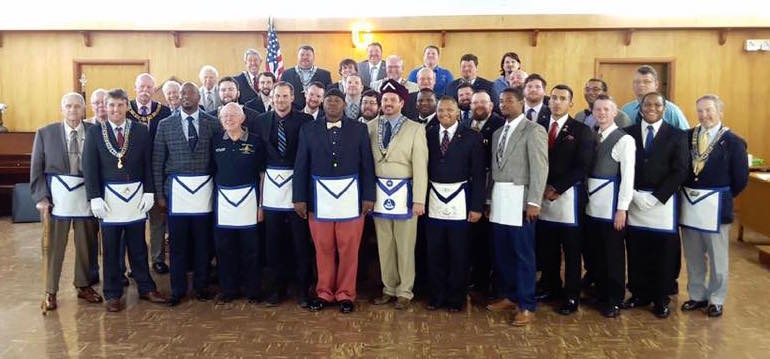
A quietly historic event occurred this evening at Shades Valley Lodge No. 829 in Birmingham, Alabama. Brother Ronald King was raised to the sublime degree of a Master Mason. 

No big deal, except perhaps for him, right? Happens every night in a lodge somewhere in the world.

Except that Brother King is the first man of color to be actually be initiated, passed, and raised in a lodge holden under the Grand Lodge of Alabama F&AM.

According to the Shades Valley website, "The lodge was founded in September of 1921 and granted a charter December 1921.  Since its inception, Shades Valley Lodge has been home to many of Birmingham, Alabama’s great men." 

Those great men now include the current members and officers of that lodge for finally breaking the color barrier in one more grand lodge of the Old Confederacy. Shades Valley Lodge was already integrated, with several African American members who already held previous membership in other jurisdictions. But Brother King was the first to be IPR'd. Appropriately, the evening's visitors included Brother Victor Marshall and other members of Atlanta, Georgia's Gate City Lodge No. 2. 

In this day and age it seems bizarrely anachronistic to announce events such as this, but Masonically, these brethren have indeed made an important step forward and shown others that the Earth did not stop turning on its axis, nor was the Moral Law broken in any way. 

Congratulations to Brother King and his lodge brothers.

(H/T to Oscar Alleyne)